


 INVEST
 PLANT
PLANT
 SOFTWOODS
 HARDWOODS
 CALCULATORS
 RESOURCES
 PROGRAMS

Softwoods
Learn More
BANANAS • TROPICAL FOOD • SUSTAINABLE GROWING
Wondering how banana trees grow and why they are so productive? Banana plants are among the fastest-growing and most useful tropical food plants, valued for their fruit production, rapid regeneration, shade, biomass, and role in home gardens and food-growing systems.
🍌 Quick answer: Although commonly called banana trees, bananas are actually large herbaceous plants in the Musa genus. Instead of a woody trunk, they grow from a pseudostem made from tightly wrapped leaf bases. Under favorable growing conditions, some banana plants can produce fruit in approximately 9–15 months.
Examples: Banana plantings can provide fresh fruit while their enormous leaves create shade, plant material can be returned to the soil as organic matter, and new suckers emerging from the underground plant structure can replace stems after fruiting. Their root systems also help anchor the soil in productive tropical landscapes.
A banana tree is the common name for a large perennial herb belonging primarily to the Musa genus. What appears to be a trunk is actually a pseudostem formed by overlapping leaf sheaths. Each mature pseudostem typically produces one flowering and fruiting cycle before new shoots continue the growth of the banana plant.
This combination of fast growth, food production, regenerative growth, shade, and useful plant biomass makes bananas valuable in everything from backyard gardens to tropical farms and food-security plantings. Understanding how the plant grows is the first step toward choosing suitable varieties and maintaining productive banana plants.
Banana plants belong to the Musa genus within the Musaceae family, a diverse group that includes both familiar dessert bananas and plantains. More than 70 species are associated with the genus, while cultivated bananas include numerous varieties and hybrids grown for different climates, flavors, cooking uses, and production characteristics.
Musa plants are characterized by their large, elongated leaves and substantial pseudostems, with some varieties reaching approximately 20–30 feet (6–9 meters) under favorable conditions. Although their size and upright growth make them resemble trees, bananas do not develop a conventional woody trunk. Botanically, the banana fruit itself is classified as a berry.
Originating in Southeast Asia and the South Pacific, banana plants spread around the world through cultivation and trade. Today they are grown extensively across tropical and subtropical regions and are valued for their adaptability, productivity, food value, and cultural importance.

Feel free to share this banana trees infographic on your website or blog. Please include a link back to this page as the source.
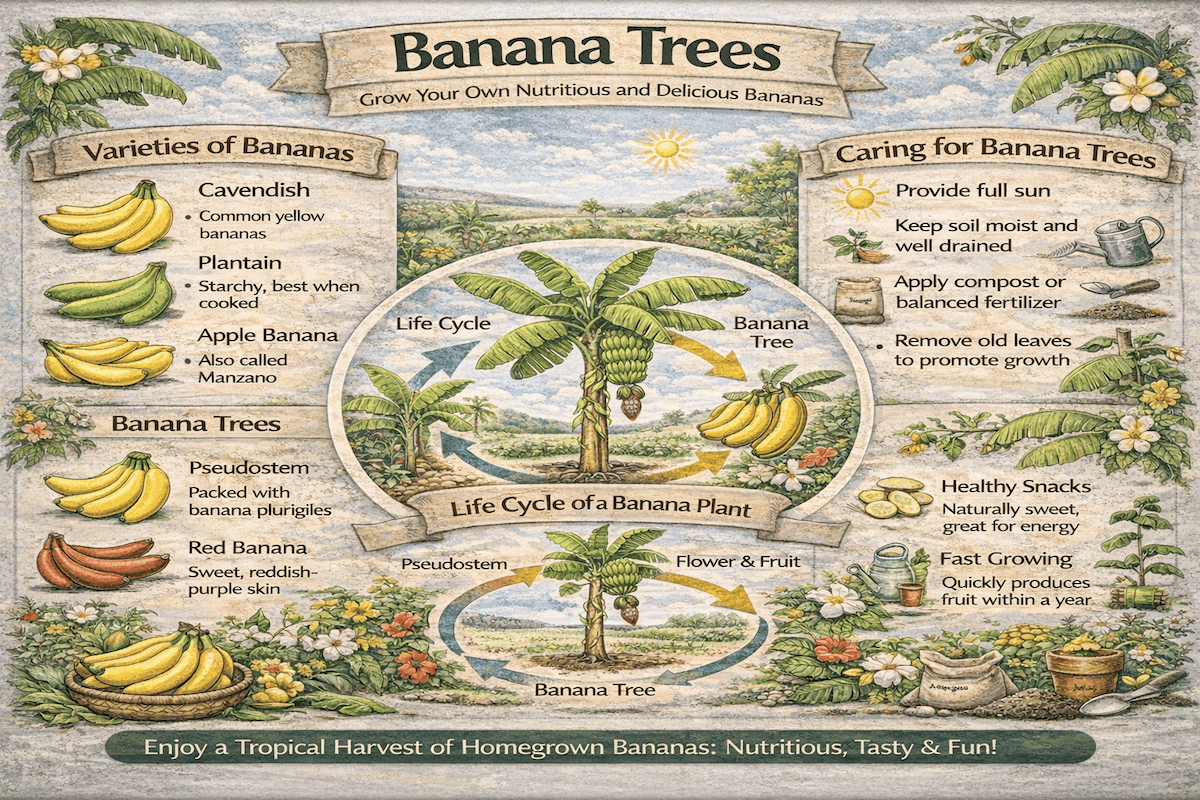
Banana trees are among the world’s most productive and fascinating fruiting plants, valued for their rapid growth, lush tropical appearance, and dependable harvests. Although commonly called trees, bananas are actually large herbaceous plants in the Musa genus, not woody trees like teak or mahogany. Their tall “trunk” is really a pseudostem, formed by tightly wrapped leaf bases that support the plant as it sends up broad leaves, a central flower stalk, and eventually a hanging cluster of bananas.
Banana plants thrive in warm, sunny, frost-free conditions with rich soil, regular moisture, and steady feeding. Under good growing conditions, a healthy plant develops quickly, producing large leaves that capture sunlight and fuel fast vegetative growth. At maturity, the plant sends a flowering stem up through the center of the pseudostem. This emerging flower eventually bends outward and downward, forming the familiar banana bunch. Each tier of fruit, often called a “hand,” develops in sequence, and multiple hands together make up the full bunch harvested from the plant.
One of the most interesting aspects of banana growth is that each pseudostem fruits only once. After producing bananas, that stem naturally declines and is usually cut back, while new shoots called pups or suckers emerge from the underground rhizome to continue the life of the plant. This growth cycle allows a banana planting to remain productive over time, with younger replacement stems always developing around the parent plant. Because of this regenerative habit, banana plants are especially useful in home gardens, tropical landscapes, and small food-producing systems.
Beyond their fruit, banana plants offer considerable value in sustainable gardening and tropical food production. Their large leaves help create shade, protect soil, reduce evaporation, and add abundant organic matter when pruned back and composted. In many parts of the world, bananas are a staple food crop as well as an important economic plant, providing fresh fruit, cooked plantains, livestock fodder, fiber, and leaves for wrapping food or ceremonial use. Their combination of beauty, speed, productivity, and practical usefulness makes banana plants one of the most rewarding species to grow in warm climates.

The Lady Finger Banana, for instance, is small and sweet, with a hint of honey-like flavor. The Red Banana, on the other hand, has a reddish-purple skin and offers a taste that's reminiscent of raspberries. For those with a penchant for something exotic, the Blue Java Banana, also known as the Ice Cream Banana, offers a creamy, vanilla-like flavor.
If you're looking for something more substantial, the Plantain Banana, also known as the cooking banana, might be the right choice. It's larger and starchier than most banana varieties and is often used in savory dishes. Other notable varieties include the Dwarf Cavendish Banana, Pisang Raja Banana, Gros Michel Banana, and Goldfinger Banana.
The cultivation of bananas plays a significant role in ensuring personal food security, particularly in tropical and subtropical regions where they are a dietary staple. Bananas, being one of the most consumed fruits worldwide, are not only rich in essential nutrients like potassium, vitamin B6, vitamin C, and fiber but also provide a continuous supply of food due to their perennial nature. Their fast-growing and high-yielding characteristics make them a reliable source of food and income for smallholder farmers, particularly in regions where seasonal changes can impact the availability of other food crops.
In developing nations, growing bananas in household or community gardens greatly contributes to food self-sufficiency. This can mitigate potential food shortages during periods of economic instability, natural disasters, or other unforeseen circumstances. Furthermore, bananas can be consumed in various forms, from fresh fruit to cooked dishes, and even the leaves are used in cooking in some cultures, ensuring minimal wastage. The cultivation of bananas for personal food security, therefore, not only provides a sustainable, nutritious food source but also encourages efficient use of resources and contributes to the resilience of local food systems.
Banana cultivation is a meticulous process that requires careful planning and execution. The process begins with the selection of a suitable planting site. Banana trees prefer well-drained, fertile soil with a pH level between 5.5 and 7.0. They also require ample sunlight and protection from strong winds.
Once the site is prepared, the next step is planting. Banana trees are usually propagated through rhizomes, also known as suckers. These are shoots that grow from the base of the banana tree, forming new plants identical to the parent plant. This method of propagation, known as vegetative reproduction, allows for the rapid multiplication of banana trees.
Rhizomes are carefully selected based on their size and health. They are then separated from the parent plant, ensuring that a portion of the root system is intact. This is followed by a period of hardening, where the rhizomes are left to dry and heal before being planted.
The use of rhizomes in banana propagation is beneficial in several ways. It ensures that the new plants carry the same genetic traits as the parent plant, thereby maintaining the quality and characteristics of the fruit. It also allows for quicker fruit production compared to propagation from seeds.
After planting, the banana trees require regular watering and fertilization to ensure healthy growth. Pests and diseases must also be kept under check to ensure the survival and productivity of the tree. With proper care, a banana tree can start producing fruit within 9 to 12 months of planting.
Banana plantations are a common sight in many tropical and subtropical regions. These vast expanses of land, filled with rows upon rows of banana trees, are a testament to the economic importance of this fruit. However, managing a banana plantation is no easy task.
A successful banana tree plantation requires a combination of favorable climate, fertile soil, and careful management. The trees need to be spaced appropriately to prevent overcrowding and promote healthy growth. Regular watering, fertilization, and pest control are also crucial to ensure a healthy and productive yield.

However, banana plantations are not without their challenges. Issues such as soil erosion, water pollution, and the spread of pests and diseases can pose significant threats to the sustainability and profitability of these plantations. Therefore, adopting sustainable farming practices is crucial to ensure the long-term success of these plantations.
When it comes to banana trees, it's not just the fruit that's valuable. The leaves of these plants are incredibly versatile and play a significant role in many cultures. They are large, flexible, and waterproof, making them suitable for a variety of uses.
In many parts of the world, banana leaves are used for cooking and serving food. They impart a subtle, sweet flavor to the food and make for a biodegradable and eco-friendly alternative to plastic or aluminum foil. Banana leaves are also used in many traditional and religious ceremonies, symbolizing prosperity and fertility.

In addition to their culinary and cultural uses, banana leaves also have several practical applications. They can be used for making baskets, roofing materials, and even as a natural fertilizer. This versatility makes banana leaves an invaluable resource in sustainable living.
Banana bunches, also known as hands, are a delightful sight. Each bunch consists of several tiers, with each tier containing a group of bananas known as a cluster. A fully grown banana tree can produce a bunch weighing up to 50 kilograms!
Just before the bunch emerges, the banana tree produces a large, beautiful flower known as the banana heart. This flower is also edible and is used in various cuisines for its unique flavor and nutritional benefits.
The formation of banana bunches and flowers is a complex process that involves the growth and maturation of the banana tree's inflorescence. This process is influenced by various factors, including the tree's health, the availability of nutrients, and environmental conditions.
Despite their resilience, banana trees are susceptible to a range of pests and diseases. These include the banana weevil, nematodes, and fungal diseases like Panama disease and Black Sigatoka. These pests and diseases can cause significant damage to banana trees, affecting their growth and productivity.
Early identification and treatment of these pests and diseases are crucial to prevent their spread. This typically involves regular inspections of the plantation, the use of biocontrol agents, and the application of fungicides and pesticides when necessary.
However, excessive use of these chemicals can harm the environment and the health of the plantation workers. Therefore, sustainable pest and disease management practices, such as crop rotation, the use of resistant varieties, and organic pest control methods, are increasingly being adopted.
Banana farming is both an art and a science. It requires a deep understanding of the plant's biology and cultivation requirements, as well as a keen eye for detail and a hands-on approach.
The art of banana farming involves nurturing the plants, observing their growth patterns, and adapting to the challenges posed by the environment. It requires patience, dedication, and a love for nature.
The science of banana farming, on the other hand, involves understanding the plant's physiology, soil science, pest and disease management, and post-harvest handling. It requires a systematic approach, analytical skills, and a commitment to continuous learning.
Balancing the art and science of banana farming is key to achieving a healthy and productive yield, while also promoting sustainable and eco-friendly practices.
Banana production is a global industry, with the fruit being grown in over 130 countries. According to the Food and Agriculture Organization of the United Nations, over 150 million metric tons of bananas are produced annually, making it one of the most important fruit crops in the world.
The majority of the world's bananas are produced in Asia, followed by Africa and Latin America. India, China, and the Philippines are among the top banana-producing countries. However, most of the bananas consumed in the Western world come from Latin America, particularly Ecuador and Costa Rica.
Despite its global reach, the banana industry faces several challenges. These include the threat of pests and diseases, climate change, and socio-economic issues such as low wages and poor working conditions for plantation workers. Addressing these challenges is crucial for the sustainability and future of this industry.
Planting banana trees can be a rewarding experience, whether you're a commercial farmer or a home gardener. Here's a step-by-step guide to get you started.
Prepare the Planting Site: Choose a sunny location with well-drained, fertile soil. Prepare the soil by removing any weeds or debris and adding compost or organic matter to improve fertility.

Select and Prepare the Rhizome: Choose a healthy, disease-free rhizome from a mature banana tree. Cut the rhizome away from the parent plant, ensuring that it has at least one bud or "eye." Let the cut surface dry and heal for a day or two before planting.
Plant the Rhizome: Dig a hole that's about twice as wide and deep as the rhizome. Place the rhizome in the hole with the bud facing upwards. Fill the hole with soil, leaving the bud slightly above the soil surface.
Water and Care for the Plant: Water the plant thoroughly after planting and continue to water regularly. Feed the plant with a balanced fertilizer every few months to promote healthy growth.
Remember, patience is key when growing banana trees. With the right care and conditions, your banana tree will reward you with a bounty of delicious fruit in due course.
Proper pruning and watering are crucial for the health and productivity of banana trees. When it comes to pruning, less is often more. The only parts that typically need to be removed are the dead or diseased leaves and the suckers or rhizomes that are not needed for propagation.

Watering, on the other hand, needs to be done regularly, especially during dry periods. Banana trees require a lot of water due to their large leaf area and fast growth rate. However, they don't like waterlogged soil, so good drainage is essential.
When watering banana trees, it's best to water deeply and thoroughly, ensuring that the water reaches the roots. The frequency of watering will depend on the climate, the soil type, and the size of the tree. In general, banana trees may need watering every 2 to 3 days during the dry season, and less frequently during the rainy season.
Banana cultivation has a promising future, thanks to the growing awareness of sustainable farming practices and the increasing demand for this versatile fruit. Innovations in pest and disease management, genetic improvement of banana varieties, and the development of climate-smart farming techniques are paving the way for a more sustainable and resilient banana industry.
At the same time, banana trees continue to play a significant role in promoting sustainable living. From their ability to improve soil fertility and sequester carbon, to the multitude of uses of their fruit, leaves, and even their trunks, banana trees are truly a powerhouse of sustainability.
As we move towards a more eco-friendly and sustainable future, let's not overlook the potential of banana trees. Whether it's in our backyards or on a global scale, these humble plants have much to offer in our quest for sustainability.
In warm, frost-free climates, most dessert banana trees (Musa spp.) will flower about 9–15 months after planting a healthy sucker or tissue-culture plant. Fruit then takes another 2–6 months to fill and ripen, depending on variety, temperature, and watering. In cooler subtropical climates or during drought, the clock slows, and it may take closer to 18 months from planting to harvest.
For small yards and urban gardens, look for compact or wind-tolerant varieties such as Dwarf Cavendish, Dwarf Brazilian, Rajapuri, and Goldfinger. If you have room and a warm climate, try specialty types like Blue Java (“Ice Cream” banana), Lady Finger, or dual-purpose plantains for cooking and frying. When space is tight, mix bananas with other fruit trees and perennial vegetables in an agroforestry or permaculture-style planting.
Bananas love full sun and warmth, but they dislike strong, drying winds. Choose a spot with at least 6–8 hours of direct sun daily, good air flow, and some protection from storm gusts—such as the lee side of a fence, building, or a row of palm trees or other wind-tolerant species. Avoid low, frost-prone pockets and areas where water puddles around the roots.
Banana trees perform best in deep, fertile, well-drained soil with a pH of about 5.5–7.0. Sandy loams enriched with compost are ideal, but they can also grow in heavier soils if you add organic matter and ensure drainage. Before planting, loosen the soil at least 18–24 inches deep and mix in compost, aged manure, or well-rotted mulch to boost moisture retention and microbial life.
Bananas are thirsty plants. In warm weather they usually need frequent, deep watering, especially in sandy soils. Aim to keep the root zone consistently moist but never waterlogged. In the growing season, this may mean watering every 1–3 days depending on your climate, soil type, and mulch depth. Drip irrigation or soaker hoses under a thick mulch layer work well to conserve water and avoid leaf disease.
Banana trees are heavy feeders. Use a mix of slow-release organic matter (compost, aged manure, chopped leaves, and grass clippings) plus a balanced granular fertilizer or organic blend. Feed lightly but often during the warm season—every 4–6 weeks for backyard plants, or smaller doses every 2–3 weeks in intensive plantings. High potassium (K) supports strong stems and fruit fill, while nitrogen (N) drives leafy growth. Avoid piling fertilizer against the pseudostem; instead, apply it in a ring around the drip line.
For most dessert bananas, plant mats about 8–12 feet (2.5–3.5 m) apart, depending on variety and how intensively you plan to manage them. Closer spacing can work in wind-sheltered sites with careful pruning and feeding. On small farms or food forests, you can use a tree spacing calculator to visualize different layouts and interplant bananas with nitrogen-fixing shrubs, groundcovers, and trees.
Yes—many gardeners successfully grow dwarf banana varieties in large pots. Choose a container of at least 20–30 gallons (75–115 L) with excellent drainage. Use a rich, peat-free potting mix amended with compost, and water more often than in-ground plants since containers dry out quickly. Feed lightly but regularly during the warm season. In cooler climates, roll containers into a greenhouse, sunroom, or bright indoor space for winter protection.
A healthy banana mat constantly produces pups (suckers) from the underground corm. For best yields, keep a simple succession: one fruiting stem (the mother), one follower of mid-size, and one small pup. Remove extra pups with a clean, sharp spade, cutting below the soil surface. You can replant good suckers elsewhere or share them with neighbors. Proper pup management concentrates water and nutrients into fewer, stronger bunches.
Common issues include banana weevils, nematodes, leaf spot diseases like Black Sigatoka, and wilts such as Panama disease (Fusarium). Practice good hygiene: remove and compost infected leaves away from the mat, keep weeds down, improve air flow, and avoid overwatering. Use clean planting material, rotate or diversify varieties, and favor resistant cultivars when possible. On small scales, biological controls and organic sprays often work well, especially when combined with healthy soil and good drainage.
Large banana leaves tear easily in strong winds, which can reduce photosynthesis and stress the plant. In windy sites, create shelterbelts using hedges, living fences, or rows of landscape trees. You can also stake young bananas and keep old, shredded leaves trimmed away before storms. Well-fed, well-watered plants with strong pseudostems are more resilient during high winds.
Bananas are sensitive to frost. Before cold snaps, water deeply, add extra mulch over the root zone, and wrap the pseudostem with breathable insulation such as burlap or straw under netting. In borderline climates, cut the leaves back after frost and protect the corm; new pups will often emerge in spring. Container plants can be moved under cover, into a garage, greenhouse, or bright indoor window until danger of frost has passed.
Harvest timing depends on variety, but most bananas are cut when the fruits are full-sized, with rounded edges and a slight color change from deep green to lighter green. Cut the whole bunch with a sharp knife or saw, supporting the weight so it doesn’t snap the plant. Hang the bunch in a cool, shaded place to ripen, or cut hands as needed. Leave the trunk standing until it’s convenient to chop and use as mulch around the mat.
Banana plants are almost zero-waste. Leaves can be used for cooking wraps, serving plates, roof thatch, crafts, and festival decorations. Chopped stems and trunks make excellent mulch, adding moisture and organic matter to the soil. On small farms and homesteads, banana leaves and trunks can be integrated into biomass and compost systems to build soil, store carbon, and reduce dependence on outside inputs.
Banana trees fit naturally into regenerative agroforestry systems. Their broad leaves shade soil, reduce erosion, and drop organic matter that feeds microbes. Deep, fibrous roots help stabilize slopes and capture nutrients, while perennial production supports food security for households and communities. When intercropped with nitrogen-fixing trees, shade-tolerant crops, and mulch crops, bananas help farmers adapt to climate change while producing reliable food and income.
Copyright © All rights reserved Tree Plantation