

 INVEST
 PLANT
PLANT
 SOFTWOODS
 HARDWOODS
 CALCULATORS
 RESOURCES
 PROGRAMS

Softwoods
Learn More
Before the Forest Comes the Tree
Growing To Give is developing an innovative high-density tree nursery inside an existing 110-foot-diameter water tank in Cashmere, Washington. The facility is being designed to accelerate the early development of thousands of hardwood trees before they are transplanted into future Spiral Forests.
Explore the full Growing To Give Spiral Forest initiative
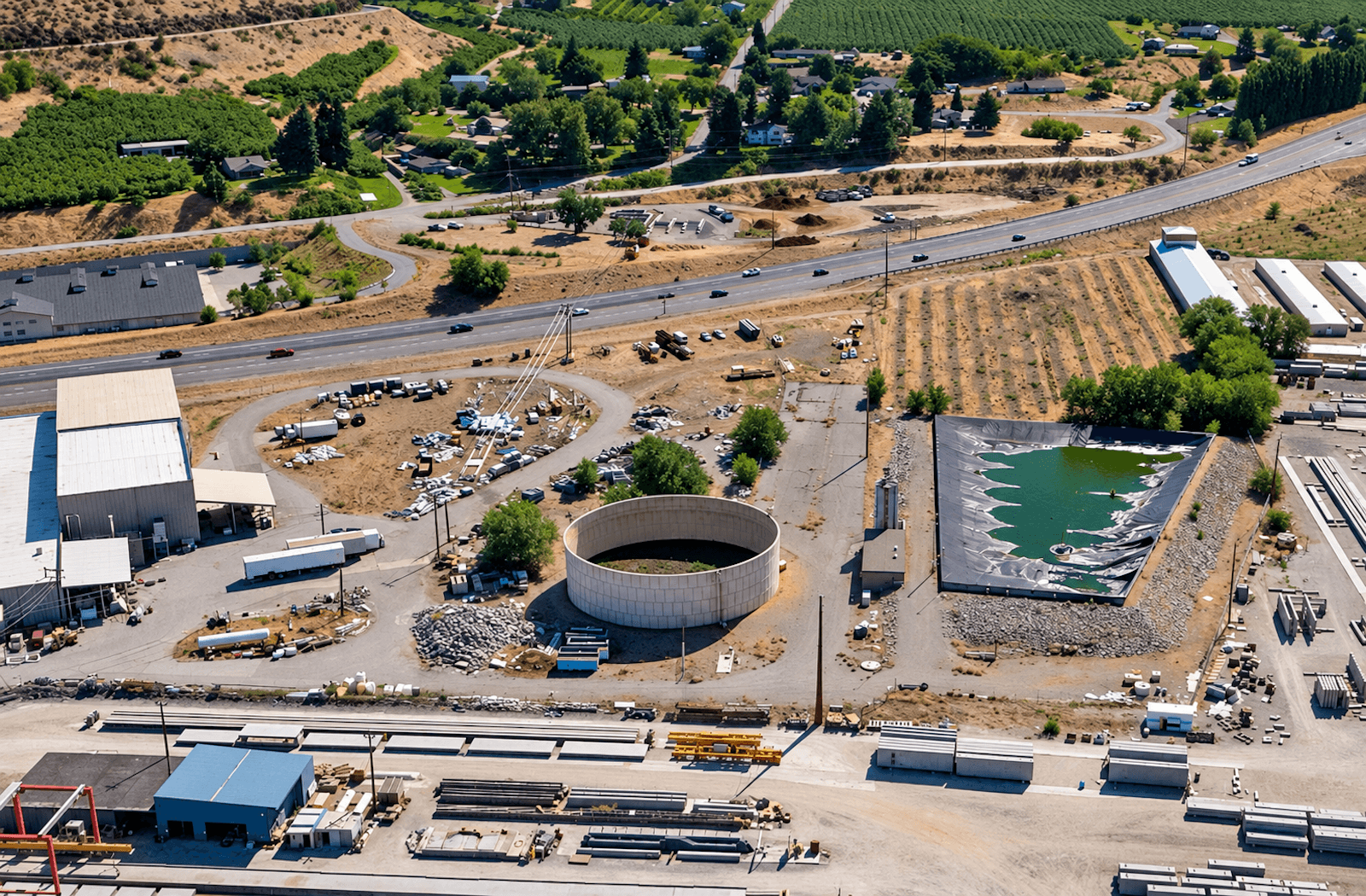
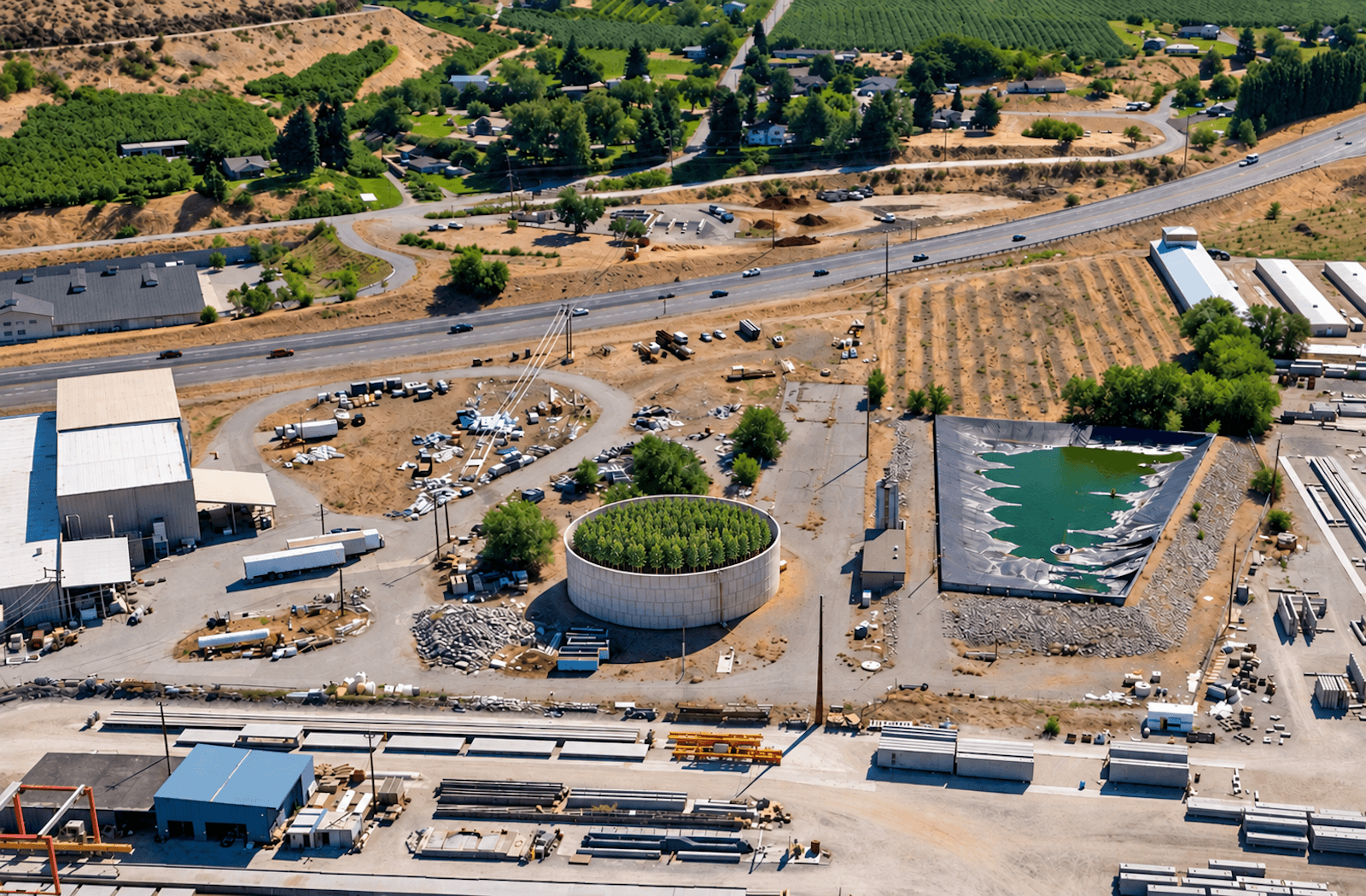
Instead of planting very small trees in the field and waiting years for a young forest canopy to emerge, the Tree Accelerator is designed to condition trees during one of the most important stages of their development.
The current concept begins with approximately 3-year-old hardwood trees measuring about 2–3 feet tall. After roughly three growing seasons inside the tank, the goal is to produce advanced, transplant-ready trees approximately 15–20 feet tall with strong central stems, elevated crowns and well-developed root systems.
The existing tank creates a rare opportunity to combine high-density tree production, root-zone irrigation, controlled access and natural overhead sunlight in a facility purpose-built to prepare advanced trees for large-scale forest restoration.
Tree Accelerator Partners & Sponsors
Project partners and sponsors help Growing To Give develop the Tree Accelerator and build the foundation for future Spiral Forest installations.


SEEDLINGS • SURVIVAL • ROI
Wondering which tree seedlings are best for your project? Tree seedlings are typically grown as plug, bare-root, or container stock, and the right choice directly impacts survival rate, planting speed, labor cost, and long-term return on investment.
🌱 Quick answer: Plug seedlings usually offer the highest survival rates (often 85–95%+), bare-root seedlings are the lowest cost upfront, and container trees provide the most flexibility in planting timing.
Example: A large planting project using plug seedlings may cost more per tree, but higher survival rates can reduce replanting and labor—often resulting in a better overall cost per successful tree.
The best seedling choice depends on how many trees you’re planting, how quickly you need canopy closure, and how much labor you can support. These tradeoffs become clearer when you compare outcomes below.
While AI can explain what seedlings are, it cannot determine which option works best for your land, climate, and budget. That decision depends on real-world variables you can model.
Next step: Use the calculators below to model tree spacing, planting density, and long-term ROI, then explore planting techniques and cost comparisons further down the page.
| Seedling Type | Survival Rate | Planting Window | Labor | Best Use |
|---|---|---|---|---|
| Plug Seedlings | High | Wide | Low–Medium | Reforestation, timber, carbon projects |
| Bare-Root | Moderate | Narrow (dormant) | Medium | Large conservation plantings |
| Container Trees | High | Very wide | Low | Landscaping, urban forestry |
| Tall Saplings | Very high | Wide | Low | Fast ROI, browse-heavy sites |
Model your plan: Tree Spacing Calculator • Tree Value Calculator • Tree Carbon Calculator • Woodlot Estimator
These tradeoffs are why calculators outperform generic advice—use them to compare scenarios before ordering stock.
The term tree seedlings was coined over a century ago to describe the commercial cultivation of young trees for forestry, farming, and landscaping. Since then, innovations in nursery technology have dramatically increased productivity and survival rates. Early on, seedlings were raised outdoors in cultivated rows of native soil and planted and harvested entirely by hand. By the 1950s, the propagation of seedlings from tree seeds became mechanized, allowing nurseries to sow, thin, and lift millions of trees per year.
In the late 1960s, propagation shifted indoors into controlled environments, where temperature, humidity, and light could be managed to produce stronger, more uniform seedlings. By the 1970s, purpose-designed growing trays and plug systems made it possible to cultivate very high densities of seedlings with consistent root structure, turning tree seedlings into a reliable and highly profitable agricultural crop. Today, tree seedlings underpin modern reforestation, agroforestry, urban forestry, and climate-smart carbon projects around the world.
The tree seedling industry expanded rapidly with the introduction of government reforestation programs and tax incentives that encouraged logging companies and landowners to replant harvested areas, especially on public or crown land. State and provincial nurseries began contracting private growers to supply bare-root and plug seedlings for large-scale planting campaigns.
By the 1980s, private nurseries started cultivating multi-year hardwood and softwood seedlings to meet demand for taller, more mature trees. These larger seedlings and saplings serve the landscape market—homeowners, developers, municipalities, and commercial projects that require instant impact and higher survival rates. Today, tree seedlings are an essential input for:
Modern nurseries grow tree seedlings in three primary formats for both wholesale and retail markets. Each format has its own economics, risk profile, and ideal end use.
Tree seedlings, regardless of type or size, play a crucial role in reforestation, afforestation, landscaping, windbreaks, erosion control, rewilding, tree plantations, climate change mitigation, biomass production, and ecosystem restoration. For landowners, seedlings represent the starting point of a long-term, appreciating tree asset.
Use the free Tree Spacing Calculator to determine optimal spacing between seedlings in new plantations, windbreaks, and mixed-species plantings. Proper spacing improves growth rates, timber quality, and long-term returns.
Tree seed propagation uses several methods depending on species, scale, and end use, including industrial grow trays, bags and pot containers, cultivated open fields, cuttings, and grafting. Each method is designed to optimize growth, root health, and transplant success for applications such as reforestation, landscaping, agroforestry, and biomass or carbon projects.
The best propagation method depends on species, site conditions, budget, and the final objective of the seedlings, whether that’s high-volume reforestation, premium landscape trees, or intensive agroforestry systems.
For timber investors and landowners, time to harvest is the single most important driver of ROI. Planting 10-foot-tall, branch-free seedlings can reduce harvest cycles by as much as 10 years, enabling returns in approximately 30 years instead of 40 for hardwoods like oak, maple, teak, and rosewood, and 20 years instead of 30 for softwoods such as pine or spruce.
Margins for plug and bare-root seedlings are slim because of high risks—disease outbreaks, weather damage, contract cancellations, and fluctuating demand. Growers must produce millions of seedlings to generate significant profit. In contrast, specializing in tall saplings can be far more lucrative.
Starting with a 1- or 2-foot seedling in a proprietary grow pot, growers can cultivate 10–15-foot, branch-free saplings worth hundreds—even thousands—of dollars each, compared with pennies for small plug seedlings. Tall saplings are highly sought after for premium landscaping, rapid restoration, and high-value timber plantations.
Tall saplings provide multiple advantages: faster ROI, higher survival rates, reduced animal damage, accelerated ecosystem restoration, erosion control, and rapid carbon sequestration that can be tracked using tools like the Tree Carbon Calculator.
Traditional plug seedlings often suffer from transplant shock because of small, underdeveloped root systems. This can result in high mortality, especially under drought or heat stress. Tall saplings grown in advanced nursery systems develop deep, fibrous roots that adapt quickly after planting. Survival rates can approach near 100% one year after transplant when proper site preparation and planting techniques are used.
Deer, elk, and other browsing animals can devastate young plantations by feeding on tender shoots and side-branches. Planting 8–10-foot-tall saplings places the crown of the tree safely above typical browse height. Early years are the most vulnerable period for a plantation; tall saplings significantly reduce damage and the need for costly fencing or guards.
In landscapes damaged by clear-cutting, mining, or wildfire, tall saplings dramatically shorten the time needed to re-establish forest structure. Their rapid canopy development:
Post-fire and post-logging hillsides are highly vulnerable to erosion and landslides. Planting tall saplings in combination with horizontal trenching or contour ripping helps trap water and sediment on site, stabilizing slopes and protecting downstream infrastructure. Deep root systems lock soil in place while the emerging canopy shields bare soil from intense rainfall.
Wild trees often have twisted, forked stems and large lower branches that limit their commercial value. By starting plantations with tall, straight, branch-free saplings and maintaining proper spacing, growers can produce long, clear stems ideal for veneer, furniture timber, and premium structural lumber. In many regions, this approach can yield harvestable grade-1 sawlogs in about 30 years.
A young forest typically takes around 12 years to develop enough canopy to capture roughly one ton of CO₂ per acre annually. Tall saplings may reduce this to as little as three years, because more leaf area and woody biomass are present from day one. For landowners and organizations participating in carbon credit projects, tall saplings offer a faster path to measurable sequestration, which can be tracked with the Tree Carbon Calculator and related tools.
Use the Tree Carbon Calculator to estimate how much carbon your seedlings and tall saplings capture each year as they grow into a mature forest.
Tree Plantation nurseries specialize in raising tree seedlings that are tall, straight, and branch-free along most of the trunk. The photo below shows one of our tall pine tree seedlings four years after transplant. It has a 3-inch caliper and a height of 27 feet. The stem is almost completely branch-free, which means that, at harvest in approximately 20 years, this tree will produce knot-free wood suitable for top-grade veneer or structural timber.
This approach—starting with small seedlings and growing them into tall, plantation-ready trees—delivers superior timber quality and faster returns for landowners who are serious about sustainable forestry.

Our Pyramid Tree Pots are engineered to grow trees in the same pot for up to 20 years. Their pyramid shape follows the natural root habit of a tree, which is bottom-half hourglass-shaped. This geometry encourages superb root development and rapid terminal leader growth, which determines the future height and straightness of the tree.
The formed root plug and tall stem virtually eliminate the need for after-planting supports and guy wires. Pots can be quickly assembled and disassembled for planting and harvest. The compact, uniform root system also makes tall trees easier to transport by container, truck, or trailer. In the field, tall trees are transplanted using a PTO tractor-mounted post-hole digger. Pyramid Tree Pots are used once and then recycled, aligning with sustainable nursery practices.
Our tree pallet propagation system grows seedlings an additional 10 feet in height over 5–6 years. Each pallet features parallel rows of vertical 6-inch-wide x 36-inch-deep tree pots arranged in 20-foot lengths. Each length grows 40 trees, and multiple lengths are laid out side by side on a rubberized, weatherproof ground cover.
An elevated drip irrigation system delivers precise water to each tree. Elevated walkways between rows allow for efficient pruning, inspection, and height control. The entire tree pallet system is modular, reusable, and recyclable, making it ideal for regional networks of tall-tree growers.
We are building a nationwide network of tall tree growers. Local growers eliminate the need for long-haul shipments of trees that could be grown closer to where they are planted. This creates a home-based business opportunity capable of generating significant income.
The basic requirements are simple: a small plot of land, modest capital, a water source, and a willingness to grow a portion of the trees for our programs—the rest you can sell into your local market for whatever the market will bear. Commercial tree species are in high demand for reforestation, landscaping, and carbon projects.
We supply everything else—site installation, pyramid pots, optimized soil mix, seedling starts, irrigation lines, and attachments—along with technical support and training.
A breakthrough in desert tree irrigation, the Deep Root Irrigator is a revolutionary technology designed to deliver water directly to the roots of trees growing in arid conditions. Engineered from high-grade iron, the irrigator is permanently embedded below grade near the tree, where it channels water to a depth of approximately four feet. This ensures that moisture reaches the deepest roots, promoting healthy growth while minimizing water waste. Highly efficient, the Deep Root Irrigator can saturate a five-foot diameter area around the tree in about 20 minutes—an ideal solution for regions with scarce water resources.
The irrigator’s design offers dual benefits. Over time, the iron structure naturally decomposes, slowly releasing trace nutrients into the soil and enriching the tree’s root environment. This reduces reliance on chemical fertilizers. Deep placement of water dramatically lowers surface evaporation, ensuring that every drop is used by the tree.
This innovative approach, developed by Tree Plantation, a division of New Leaf Technologies LLC, supports the establishment of robust trees capable of withstanding harsh desert climates. It is a game-changer for sustainable desert reforestation, oasis farming, and shelterbelt projects in water-limited environments.
Explore more articles and guides on trees, forests, and climate solutions from Tree Plantation.
Partner with us in a land management and reforestation project to repurpose agricultural lands into appreciating tree assets. We have partnered with growingtogive.org , a 501(c)(3) nonprofit, to create tree-planting partnerships with land donors.
We have partnered with growingtogive.org , a Washington State nonprofit, to create a land-and-tree partnership program that repurposes agricultural land into appreciating tree assets.
The program uses privately owned land to plant trees that benefit both the landowner and the environment. If you have 100 acres or more of flat, fallow farmland and would like to plant trees, we would like to talk to you. There are no costs to enter the program. You own the land; you own the trees we plant for free. There are no restrictions—you can sell or transfer the land with the trees at any time.
A tree seedling is a young tree grown from seed in a nursery setting, typically ranging from a few inches to a few feet tall. Modern nurseries raise seedlings in controlled environments using trays, containers, or open-field beds to produce dense, healthy root systems and uniform above-ground growth. These seedlings are the starting point for reforestation, agroforestry systems, shelterbelts, urban plantings, and timber plantations.
Plug tree seedlings are grown in multi-cell trays where each seedling occupies its own “plug” of growing media. The plug is usually conical or cylindrical and produces a compact, well-formed root system that can be planted quickly with a dibble bar, planting spade, or mechanized planter. Plug seedlings are the workhorse of commercial forestry because they are easy to handle, ship, and plant at scale while maintaining high survival rates.
Plugs come with their root system enclosed in media, which protects roots during handling and reduces transplant shock. They are ideal for reforestation projects, private woodlots, and climate-focused tree plantations where speed and uniformity matter.
Bare-root seedlings are grown in cultivated nursery fields and lifted with no soil attached to the roots. They are bundled and stored cool until planting. Bare-root stock offers excellent value per tree and is widely used in conservation and large-scale planting programs, but requires careful handling to prevent roots from drying out.
Container-grown trees spend several years in pots or grow bags and are sold as tall saplings or small trees, often 6–20 feet high or more. They cost more per tree but provide instant visual impact, high establishment success, and shorter time to canopy closure—ideal for streetscapes, parks, and high-value timber plantings.
Choose plug seedlings when you need rapid planting, higher early survival, and more flexibility in planting dates. Because plug roots are protected by media, they can be planted whenever soil is workable, not just in a narrow dormant-season window. Plugs are especially useful in remote or rough terrain where planting crews must move quickly and carry many seedlings at once.
For most projects, you only need a few basic tools: a dibble bar or narrow planting spade, gloves, and a planting bag or bucket for carrying seedlings. On rocky or compacted ground, a pick or digging bar helps open narrow planting slits or holes. For large commercial sites, mechanized tree planters pulled behind a tractor can install thousands of plug seedlings per day.
Seedling spacing depends on your goal—timber, biomass, windbreaks, or ecosystem restoration. Tight spacing produces more stems per acre and encourages straight, knot-free trunks; wider spacing allows larger crowns and faster diameter growth on fewer stems.
Use the free Tree Spacing Calculator to plan row spacing, in-row distance, and total trees per acre for new plantations, shelterbelts, and mixed-species plantings.
Tree seed propagation refers to the techniques used to grow new trees from seed or vegetative material. Methods include industrial plug trays, bag and pot containers, open-field beds, rooted cuttings, and grafting. The propagation method influences root structure, growth rate, and transplant success, which in turn affects survival rates, time to harvest, and long-term return on investment.
Plug trays grow seedlings in individual cells, creating uniform root plugs that establish quickly. They are ideal for high-volume forestry and carbon projects where consistency and mechanized planting are priorities.
Seedlings grown in fabric bags or rigid pots can be held longer and grown larger before sale. Fabric bags air-prune roots, encouraging a dense, fibrous root system, while pots are durable and reusable. These seedlings are common in nurseries serving landscapers and garden centers.
Seedlings grown in raised nursery beds and lifted as bare-root stock deliver robust plants at a low per-tree cost. This method suits large conservation and reforestation programs needing millions of seedlings.
For species that root readily from cuttings—such as hybrid poplar, willow, and some eucalyptus—nurseries propagate clones for uniform growth, disease resistance, or specialized traits, which is valuable in biomass and short-rotation plantations.
Grafting joins a chosen scion to a reliable rootstock and is the standard for high-value nut trees, orchard trees, and specialty crops like truffle trees. It ensures uniform yield, flavor, and disease resistance.
For investors and landowners, time to harvest is a key driver of ROI. Starting plantations with 8–15-foot, branch-free saplings can shorten the rotation by a decade or more. Instead of waiting 40 years to harvest veneer-quality hardwoods, you may reach target size in about 30 years. Softwoods such as pine or spruce can reach pole or sawlog size in roughly 20 years instead of 30 when planted as tall saplings instead of small plugs.
Tall saplings cost more because they occupy nursery space longer, require more inputs, and need larger containers or grow bags. However, they provide several advantages:
For high-value timber, premium landscaping, or urgent restoration projects, the extra upfront cost can be offset by reduced losses, faster growth, and earlier revenue.
Browsing animals typically feed within the first few feet above ground, stripping foliage and side branches from small seedlings. When you plant 8–10-foot saplings, most of the live crown sits above normal browse height. The trunk may still need protection in some regions, but the risk of total top-kill is greatly reduced compared with 12–18-inch plug seedlings.
Yes. On steep or disturbed sites—such as burned hillsides or clear-cut slopes—tree seedlings knit soil together with their roots and rebuild a protective canopy. Tall saplings combined with contour ripping, trenching, or micro-catchments can dramatically reduce surface runoff, trap sediment on site, and stabilize slopes. Over time, the developing forest canopy shades soil, moderates temperature extremes, and supports the return of understory plants and wildlife.
Growing trees absorb carbon dioxide and store it in trunks, branches, roots, and soil organic matter. A young plantation of small seedlings may take a decade or more to develop enough canopy to sequester roughly a ton of CO₂ per acre per year. When you start with tall saplings, that threshold can be reached much sooner because the trees already have significant leaf area and woody biomass.
You can estimate the annual and lifetime carbon captured by your trees using the Tree Carbon Calculator, especially when planning climate-change and carbon-credit projects.
The ideal number of seedlings per acre depends on species, site quality, management intensity, and your end market (pulpwood, biomass, poles, or sawlogs). High-density plantings create natural self-thinning and encourage straight, knot-free stems; lower densities reduce competition and focus growth on fewer, larger trees.
Start by testing different spacing scenarios with the Tree Spacing Calculator, then combine those results with financial models and local advice to refine your planting plan.
Tree Plantation offers several free tools and reference pages to help you plan profitable and climate-smart tree projects:
Copyright © All rights reserved Tree Plantation