



 INVEST
 PLANT
PLANT
 SOFTWOODS
 HARDWOODS
 CALCULATORS
 RESOURCES
 PROGRAMS





🌳 Wood Biomass Energy Systems
Logs, chips, pellets, and forestry residues used for heat, power, and fuel production.
A complete guide to biomass as a renewable energy source and ecological resource, including how it works, types of biomass, and high-performance biomass crop systems.
In energy systems, biomass refers to renewable organic fuel sources. In ecology, it refers to the total mass of living organisms in a given area.
Use our biomass calculator to estimate biomass yield, harvest volume, energy potential, and land productivity for willow, fast-growing trees, grasses, and other biomass crops.
Use the Biomass Calculator →BIOMASS TYPES • ENERGY SOURCES • ORGANIC MATERIALS
Biomass comes from a range of organic materials, each with different energy potential, availability, and best-use applications.
Logs, chips, pellets, and forestry residues used for heat, power, and fuel production.
Fast-growing plants like willow, miscanthus, and switchgrass designed for high biomass yield.
Crop waste such as corn stover, husks, and straw repurposed for renewable energy.
Food waste, manure, and organic byproducts converted into biogas and energy.
Different biomass crops serve different roles in renewable energy systems. Some are grown for rapid annual harvests, while others are managed in short-rotation coppice or longer tree-based systems that provide both biomass and wood products.
The table below compares several of the most important biomass crops by harvest cycle and primary use.
| Crop | Harvest Cycle | Main Use |
|---|---|---|
| Willow SRC | 2–4 years | Wood chips, combined heat and power (CHP), district heating |
| King Grass | Annual | Pellets, direct combustion, biofuel feedstock |
| Paulownia | 5–7 years | Timber + biomass, coppice systems, lightweight wood products |
| Bamboo | 3–5 years | Biomass + timber, renewable fuel, construction material |
Choosing the best biomass crop depends on climate, soil conditions, available equipment, harvest cycles, and long-term project goals. Some systems are optimized for rapid fuel production, while others are designed for timber, carbon sequestration, or integrated land-use strategies. Understanding biomass yield per acre is critical when comparing crops, as yield directly impacts energy output, revenue potential, and land efficiency. In addition to yield, project viability is influenced by market demand, processing infrastructure, and overall economics. Reviewing energy crop profitability can help determine which species and systems deliver the strongest financial returns under specific conditions. Many high-performing biomass systems are now designed as integrated agroforestry systems, where trees, crops, and sometimes livestock are combined to improve soil health, increase biodiversity, diversify income streams, and enhance long-term sustainability. These systems can outperform single-use biomass plantations by producing both energy feedstocks and valuable co-products over time.
Feel free to share this biomass infographic on your website or blog. Please include a link back to this page as the source.
This biomass infographic explains biomass types, biomass yield per acre, energy conversion systems, and renewable fuel applications. It is part of our complete biomass guide and links to tools including the biomass calculator, wood biomass systems, energy crops, and organic waste energy.
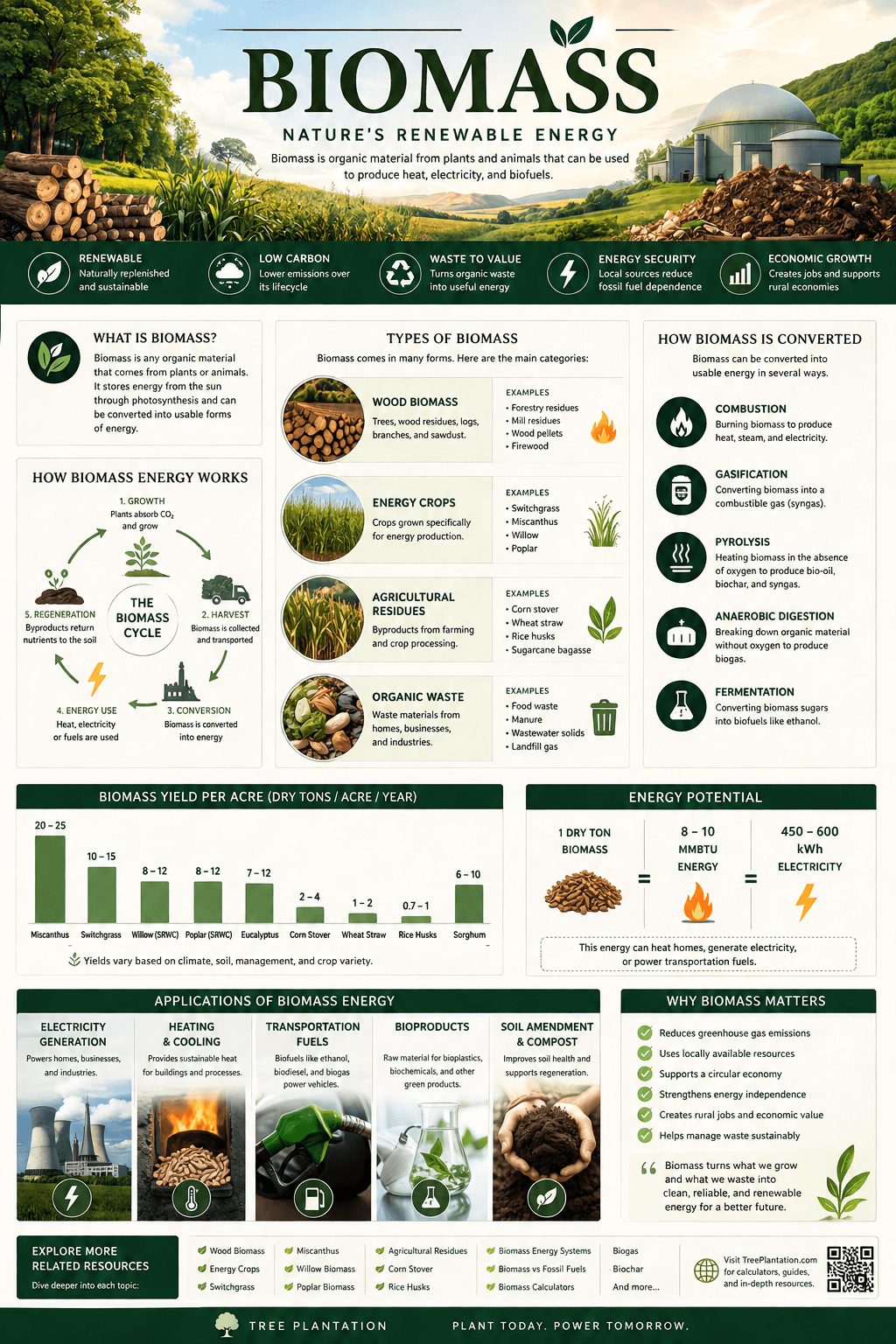
Biomass energy plays an important role in the global transition toward renewable energy systems. By converting organic plant material into usable fuel, biomass can provide reliable energy while supporting sustainable land management and rural economies.
When integrated with sustainable forestry, agroforestry systems , and responsible land management practices, biomass energy can contribute to both environmental restoration and long-term energy resilience.
One of the most important factors in evaluating biomass energy crops is how much usable plant material can be produced per acre each year. Fast-growing grasses and coppiced trees can generate large amounts of renewable fuel, making them attractive for both farm-scale energy systems and commercial biomass power plants.
The table below shows typical yield ranges for several common biomass crops. Actual production depends on climate, soil conditions, irrigation, fertilization, and management practices.
| Crop | Typical Yield |
|---|---|
| Willow SRC | 8–12 tons per acre per year |
| King Grass | 20–40 tons per acre per year |
| Paulownia | 10–15 tons per acre per year |
High-yield biomass crops can be integrated into agroforestry systems or planted in dedicated energy plantations to produce renewable fuel while improving soil structure and capturing atmospheric carbon.
Estimate biomass yield, harvest cycles, coppicing performance, and per-acre profitability across multiple tree species and climate regions. Compare dry vs green tons and model short-rotation biomass systems with confidence.
Energy from biomass can be produced through several thermochemical and biological conversion technologies, each with its own benefits, feedstock requirements, and best-fit applications:
Unlike solar or wind, which are intermittent, biomass energy is dispatchable—plants can be designed to run on demand, supporting grid stability. Biomass can be used on its own or integrated into existing fossil fuel infrastructure to reduce emissions without rebuilding the entire system from scratch.
Common applications include:
When designed well, biomass systems can help restore degraded soils, provide new markets for farmers, and integrate with reforestation and climate-change mitigation projects.
Woody biomass crops dominate global biomass production, contributing roughly 70% of the market due to their efficiency and high energy output. Trees such as Willow, hybrid Poplar, Paulownia, American basswood, and certain bamboo species are especially valued for their superior heat-to-plant-mass conversion rates, meaning less material is required to generate a given amount of energy compared with many grasses.
These crops typically show high BTU (British Thermal Unit) values per pound, uniform moisture content when properly dried, and predictable behavior in furnaces and boilers. Compared to grasses, biomass tree crops offer greater sustainability and scalability for long-term renewable energy projects, especially when integrated with tree seedling programs and multi-purpose timber or carbon plantings.
To fully realize the climate benefits of woody biomass, it is essential to use sustainable plantation designs, avoid deforestation, and combine biomass harvests with soil protection, wildlife corridors, and long-rotation tree planting for carbon storage.

Fast-growing tree crops behave differently than annual grasses or crop residues. When managed in short-rotation coppice systems, they offer several advantages for both landowners and biomass power operators:
Woody biomass also comes with practical and economic considerations that must be weighed against its advantages:
Classified as a softwood, hybrid poplar trees are fast-growing and adaptable to various soils and climates. In optimal conditions—loose, well-fertilized loam, regular rainfall or irrigation, and full sun with daytime temperatures around 80°F—hybrid poplars can grow more than 5 feet each year. Their rapid growth and short rotation cycles make them an excellent choice for dedicated biomass plantations, shelterbelts, and riparian buffer zones that also protect waterways.
Basic steps for establishing a hybrid poplar biomass plantation:
Growing hybrid poplar as a biomass crop offers a sustainable and profitable opportunity for landowners who want to combine bioenergy production with windbreaks, erosion control, and improved soil health.
Paulownia, also known as the Empress Tree, is a fast-growing tree native to China that has gained popularity as a biomass crop due to its adaptability and high yield. It thrives in parts of the United States, Europe, and warmer temperate regions, making it a viable option for renewable energy production. While its calorific value is about half that of dense hardwoods, Paulownia’s very low wood density lowers transportation costs and speeds chipping and fiber breakdown, reducing total processing costs per ton of energy delivered.
Paulownia is frequently cultivated for biomass because of its quick rotation cycle, ability to coppice after harvest, and tolerance for a range of soils and climates. It can also be integrated into agroforestry systems where shade-tolerant crops grow between tree rows. Here are essential tips for growing Paulownia for biomass production:
When combined with careful planning, regular maintenance, and efficient harvesting, Paulownia can become a core species in diversified biomass energy portfolios.

American basswood, native to the Great Lakes basin of North America, thrives in regions with cold continental winters, warm summers, and humid to sub-humid moisture conditions. Juvenile basswood exhibits rapid growth, averaging more than 5 feet per year from the second to the tenth year after planting. By this stage, trees often reach 40 feet or more in height with average stem diameters of 8 inches.
Thanks to its fast growth rate and high wood volume, basswood is an excellent candidate for biomass tree plantations, shelterbelts, and mixed-species plantings with other hardwoods. While similar to Paulownia in growth speed, American basswood is generally more affordable to source and plant, providing an attractive option for large-scale biomass programs and reforestation projects.
American basswood has only recently gained attention in the biomass industry, yet it is native to large areas of prime land around the Great Lakes that have remained underutilized for decades. Seed is abundant and well-adapted to local climates, making seedling production and field planting cost-effective.
Planting design tips for basswood biomass plantations:
This combination of rapid growth, low maintenance, and flexible spacing makes American basswood a promising choice for landowners who want to combine biomass production with wildlife habitat, pollinator support, and long-term carbon storage.

Willow wood is emerging as one of the most productive short-rotation woody crops for bioenergy. In nature, willow thrives in riparian zones and wetlands where the water table remains high throughout the growing season. Modern breeding programs have created hybrid willow clones that produce roughly double the stem volume of wild willow, making them highly efficient bioenergy crops.
When cultivated as high-density coppice, willow can be harvested using the same specialized equipment used for hybrid poplar. The entire above-ground biomass is cut, chipped, and transferred directly into container trucks in a single pass, reducing handling costs. Willow also has a higher BTU value than many other soft, fast-growing species such as hybrid poplar, Paulownia, and basswood, making it a strong candidate for power and heat production where fuel quality is critical.
Short-rotation willow coppice in practice:
For landowners with moist or marginal land that is difficult to farm with annual crops, willow offers an excellent way to turn excess water into a stable, high-BTU bioenergy feedstock.

Giant King Grass is widely recognized as one of the most efficient grass crops for biomass production, particularly in tropical and subtropical regions. It thrives in areas with more than 110 days of strong sunshine each year and a minimum of 30 inches of annual rainfall, making it well-suited to many island nations and coastal regions.
Unlike many annual crops, Giant King Grass grows as a perennial, producing multiple cuts per year once established. It requires only modest amounts of fertilizer and typically needs no pesticide treatments, which lowers input costs and environmental impact. The crop can be cut, chopped, and fed directly into biomass boilers or pelletized for transport.
Because of its rapid regrowth and high dry-matter yield per acre, Giant King Grass is a strong candidate for integrated projects that combine biomass energy, climate mitigation, and local job creation. It can also be mixed with woody biomass in co-firing systems to improve fuel flexibility and year-round supply.

Corn is one of the world’s most productive crops and a vital resource for biomass production, with different varieties offering unique applications. Field (dent) corn is the primary type grown for bioenergy due to its high starch content, which makes it ideal for bioethanol production. After grain harvest, residues such as stalks, cobs, and husks can be processed into cellulosic ethanol, biogas, and biochar.
Sweet corn, primarily grown for fresh and processed food, also contributes to biomass through husks, leaves, and stalks. Less common types such as popcorn, flint corn, and waxy corn generate residual plant material that can enter biomass or composting streams, while their grain is used for specialty food or industrial markets.
Beyond energy, corn biomass supports regenerative agriculture:
By utilizing every part of the plant, corn biomass supports a circular bioeconomy—reducing waste, producing renewable energy, and feeding carbon back into the soil where it belongs.
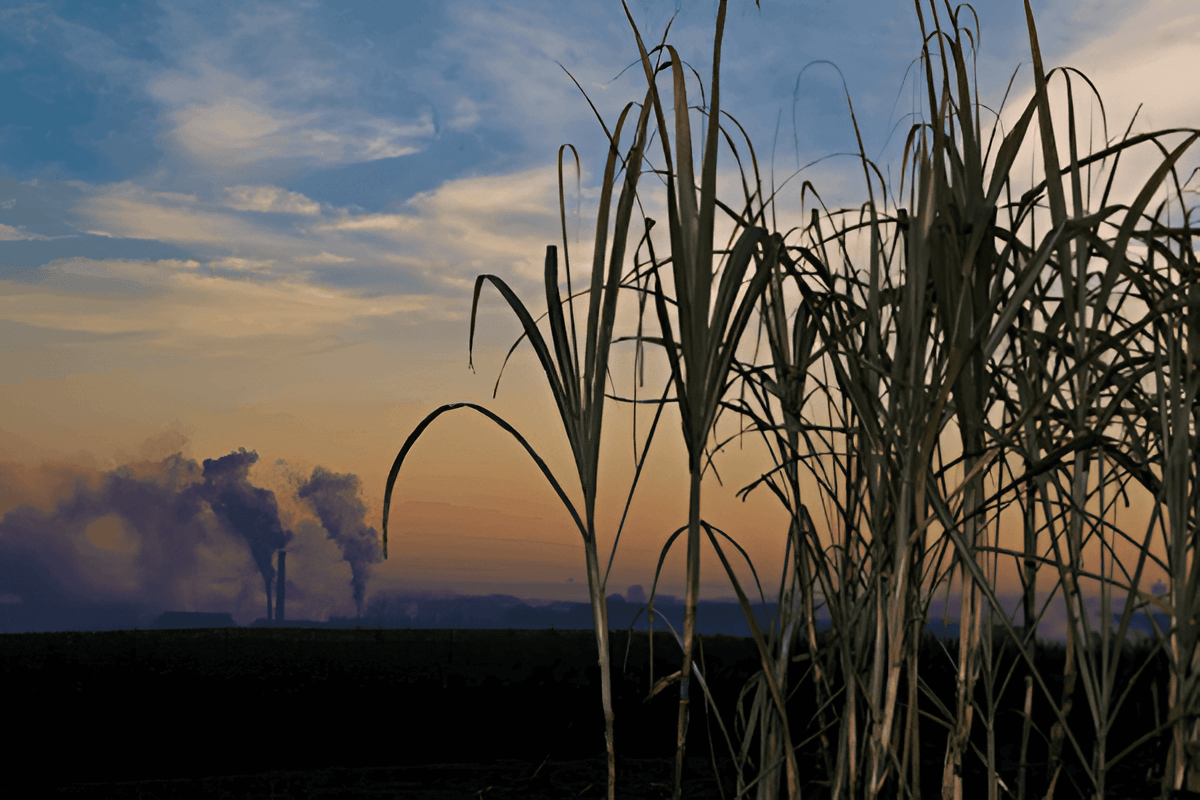
Explore more Tree Plantation resources to design profitable, climate-smart biomass plantations that support soil health, biodiversity, and long-term carbon storage.
BIOMASS FAQ • RENEWABLE ENERGY • ORGANIC FUELS
Biomass is organic material from plants, trees, crops, animals, and organic waste that can be used as renewable fuel or measured as biological mass in ecosystems.
The main types of biomass include wood biomass, energy crops, agricultural residues, and organic waste. Examples include wood chips, pellets, willow, miscanthus, corn stover, straw, manure, and food waste.
Biomass energy is produced through combustion, gasification, pyrolysis, anaerobic digestion, or conversion into liquid biofuels. These methods turn organic material into heat, electricity, gas, oil, or fuel.
Biomass can be renewable when it is grown, harvested, and replaced responsibly. Sustainable biomass systems use managed forests, crop residues, waste streams, or fast-growing crops that regenerate over time.
High-yield biomass crops include Giant King Grass, miscanthus, willow, bamboo, and Paulownia. Actual yield depends on climate, soil, irrigation, fertility, harvest cycle, and management practices.
Woody biomass comes from trees and wood materials such as logs, chips, pellets, forestry residues, sawmill waste, and short-rotation tree crops. It is commonly used for heat, power, pellets, and combined heat and power systems.
Agricultural residues such as corn stover, wheat straw, rice husks, sugarcane bagasse, and crop stalks can be converted into heat, electricity, pellets, biogas, or cellulosic biofuels.
Biomass is the organic material itself, while biogas is a gas produced when organic waste breaks down without oxygen. Biogas is usually made through anaerobic digestion and contains methane that can be used for energy.
Yes. Biomass systems can convert food waste, manure, crop residues, forestry byproducts, and other organic materials into useful energy instead of sending them to landfills or burning them without energy recovery.
You can estimate biomass yield by calculating crop type, acres planted, harvest cycle, dry matter percentage, and energy value. Use the Biomass Calculator to model yield, fuel value, and project potential.
Biomass energy data is supported by research from organizations such as the U.S. Department of Energy (DOE), USDA, and international renewable energy agencies. These sources provide data on biomass yield, energy conversion efficiency, and sustainability practices.
Partner with us in a land management project to repurpose agricultural lands into appreciating tree and biomass assets. We have partnered with Growing To Give, a 501(c)(3) nonprofit, to create tree-planting partnerships with land donors that can include biomass crops, timber, and long-rotation forests.
Use our experience designing high-yield tree plantations and biomass systems to:
We have partnered with Growing To Give, a Washington State nonprofit, to create a land and tree partnership program that repurposes agricultural land into appreciating tree assets.
The program utilizes privately owned land to plant trees that benefit both the landowner and the environment—supporting biomass energy, timber, wildlife habitat, and long-term carbon storage.
If you have 100 acres or more of flat, fallow farmland and would like to plant trees, we would like to talk to you. There are no fees to enter the program. You own the land; you own the trees we plant for free, and there are no restrictions—you can sell or transfer the land with the trees at any time.
Copyright © All rights reserved Tree Plantation