 INVEST
 PLANT
PLANT
 SOFTWOODS
 HARDWOODS
 CALCULATORS
 RESOURCES
 PROGRAMS

Softwoods
Learn More




Explore the most popular Christmas tree varieties, including Fraser fir, Douglas fir, spruce, and pine. Learn how real Christmas trees are grown, harvested, and sold—and discover how to start and profit from your own Christmas tree farm
CHRISTMAS TREES • FARMING • PROFIT
Wondering how Christmas tree farming works? Christmas trees are grown as a specialty tree crop, typically over 6–12 years, then harvested and sold through wholesale, retail lots, or choose-and-cut farms.
🎄 Quick answer: Christmas tree farms can be profitable because they combine steady seasonal demand, relatively high value per tree, and multiple sales channels— but success depends on species choice, spacing, pruning, weed control, and marketing.
Key insight: The most profitable Christmas tree farms usually stagger plantings so a portion of the crop is ready for harvest every year.
Examples: Popular Christmas tree species include Fraser fir, Douglas fir, spruce, and pine, each offering different growth rates, needle retention, fragrance, and appearance.
Discover the best Christmas tree varieties—including Fraser fir, Douglas fir, spruce, and pine— how they are grown on farms, and what makes each one unique for your home or business.
👉 Learn how to select, grow, and profit from Christmas trees with practical guidance on spacing, pruning, harvesting, and sales.
Note: This article is a comprehensive guide to growing Christmas trees for profit. Whether you are an established agriculturist, a small-acreage landowner, or a novice grower with a few spare acres, this guide walks through the basics of Christmas tree farming—from choosing species and planting seedlings to pruning, harvesting, and marketing your crop.
The long-term goal is simple: a healthy, well-managed Christmas tree plantation that produces beautiful, profitable trees year after year.
Growing Christmas trees can be both a rewarding hobby and a serious agricultural business. Every winter, millions of families search for a fresh-cut tree to bring into their home, creating reliable seasonal demand for quality trees.
A well-managed Christmas tree farm can supply those trees while also improving soil health, storing carbon, and providing habitat for wildlife. Unlike annual crops, Christmas trees remain in the ground for years, turning your land into a living inventory of future holiday income.
Natural Christmas trees are also a renewable resource. When mature trees are harvested, new seedlings are planted in their place, creating a cycle that can support both profitable production and long-term land stewardship.
The Christmas tree industry offers multiple benefits for growers who manage their plantations carefully:
With careful planning around species selection, spacing, and markets, even small farms can carve out a niche and build a loyal customer base that returns year after year.
Choosing the right Christmas tree species for your plantation is one of the most important decisions you will make. Your choice should reflect climate, soil conditions, disease pressure, and customer preferences in your region.
DOUGLAS FIR: Known for excellent needle retention and fragrance, the Douglas fir is a favorite among consumers and retailers. It grows relatively fast, shears well, and produces dense, bushy trees. Douglas fir prefers well-drained soils and cool to mild climates.
NORWAY SPRUCE: Recognized for its classic conical shape and dark green needles, Norway spruce is a traditional choice in many markets. It can grow quickly but may have shorter needle retention indoors than firs, so harvest timing matters.
BLUE SPRUCE: Colorado or blue spruce stands out with striking bluish-green needles and stiff, symmetrical branches. Its strong limbs make it ideal for heavy ornaments, and its appearance often supports premium pricing.
Feel free to share this Christmas trees infographic on your website or blog. Please include a link back to this page as the source.
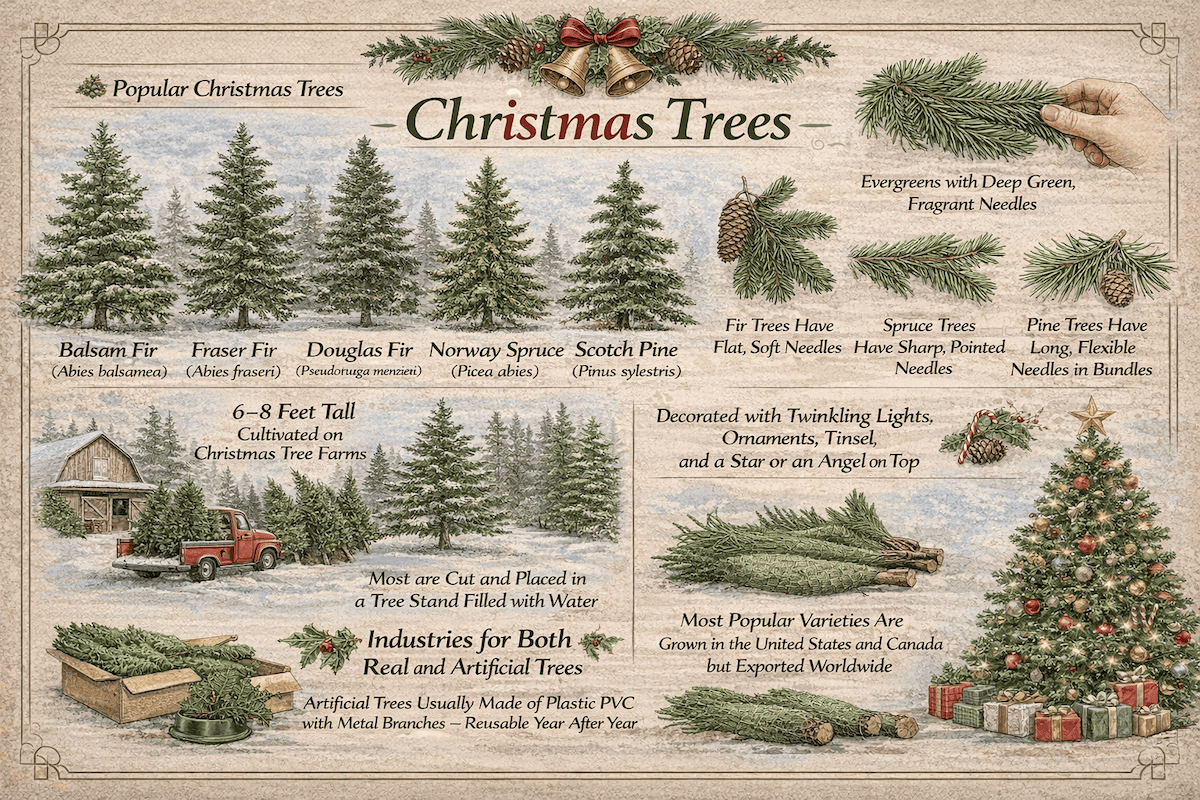

BALSAM FIR: Known for its strong, classic Christmas fragrance and rich green needles, balsam fir is a top choice in colder climates. It shears into a beautifully dense cone and offers good needle retention when kept watered indoors.
FRASER FIR: Fraser fir combines sturdy branches, soft needles, and outstanding needle retention, making it one of the most desirable species in both retail and wholesale markets. Its silvery underside and strong fragrance give it a premium look and feel on the lot.
SCOTCH PINE: With its excellent needle retention, stiff branches, and affordability, Scotch pine (Scots pine) has long been a workhorse of the Christmas tree industry. It can tolerate a wider range of soils than many firs and responds very well to shearing, making it a good starter species for new growers.
NOBLE FIR: Noble fir produces beautiful, layered branches and long-lasting needles, making it a premium choice in many western markets. Its stiff, upward-angled branches are ideal for heavy ornaments and decorator-quality trees.
WHITE PINE: The white pine’s soft, flexible needles and graceful, feathery appearance make white pine an elegant choice for customers who prefer a softer look and lighter ornaments. It is less suitable for heavy decorations but offers a beautiful, natural appearance.
Many plantations plant a mix of firs, spruces, and pines to spread risk, match different soil types on the farm, and offer customers a range of colors, fragrances, and price points.
Healthy, genetically sound Christmas tree seedlings are the foundation of a profitable plantation. Always source from reputable nurseries that specialize in conifers and Christmas tree stock. Look for improved seed sources or clonal material selected for rapid growth, good form, and disease resistance.
When evaluating seedlings:
Handle seedlings carefully before planting. Keep roots moist and shaded, never allowing them to dry out or sit in standing water. If planting is delayed, “heel in” seedlings in a shaded, well-drained trench until the field is ready.
Good site preparation and smart cultivation practices can dramatically improve survival and growth on a Christmas tree farm. Start by clearing old brush, stumps, and rocks from the field and correcting drainage issues. Christmas trees prefer well-drained soils; standing water increases root disease and mortality.
Lay out your plantation in rows that follow the contour of the land where possible, leaving headlands and access lanes for equipment. Common spacings range from 5x5 feet to 8x8 feet depending on species, soil fertility, and your target finished height. Tighter spacing can produce more trees per acre but may require more pruning and earlier thinning.
After planting, keep grass and weeds under control, especially during the first three years when young trees are competing for water and nutrients. Options include mulching around each tree, mowing between rows, and using carefully targeted herbicides if desired. Many growers also plant low-growing ground covers or clover strips between rows to suppress weeds and improve soil organic matter over time.
Knowing when and how to harvest your Christmas trees is vital for maximizing value and maintaining freshness. Most farms harvest in late autumn or early winter, just ahead of peak holiday demand. A typical rotation age ranges from 6–12 years, depending on species, soil quality, and target height.
Walk each block and tag trees that meet your standards for height, fullness, and symmetry. Uniform, well-shaped trees will command the best prices. Harvest using sharp hand saws or chainsaws, cutting trees as close to the ground as practical while maintaining a straight butt end for stands.
Immediately after cutting, keep trees cool, shaded, and out of drying winds. Shake or clean debris from branches, then wrap or bale trees for easier handling and reduced needle loss. If you sell wholesale, loading trees quickly and minimizing time in transit helps preserve the fresh appearance that retailers expect.
Soil health drives growth, color, and overall quality in Christmas trees. Begin by conducting a soil test to determine pH and nutrient levels. Most conifers prefer slightly acidic soils (roughly pH 5.5–6.5). Apply lime to raise pH or elemental sulfur to lower it, following recommendations from your soil report.
Fertilizer programs typically supply nitrogen (N) for growth, along with phosphorus (P) and potassium (K) where needed. Balanced, slow-release fertilizers or well-composted organic amendments can maintain steady growth without excessive, lanky shoots that are harder to shear. Avoid over-fertilizing late in the season; soft late growth is more susceptible to winter injury and disease.
As trees mature, keep monitoring color and growth. Pale, stunted trees may need additional nutrients or improved weed control. Maintaining a layer of organic matter on the surface—through mulches or decaying grass clippings—helps conserve soil moisture and feeds beneficial soil organisms over time.
Pruning and shearing are what transform a rough-looking conifer into a classic, marketable Christmas tree. Begin training your trees early, usually by year 3 or 4, when they are tall enough to shape without damaging the leader.
Key practices include:
Shearing schedules vary by species and climate, but many growers shear once per year in mid to late summer when new growth has “hardened off.” Consistent, patient shaping produces superior trees with higher market value.
While established trees can tolerate moderate drought, young Christmas tree seedlings are very sensitive to dry conditions. Monitor soil moisture closely in the first few years after planting and irrigate as needed, especially on sandy or shallow soils.
Drip irrigation, micro-sprinklers, or portable sprinkler lines can all work in a Christmas tree plantation. The goal is to moisten the root zone thoroughly without keeping the soil waterlogged. Deep, infrequent watering encourages deeper rooting and more resilient trees, while frequent light sprinklings tend to promote shallow roots and weed growth.

Healthy trees and clean fields are your best defense against pests and diseases. Regularly scout your plantation for signs of needle discoloration, stunted leaders, unusual spotting, or dieback. Common issues in Christmas tree farming include aphids, adelgids, spider mites, needle casts, and root rots.
Practice integrated pest management (IPM) by combining cultural controls (good spacing, mowing, pruning for air flow) with careful monitoring and targeted treatments only when necessary. Encourage beneficial insects and predators by maintaining diverse field borders and minimizing broad-spectrum chemical sprays. When pesticides or fungicides are needed, always follow label directions and local regulations.
Most Christmas tree species require full sun to develop dense foliage and strong, straight leaders. Avoid planting in deep shade, narrow valleys that act as frost pockets, or poorly drained low spots. Ideally, select gently sloping sites with good air drainage to reduce frost and disease pressure.
Match species to your local climate. Firs such as Fraser and balsam prefer cooler, moist conditions at higher elevations, while some pines and spruces are more tolerant of heat and variable moisture. Planting species outside their preferred climate zone often results in poor growth, higher mortality, and increased pest problems.
Once your trees reach marketable size, effective marketing will determine how profitably you sell your crop. Decide early whether you will focus on wholesale markets, retail lots, or a “choose-and-cut” farm experience that brings families onto your land.
For wholesale Christmas tree farming, emphasize consistency, volume, and reliable delivery schedules. For direct-to-consumer sales, invest in signage, a simple website or social media presence, and a memorable on-farm experience. Many successful Christmas tree farms offer wagon rides, hot cocoa, fire pits, photo backdrops, and small gift shops with wreaths, garlands, and wooden crafts made from farm-grown timber and trimmings.
Good presentation sells trees: keep display areas tidy, restock frequently, and train staff to help customers choose the right height and species for their home. Clear pricing, tagging systems, and optional services such as shaking, baling, and delivery can set your farm apart from big-box retailers.
Before planting your first tree, build a realistic financial plan. Christmas trees are a long-term crop, often requiring 6–10 years before your first major harvest. Factor in land costs (or lease rates), equipment, seedlings, fencing, irrigation, fuel, labor, insurance, and marketing expenses.
Stagger planting over multiple years so once your first block reaches maturity, you have younger blocks coming on behind it. This rotation planning smooths out income from year to year instead of creating a boom-and-bust cycle. Many growers also diversify with other tree crops, timber stands, or seasonal agritourism to spread risk and make better use of their land and equipment.
Talk with experienced Christmas tree farmers, extension agents, or forestry consultants to compare assumptions about survival rates, selling prices per tree, and realistic yields per acre. A clear understanding of costs and likely revenue will help you avoid unpleasant surprises and build a resilient business model.
Growing Christmas trees for profit can be a deeply rewarding and profitable endeavor. By applying the expert tips and techniques outlined in this guide—choosing the right species, starting with quality seedlings, managing soil fertility, shearing trees into classic shapes, and marketing them effectively—you can establish a thriving Christmas tree farm that brings the spirit of the holidays to families year after year.
If you are ready to explore your own Christmas tree plantation, start by assessing your land, climate, and local markets, then develop a step-by-step plan for planting, managing, and selling your crop.
Fraser fir and Noble fir are generally considered the best for needle retention and fragrance. Balsam fir is also very aromatic, while Douglas-fir offers a soft, full appearance at a lower cost. Blue spruce has stiff branches that support heavy ornaments, but its sharp needles can be prickly to handle. When in doubt, ask your grower which varieties have been holding best that season.
Gently grasp a branch and pull it toward you—on a fresh Christmas tree only a few needles should come off. The cut at the base should look moist or sappy, not dry and cracked. The tree should also feel heavy for its size because the needles still contain moisture. If possible, bounce the butt of the tree on the ground; excessive needle drop is a sign that the tree has already dried out.
Before placing the tree in the stand, make a fresh ½–1 inch recut on the trunk so it can absorb water. In the first 24 hours a tree may drink a gallon (4 L) or more. After that, check the stand at least once a day and keep it topped up. Never let the water level drop below the fresh cut or the base can seal over with sap and stop taking up water. A well-hydrated tree is safer and holds its needles longer.
With good hydration and a cool environment, most species will look their best for 3–5 weeks indoors. Keep the tree stand full, avoid placing the tree near heat sources such as fireplaces, radiators, or forced-air vents, and consider using cool LED lights instead of hot incandescent bulbs. Lowering room temperature slightly at night can also help reduce drying and needle drop.
Real trees from a local Christmas tree farm are generally a sustainable choice—they are replanted, provide wildlife habitat as they grow, and can be recycled after the holidays. Some growers offer living (potted) Christmas trees that can be planted outdoors after use in suitable climates. You can also support local tree-recycling or “tree-cycle” programs that chip trees into mulch or use them in erosion-control and habitat projects instead of sending them to landfill.
The best option is to use curbside recycling or municipal drop-off programs that chip trees into mulch. Many communities host tree-chipping events at parks or recycling centers. At home, you can cut branches and use them as winter mulch over garden beds, then compost or chip the trunk later. Avoid burning the tree indoors—dry evergreens can ignite quickly and create dangerous creosote buildup in chimneys.
Some people are sensitive to molds, pollen, or dust that may be present on outdoor-grown trees. Rinsing the tree with a garden hose and allowing it to dry in a garage or covered area before bringing it indoors can help. Artificial trees can also collect dust and dander over time—clean them before decorating and store them in sealed bags or containers between seasons. If allergies are severe, talk with your doctor about which options (real vs artificial) are best for your household.
Real Christmas trees are a renewable agricultural crop that capture carbon while they grow and can be composted or mulched at the end of their life. Artificial trees are made from plastics and metal and require significant energy to manufacture and ship, but they can be reused for many years. In general, a locally grown, recycled farm tree has a smaller carbon footprint than a short-lived artificial tree. If you already own an artificial tree, the most sustainable choice is to use it for as many seasons as possible.
Copyright © All rights reserved Tree Plantation