


 INVEST
 PLANT
PLANT
 SOFTWOODS
 HARDWOODS
 CALCULATORS
 RESOURCES
 PROGRAMS

Softwoods
Learn More
PINE STRAW • MULCH • LANDSCAPING
Wondering what pine straw is and why it’s used in landscaping? Pine straw is a natural mulch made from fallen pine needles, widely used to improve soil health, conserve moisture, and reduce weeds.
🌲 Quick answer: Pine straw is a lightweight, breathable mulch that retains soil moisture, regulates temperature, prevents erosion, and suppresses weeds while slowly improving soil over time.
Examples: Pine straw is commonly used in garden beds, tree rings, slopes, pathways, orchards, and large landscape areas where cost-effective, natural coverage is needed.
Compared to bark or wood chip mulch, pine straw offers a unique combination of ease of application, strong coverage, and long-term soil benefits. Its interlocking structure helps it stay in place, even on slopes or in heavy rain.
Pine straw is the layer of fallen pine needles that naturally accumulates beneath pine trees. These needles are sustainably collected, cleaned, and baled to be used as a lightweight, breathable mulch for landscaping, gardens, and tree plantations.
Unlike heavier mulches, pine straw interlocks to stay in place, allowing water to penetrate easily while helping soil retain moisture, regulate temperature, and reduce weed growth.
Pine straw can reduce soil moisture loss by up to 50% and is one of the most cost-effective mulches per square foot. As it slowly breaks down, it also adds organic matter back into the soil—making it both a protective layer and a long-term soil builder.
Key insight: Pine straw is one of the most efficient mulches for covering large areas quickly while improving soil health over time.
Pine straw, a natural byproduct from the shedding of needles by southern pine trees such as loblolly pine , slash pine, and longleaf pine, has emerged as a favored choice for gardeners and landscapers seeking an eco-friendly and aesthetically pleasing mulching material. Often called pine needle mulch, it is lightweight, easy to spread, and blends naturally into woodland and suburban landscapes.
Homeowners and professional landscapers value pine straw mulch for its ability to maintain soil moisture, suppress weeds, and provide natural insulation to plant roots against temperature fluctuations. Pine straw forms beneath mature pine trees and their pine cones, and when collected and baled, becomes a highly effective, renewable mulch for beds and borders.
As pine straw decomposes, it slowly enriches the soil with organic matter, improving its structure and nutrient content. This gradual breakdown supports beneficial soil microbes and earthworms, further enhancing plant health over time. This guide walks through the practical aspects of using pine straw, including how much to apply, best landscaping uses, maintenance tips, and how to choose between different types such as loblolly pine, slash, and longleaf pine straw. Whether you're a seasoned gardener or new to landscaping, understanding how to utilize pine straw effectively can significantly improve the health and beauty of your outdoor space.
Feel free to share this pine straw infographic on your website or blog. Please include a link back to this page as the source.
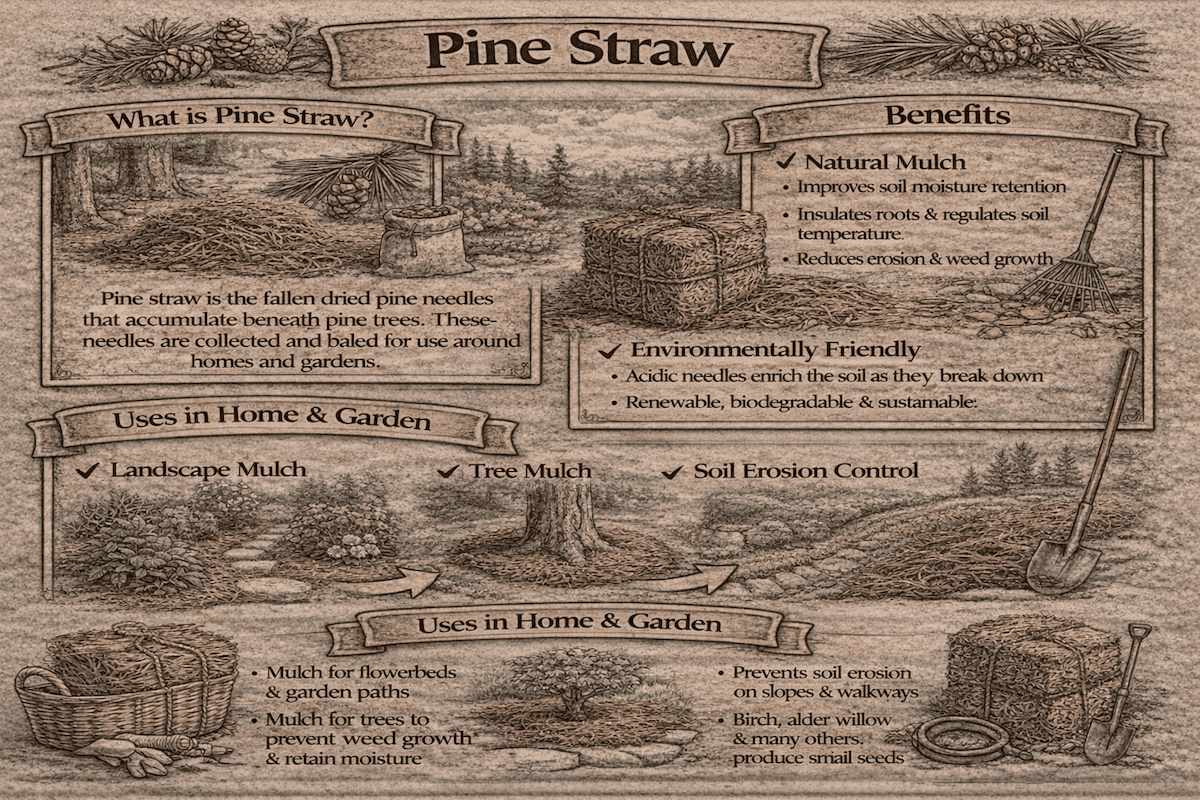

The use of pine straw as landscaping mulch brings an array of advantages that are both environmentally beneficial and practical for gardeners, homeowners, and commercial landscape managers. Its role as a natural insulator is paramount; by maintaining a more stable soil temperature, pine straw helps safeguard plant roots from the harshness of both sudden cold snaps and scorching summer heat. This characteristic is especially valuable in regions with unpredictable weather, providing a more consistent growing environment for ornamental shrubs, perennials, and young trees.
Pine straw excels at reducing evaporation, slowing the loss of moisture from the soil surface. A well-maintained layer of pine straw mulch can significantly lessen the frequency of irrigation, conserving water resources and lowering watering costs. This water-saving aspect is particularly advantageous during dry spells or in drought-prone climates where efficient moisture management is critical for plant survival.
Another key benefit is its effectiveness in weed control. When applied at the proper depth, pine straw forms a thick, woven mat that blocks sunlight from reaching weed seeds. Without light, many weed seeds fail to germinate or remain weak and easily removed by hand. This natural barrier reduces reliance on chemical herbicides and supports a more organic, pollinator-friendly gardening approach. For additional ideas on non-chemical weed suppression, see organic weed control strategies at Crop Circle Farms .
Over time, as pine straw decomposes, it adds a rich layer of organic matter to the soil. This gradual enrichment improves soil structure, increases water-holding capacity in sandy soils, and enhances drainage in heavy clay. The process also boosts the soil’s nutrient profile and fosters a healthy environment for beneficial microorganisms and mycorrhizal fungi, all of which contribute to improved root development and overall plant vigor. These combined benefits make pine straw an ideal choice for gardeners and landscapers seeking a sustainable, efficient, and visually appealing mulching solution that works with nature rather than against it.
| Feature | Pine Straw | Wood Mulch |
|---|---|---|
| Cost per sq ft | Lower | Higher |
| Weight | Lightweight | Heavy |
| Erosion control | Excellent | Moderate |
| Longevity | Moderate | Longer |
| Appearance | Natural woodland | Uniform/dyed |
One of the most common questions homeowners and landscapers ask is how much area a bale of pine straw will actually cover. While coverage varies by bale size, needle type, and how tightly the bale is packed, a standard bale of pine straw usually covers about 40 to 60 square feet when spread at the recommended mulch depth.
For most planting beds, foundation borders, and tree rings, a pine straw depth of 2 to 3 inches provides a good balance of moisture retention, weed suppression, and clean visual coverage. A lighter 2-inch layer may work for decorative beds or top-dressing an existing mulch layer, while a full 3-inch layer is often better for new beds, hotter climates, and areas with stronger weed pressure.
To estimate cost per square foot, divide the bale price by the number of square feet covered. For example, if a bale costs $8 and covers 50 square feet, your mulch cost is about $0.16 per square foot. If the same bale only covers 40 square feet at a deeper application, your cost rises to about $0.20 per square foot. This simple math helps compare pine straw against bark mulch, wood chips, and other landscape coverings.
Coverage also changes based on the type of pine straw you buy. Longleaf pine straw often provides better loft, better interlocking, and slightly more visual coverage, while slash and loblolly pine straw can be more economical for routine maintenance. Because every bed layout is a little different, it is smart to order a little extra for touch-ups, edges, and settling after installation.
Pine straw is one of the most versatile mulch materials you can use in a landscape, but it performs especially well in areas where lightweight coverage, airflow, and erosion resistance matter most. Because the needles interlock and form a breathable mat, pine straw works particularly well in both residential gardens and larger natural-style landscapes.
Pine straw is especially effective on slopes and gently sloped banks because the needles knit together and resist washing better than many loose mulches. This makes it a popular choice for erosion control around homes, pathways, and tree plantings where rainfall might otherwise expose bare soil. Longleaf pine straw is often preferred on slopes because its longer needles create a stronger woven layer.
Pine straw is an excellent mulch for tree rings because it helps regulate soil temperature, conserve moisture, and reduce competition from weeds and grass. It also creates a softer, more natural woodland appearance than many dyed mulches. For best results, keep the pine straw pulled back several inches from the trunk so moisture does not build up against the bark.
In garden beds and foundation plantings, pine straw offers a clean, uniform appearance while helping the soil stay cooler in summer and more protected in winter. It is especially useful around shrubs, perennial borders, flowering beds, and young trees where consistent soil moisture improves plant performance. Its light weight also makes it easy to spread around delicate plantings without damaging stems or compacting the soil.
Pine straw also works well along walkways, path edges, and landscape borders, where it creates a neat finished look and helps prevent soil splash during rain or irrigation. In natural garden designs, woodland paths, and informal landscapes, pine straw blends beautifully with trees, shrubs, and native plantings while still providing practical weed suppression and moisture control.
Pine straw is easy to use, but a few common mistakes can reduce its effectiveness and shorten the life of the mulch layer. Applying it correctly from the beginning helps you get better weed suppression, stronger moisture retention, and a more polished finished look.
One of the most common mistakes is spreading pine straw too thin. A thin layer may look neat at first, but it will not provide enough weed suppression, insulation, or moisture protection. In most beds, 2 to 3 inches is the ideal finished depth. Less than that often leaves bare gaps where sunlight reaches the soil and weeds can germinate.
Another frequent mistake is pushing pine straw directly against the trunk of a tree or the crown of a shrub. This can trap moisture, encourage bark problems, and increase the risk of rot, insects, or fungal disease. Instead, form a mulch doughnut by keeping the straw several inches away from the trunk while maintaining a wider ring over the root zone.
Pine straw naturally settles and decomposes over time, so it needs to be refreshed to stay effective. Waiting too long to top-dress beds can leave areas thin, faded, and more vulnerable to weeds and moisture loss. In most landscapes, a light refresh once a year keeps the mulch looking clean and maintains the proper working depth.
Pine straw works best when it is laid over a clean, prepared surface. If weeds, old debris, or uneven soil are left underneath, the finished bed will look rough and weeds may push through faster. Before applying pine straw, remove existing weeds, rake the bed smooth, and edge the borders for a more professional result.
While pine straw is useful in many areas, it should not be packed tightly against siding, decks, vents, or other structures. Leaving a small clearance zone improves airflow, reduces trapped moisture, and supports better fire-smart landscape management in dry climates.
The best-looking pine straw beds usually come from three simple steps: clean the bed first, apply 2–3 inches evenly, and refresh thin spots annually.
Use our calculator to determine exactly how many bales you need based on your bed size and mulch depth.
Estimate how many bales you need based on bed size and desired depth (2–4 inches), then see total cost, refresh/top-up planning, and slope-friendly recommendations.
The diverse range of pine straw types available gives landscapers and gardeners the flexibility to select the ideal mulch for their specific climate, soil conditions, and design goals. Although all pine straw is made from naturally fallen pine needles, each variety differs in needle length, color, durability, and performance. These differences can influence how well the mulch resists erosion, retains moisture, suppresses weeds, and enhances the overall appearance of a landscape.
Choosing the right type of pine straw is especially important for projects such as sloped landscapes, high-visibility entryways, garden beds, and large-scale planting areas, where both function and aesthetics matter. The three most common types used in landscaping are loblolly, slash, and longleaf pine straw—each offering unique advantages.
Loblolly pine straw is one of the most widely used and readily available options. It is known for its warm orange-brown color and medium-length needles, which create a balanced, natural look in both residential and commercial landscapes. Because it is abundant and easy to harvest, loblolly pine straw is often the most cost-effective choice for routine mulching projects such as subdivision entrances, foundation plantings, and large garden beds.
In terms of performance, loblolly pine straw provides reliable moisture retention and weed suppression, while still allowing good airflow and water penetration into the soil. Its needles interlock moderately well, helping it stay in place on flat and gently sloped surfaces. It also breaks down at a steady, predictable rate—slow enough to provide consistent coverage throughout the season, yet fast enough to gradually enrich the soil with organic matter and support healthy microbial activity.
Because of this balance between appearance, performance, and affordability, loblolly pine straw is often considered the “everyday standard” for landscaping mulch. It is an excellent choice for homeowners, property managers, and landscapers who want dependable results without the higher cost associated with premium longleaf pine straw.
For projects where budget, coverage, and visual consistency are key, loblolly pine straw delivers a practical and attractive solution that performs well across a wide range of landscaping applications.
Not all pine straw performs exactly the same in the landscape. While loblolly, slash, and longleaf pine straw all provide weed suppression, moisture retention, and natural-looking mulch coverage, each type has strengths that make it better suited for certain applications. If you are deciding which pine straw to buy, this quick comparison can help you match the right material to your project, budget, and design goals.
| Pine Straw Type | Best Use | Needle Length | Appearance | Durability | Typical Value |
|---|---|---|---|---|---|
| Loblolly Pine Straw | General landscaping, subdivision entrances, foundation beds, routine mulching | Medium | Warm orange-brown, natural and balanced | Moderate | Best all-around budget choice |
| Slash Pine Straw | Neat residential beds, borders, walkways, decorative planting areas | Short to medium | Reddish-brown, tidy and refined | Moderate | Good visual value for manicured beds |
| Longleaf Pine Straw | Slopes, erosion control, premium landscapes, high-visibility installations | Long | Rich, full, premium woodland look | High | Premium choice for performance and appearance |
Quick takeaway: Loblolly pine straw is the best all-around value, while longleaf is ideal for slopes and premium landscapes.
If your main goal is covering a large area affordably, loblolly pine straw is usually the best all-around choice. It is widely available, attractive, and dependable for most routine landscaping jobs. If you want a neater, more manicured look around flower beds, pathways, or home foundations, slash pine straw can be a strong option because of its finer texture and tidy finish.
If you are mulching a slope, bank, or erosion-prone area, longleaf pine straw is often the best choice because its longer needles interlock more effectively and stay in place better during rainfall and wind. It also creates a fuller, more premium appearance, which makes it a favorite for upscale residential landscapes and commercial entry features.
Because a typical bale of pine straw covers about 40 to 60 square feet at the recommended depth of 2 to 3 inches, the number of bales you need depends on the size of the bed and how thickly you want to apply it. This quick guide gives a practical estimate for common project sizes.
| Landscape Area | Approximate Bed Size | Estimated Bales Needed |
|---|---|---|
| Small bed | 40–60 sq ft | 1 bale |
| Medium bed | 80–120 sq ft | 2 bales |
| Large bed | 160–240 sq ft | 4 bales |
| Front yard bed system | 240–360 sq ft | 5–7 bales |
These are practical starting estimates, but actual coverage varies by bale density, needle type, slope, and how much loft you want in the finished bed. For the most accurate estimate, especially on irregular beds or larger landscapes, use your Pine Straw Coverage & Cost Calculator to calculate the number of bales needed based on your exact dimensions and preferred mulch depth.
Loblolly pine straw is one of the most widely used and readily available mulch options in landscaping. Known for its warm orange-brown color and medium-length needles, it creates a natural, balanced look that works well across a wide range of garden styles—from residential foundation beds to large-scale community landscapes.
Because of its availability and consistent quality, loblolly pine straw is often the most cost-effective choice for routine mulching projects. It provides dependable weed suppression, moisture retention, and soil insulation, helping protect plant roots while improving overall soil health as it gradually breaks down.
The needles interlock moderately well, allowing loblolly pine straw to stay in place on flat surfaces and gently sloped areas. While it does not have the same long-needle binding strength as longleaf pine straw, it performs reliably in most everyday landscaping applications, including garden beds, tree rings, borders, and subdivision entryways.
For homeowners and landscapers looking for an affordable, attractive, and easy-to-apply mulch, loblolly pine straw offers an excellent balance of performance, appearance, and value.

Slash pine straw, with its distinctive reddish-brown tint, provides a striking contrast that can accentuate the colors of flowering plants and foliage, adding depth and vibrancy to garden landscapes. Its slightly shorter needles create a finer texture, making it a suitable choice for areas where a neat, manicured appearance is desired—around formal garden beds, walkways, and patios, for example. Many landscape professionals prefer slash pine straw for residential neighborhoods because it knits together well and resists washing on gentle slopes.

Longleaf pine straw stands out for its exceptional durability and resistance to decomposition. Its longer needles—often 12 inches or more—create a dense, protective layer that effectively suppresses weeds and retains moisture for extended periods. This variety is particularly beneficial for large commercial sites, steeper slopes, and high-traffic areas that require a robust mulching solution capable of withstanding wind, rainfall, and foot traffic. Many premium “landscaping pine straw” products are composed primarily of longleaf pine needles for this reason.

Each type of pine straw brings its own set of attributes—from color and texture to longevity—allowing gardeners to tailor their mulch choice to the specific climatic and aesthetic needs of their landscaping projects. By understanding the characteristics of loblolly pine, slash, and longleaf pine straw, you can make an informed decision on which variety will best enhance and protect your trees, shrubs, and garden beds.
Pine straw plays a pivotal role in natural weed management within landscaped areas, thanks to its unique structure. When applied in layers, the pine needles interlock to form a dense, mat-like layer over the soil. This woven blanket acts as an effective physical barrier, blocking sunlight from reaching the soil surface. Since sunlight is a crucial factor for weed seed germination, the lack of light significantly hampers the ability of weed seeds to sprout, reducing the emergence of new weeds around trees, foundation plantings, and walkways.
The effectiveness of pine straw in weed control lies not only in its density but also in its longevity. Unlike some other organic mulches such as shredded bark or wood chips, pine straw tends to stay in place and maintain its barrier-like properties for many months, even on gentle slopes. This provides sustained weed suppression without constant replenishment and complements other weed control methods recommended by Crop Circle Farms .
That said, pine straw is not a magic shield. Some particularly hardy weed species may still manage to penetrate the mulch layer, especially if the pine straw is applied too thinly or if existing weeds are left in place underneath. Gardeners should still plan for regular maintenance—spot-checking beds and manually removing any weeds that appear. Using pine straw mulch for primary weed control and supplementing it with occasional hand weeding or spot treatment provides a practical, low-chemical approach to maintaining clean, attractive beds.
Laying pine straw correctly is crucial for maximizing its benefits in landscaping or garden settings. Start by thoroughly preparing the area where the pine straw will be applied. Remove existing weeds, grass, large stones, and any old mulch that might interfere with the new layer. If needed, lightly cultivate or loosen the soil surface and then rake the area smooth to ensure an even application.
When spreading the pine straw, aim for a uniform layer about 3 inches thick. This thickness is ideal for retaining moisture, regulating soil temperature, and suppressing weed growth without being so thick that it smothers shallow-rooted plants or prevents water and air from reaching the soil. Around large trees and shrubs, you can increase the depth slightly, especially on slopes or in hot, sunny locations.
For pine straw to be most effective and stay put, it helps to build the mulch in several passes. Spread one light layer, then a second laid somewhat perpendicular to the first, and finally a third “finishing” layer to smooth and even the surface. This crisscross layering helps the needles lock together, creating a cohesive mulch cover that can withstand scurrying animals, light foot traffic, rain, and wind without washing away.

It is particularly important to keep the pine straw away from direct contact with the trunks of trees and the stems or crowns of plants. Creating a small buffer zone or “mulch doughnut” around these areas prevents excessive moisture and reduces the risk of rot, insects, and fungal disease at the base of the plant. For conifers such as loblolly pine, good mulching practices can also help reduce stress and make trees less vulnerable to pests like pine beetles.
For enhanced weed control and improved longevity of the pine straw, some gardeners install a breathable landscape fabric on the soil before spreading the mulch. This fabric acts as an additional barrier to weeds while still allowing water and air to reach the roots. If you choose to use fabric, overlap edges by several inches so no gaps are left for weeds to emerge.
Once the pine straw is in place, water it lightly to help the needles settle and interlock. This step helps the mulch form a cohesive mat, reduces movement in windy conditions, and gives the bed a finished, professional look. Following these steps will ensure that your pine straw mulch is effectively and attractively applied, providing long-lasting benefits to your garden or landscape.
Pine straw stands out as an eco-friendly and sustainable mulching option, particularly appealing to gardeners who are mindful of their environmental impact. One of its key sustainable features is its origin as a renewable resource. Pine straw is a natural byproduct of managed pine forests grown for timber and pulpwood. Needles are shed annually and collected from the forest floor without cutting or harming the trees, making pine straw a low-impact, renewable mulch.
This sets pine straw apart from many synthetic mulches, which are manufactured from non-renewable resources and can persist in the environment for decades. Even compared to dyed wood mulches, pine straw typically requires less processing and transportation, reducing its overall carbon footprint.
As it breaks down, pine straw returns organic matter and nutrients back to the soil, enhancing soil quality and fostering a healthier garden ecosystem. This biodegradation supports soil microorganisms and promotes a balanced soil environment. Because it is relatively lightweight, pine straw can often be transported in larger quantities with less fuel than heavier mulches, further lowering emissions associated with its use.
Pine straw also contributes indirectly to sustainability by conserving water and reducing chemical inputs. By helping the soil retain moisture, pine straw mulch reduces the need for frequent irrigation, and by suppressing weeds, it cuts down on herbicide use. For eco-conscious gardeners and landscape designers, these combined benefits make pine straw an excellent choice in sustainable landscape management.
Pine straw, commonly used as a mulch, offers significant benefits for plant health beyond its aesthetic appeal and weed suppression capabilities. As pine needles break down, they enrich the soil by releasing organic matter that improves soil tilth and increases cation-exchange capacity (CEC). This process enhances soil structure and drainage while boosting its fertility, creating an ideal rooting environment for many ornamental plants and trees.
A layer of pine straw also serves as a protective barrier for plant roots, shielding them from extreme heat, sudden frost, and soil compaction from heavy rains. By reducing evaporation, pine straw helps keep soil consistently moist—an essential factor in maintaining plant health during hot, dry weather. Healthy, well-watered conifers with good soil conditions are generally more resilient to insect pests, including pine beetles, than stressed trees growing in bare, exposed soil.
Maintaining pine straw mulch effectively extends its lifespan and maximizes its benefits for soil and plant health. Regularly inspect beds and promptly remove any weeds that break through the mulch, before they can develop deep roots or spread seed. As pine straw settles and compresses over time, occasional fluffing with a rake or hoe restores its loft, improving appearance and insulation.
Check soil moisture levels beneath the mulch periodically. Pine straw should help retain moisture without leaving soil soggy. Adjust your watering schedule to take advantage of the mulch’s water-saving properties, especially during rainy seasons or cool weather.
Because pine straw gradually decomposes, plan to top-dress beds with a light refresh layer annually—or every other year in low-traffic areas. Adding a fresh inch of pine straw on top of the existing layer restores color, renews weed-suppression performance, and maintains the ideal 2–3 inch mulch depth.
Harnessing the versatility of pine straw for DIY garden projects can add natural character and rustic charm to your outdoor space. A simple but effective project is creating informal garden paths by laying a thick trail of pine straw through your yard or woodland garden. These paths are soft underfoot, drain quickly after rain, and blend beautifully with the surrounding plantings.
Pine straw can also be used to create clean, curved edges that frame your flower beds, shrub borders, or vegetable plots. Defined mulch edges not only highlight beds visually but also help keep grass and weeds from creeping into planting areas.
In container gardening, a thin layer of pine straw on top of potting soil in patio containers or hanging baskets reduces surface evaporation and helps keep soil temperatures more stable. This is especially useful for moisture-loving plants or planters exposed to hot afternoon sun. By embracing the creative potential of pine straw, you can transform your garden into a more naturalistic, practical, and sustainable haven.
Pine straw is widely available at local garden centers, specialized nurseries, landscape supply yards, and farm co-ops. In pine-growing regions, you’ll often find pine straw sold by the bale along rural roadsides or directly from growers who harvest from managed loblolly pine, slash, and longleaf pine stands. For those who prefer the convenience of shopping from home, many online vendors also offer pine straw with delivery, often in compressed bales or bags.
Before you buy, assess the scope of your project to determine how much pine straw you need. Pine straw is commonly sold by the bale; most suppliers estimate that one standard bale covers roughly 40–50 square feet at a depth of about 2–3 inches. For larger projects—such as commercial properties, long driveways, or large woodland gardens—buying in bulk can reduce the cost per square foot.
Prices for pine straw may fluctuate based on geographic location, time of year, and straw quality. Premium, clean, long-needle pine straw typically commands a higher price than lower-grade bales that may contain sticks, leaves, or shorter needles. Peak demand often occurs in the fall and early spring when many homeowners refresh their mulch. To make a cost-effective decision, compare prices among different suppliers, factor in delivery fees if needed, and consider sourcing locally harvested pine straw to reduce transport costs and support regional growers.
Pine straw is lightweight, easy to spread, and its interlocking needles naturally resist erosion on slopes and berms. It suppresses weeds, buffers soil temperature, and allows excellent air and water exchange so roots can breathe. Pine straw is often more economical per square foot than many wood mulches and doesn’t compact into a hard crust, making it a favorite for shrub borders, tree rings, and foundation plantings.
A standard bale of pine straw usually covers about 40–50 square feet at a 2–3 inch depth. Longleaf bales with longer needles can cover roughly 50–60 square feet at the same thickness. For new beds, steep slopes, or high-visibility areas, plan for the higher end of those ranges so you can build a full, even layer right up to the bed edge.
For most landscape beds, apply pine straw at a 2–3 inch depth. On slopes or in areas with heavy weed pressure, you can go up to 4 inches for better coverage and erosion control. Always pull the straw back 3–6 inches from tree trunks, shrub crowns, and building foundations to reduce moisture buildup, rot, and pest issues.
Fresh pine needles are mildly acidic at the surface, but as they break down, the overall effect on soil pH is usually small. Most landscape plants, including many ornamentals and shrubs, tolerate pine straw mulch very well. If you grow pH-sensitive plants or vegetables, run a simple soil test and amend as needed rather than assuming pine straw is causing major acidity changes.
In most climates, plan to refresh pine straw once or twice per year. Color fades before performance drops, so a bed may still be functioning well even when it looks a bit sun-bleached. Lightly fluff compacted areas with a rake, then top up thin spots to maintain a consistent 2–3 inch layer for moisture retention and weed suppression.
Any dry organic mulch can burn, and pine straw is no exception. In wildfire-prone areas, keep pine straw a safe distance from homes, decks, wooden fences, and heat sources. Use non-combustible borders (stone, gravel, pavers), remove dry leaves and debris regularly, and consider using rock or composted mulch immediately next to structures while reserving pine straw for beds farther out in the landscape.
Longleaf pine straw has extra-long needles that interlock tightly, creating a premium, tidy look and excellent erosion control—ideal for slopes and high-end landscapes. Slash pine straw and mixed bales are more budget-friendly and work well for general-purpose beds and large areas. Choose based on your priorities: appearance and erosion control (longleaf) versus cost and broad coverage (slash or mixed).
Pine straw itself doesn’t inherently attract insects or rodents, but any thick, damp organic mulch can provide shelter if it’s piled too deep or kept against wood siding and trunks. Maintain the recommended depth, keep straw pulled back from structures and plant crowns, and practice routine cleanup of fallen debris. These simple steps minimize pest issues while letting you enjoy the many benefits of pine straw mulch.
Copyright © All rights reserved Tree Plantation