


 INVEST
 PLANT
PLANT
 SOFTWOODS
 HARDWOODS
 CALCULATORS
 RESOURCES
 PROGRAMS

Softwoods
Learn More
Truffles • Host Trees • Soil
A well-designed truffle orchard can take 5–10 years to produce, but once established, it can generate high-value harvests for decades—with premium truffles selling for $300–$450+ per pound.
The real key isn’t just the trees—it’s the underground partnership between tree roots and truffle fungi, which requires the right soil pH (7.5–8.5), drainage, and climate alignment.
🌱 Many growers use intercropping or agroforestry systems to generate income while waiting for truffle production—turning orchards into multi-layer, revenue-producing ecosystems.
Want the quickest answer to “can I grow truffles in the United States?” You can—if you match the right host tree (often oak or hazelnut), the right truffle species, and the right soil chemistry (especially pH + drainage). This page summarizes the essentials and links you to the tools that help you plan spacing and orchard density.
Note: Truffle yield is highly site-specific. Results depend on climate, irrigation, weed control, inoculation quality, competing fungi, and how well you manage soil moisture over years.
Jump to: truffle basics • host trees • host tree comparison • infographic • black truffles • white truffles • truffle varieties • FAQs
Truffles develop in a symbiotic relationship with the roots of specific tree species, forming what is known as a mycorrhizal network. In this underground partnership, the tree provides carbohydrates to the fungus, while the truffle enhances the tree’s ability to absorb water and nutrients from the soil. This delicate biological exchange is the foundation of all successful truffle production.
The most valuable and widely cultivated truffles—particularly Périgord black truffles—are associated with oak trees, including English Oak, White Oak, and French Oak. These species have proven to be the most reliable hosts for producing premium, export-quality truffles due to their strong compatibility with truffle fungi and their adaptability to managed orchard systems.
Other tree species can also support truffle growth, though yields and quality may vary. These include beech trees, birch trees, Douglas fir, poplar, and hazelnut (part of broader nut tree systems). Hazelnut orchards, in particular, are often used in commercial truffle farming because of their faster establishment and suitability for higher-density planting.
Site selection plays a critical role in success. Truffle orchards should be established in areas with excellent sunlight exposure—typically southern-facing slopes or open fields—to maximize warmth and soil activity during the growing season. Equally important is soil chemistry: truffles thrive in well-drained, alkaline soils with a pH generally between 7.5 and 8.0. If soil pH is too low, amendments such as agricultural lime or wood ash can be applied to gradually raise alkalinity.
For growers seeking the highest-value production—often reaching $300 to $450+ per pound—oak-based systems remain the gold standard. However, diversified orchards that incorporate multiple compatible tree species can improve resilience, optimize land use, and support long-term ecosystem health.
Not all truffle host trees perform the same. Some are favored for premium black truffle production, while others may offer faster establishment, easier orchard management, or niche regional advantages. The table below provides a planning-level comparison of four of the most commonly discussed host tree options.
| Host Tree | Best Use | Typical ROI Profile | Timeline to Meaningful Harvest | Key Advantages | Key Trade-Offs |
|---|---|---|---|---|---|
| Oak | Premium black truffle orchards, long-term production systems | Highest upside for premium-quality truffles; generally considered the gold standard for long-term value | Usually 5–10 years | Strong compatibility with high-value truffle species, proven orchard performance, strong premium-market appeal | Slower establishment than some alternatives; requires patience and excellent soil management |
| Hazelnut | Commercial orchards, higher-density planting, diversified nut-and-truffle systems | Strong, balanced ROI with faster orchard establishment and efficient land use | Often 4–8 years in well-managed systems | Faster juvenile growth, manageable canopy, good fit for tighter spacing and commercial orchard layouts | May not carry the same premium perception as oak-based systems in some markets |
| Beech | Niche regional orchards and mixed-species plantings | Moderate ROI with more niche use than oak or hazelnut | Often 5–9 years | Can support truffle formation in suitable climates, adds biodiversity and orchard resilience | Less commonly used in commercial truffle orchards, so there is less grower familiarity and fewer proven models |
| Birch | Specialty systems, regional experimentation, diversified plantings | Lower to moderate ROI compared with oak and hazelnut in premium orchard planning | Often 5–9 years, depending on species pairing and site quality | Useful for certain truffle pairings, can diversify ecological structure in mixed plantings | Generally less associated with the highest-value commercial truffle output |
Bottom line: Oak is usually the best fit for growers chasing premium long-term truffle value, while hazelnut often offers the best balance of orchard efficiency and earlier production potential. Beech and birch are more specialized options that may work well in selected climates or mixed-species systems.
Feel free to share this truffle orchard calculator infographic on your website or blog. Please include a link back to this page as the source.
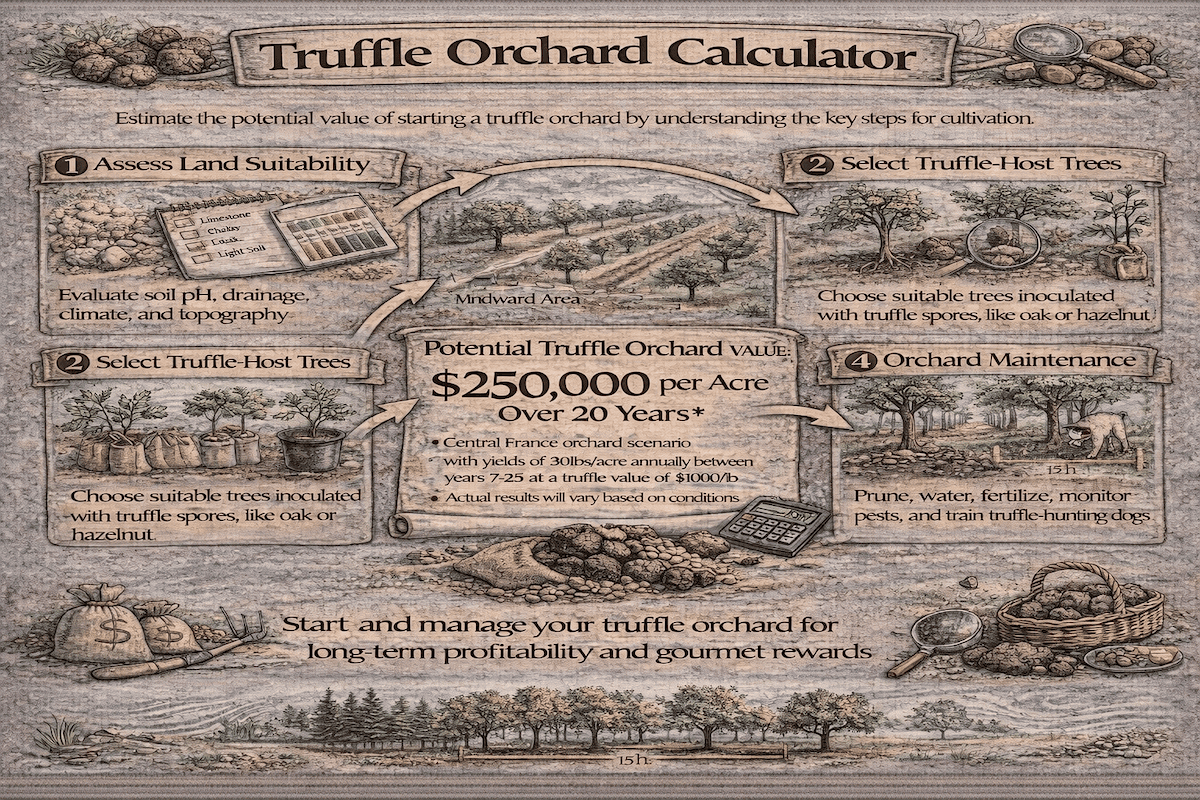
Estimate the profitability of your truffle orchard by calculating tree spacing, yield potential, and long-term revenue per acre based on real-world growing conditions.
Truffles are among the most valuable and sought-after culinary ingredients in the world, prized for their intense aroma, complex flavor, and rarity. While wild-harvested truffles have traditionally dominated the market, cultivated truffle orchards now offer a scalable way to produce high-quality truffles using carefully inoculated host trees such as oak and hazelnut.
Of the hundreds of truffle species that exist globally, only a select few—known as culinary tubers—are considered true delicacies. These fungi develop just below the soil surface in a symbiotic relationship with tree roots, where they exchange nutrients in a highly specialized underground ecosystem. Their value is driven by scarcity, flavor intensity, and the difficulty of cultivation, with premium varieties often reaching $300 to $450+ per pound in global markets.
Harvesting truffles requires precision and experience. Because they grow underground and cannot be seen, trained animals—most commonly dogs—are used to locate mature truffles by scent. Once identified, the soil is carefully opened by hand to preserve both the truffle and the surrounding root system, ensuring continued production in future seasons.
Truffles are cultivated and harvested across Europe, Australia, North America, and parts of Asia, with each region producing distinct varieties adapted to local soils and climates. The most prized include Périgord black truffles, Burgundy truffles, and the rare Piedmont white truffle. Each variety differs in aroma, texture, seasonality, and market value, creating a diverse global marketplace with multiple pricing tiers.
Successful truffle cultivation depends on aligning tree species, soil chemistry, climate conditions, and orchard management. Factors such as soil pH (typically 7.5–8.5), drainage, microbial activity, and seasonal moisture all play critical roles in determining yield and quality. This complexity is what makes truffle farming both challenging and highly rewarding.
Fresh truffles are best enjoyed at peak ripeness, when their aroma is most pronounced. Rather than being cooked heavily, they are typically shaved or grated thinly over finished dishes to preserve their delicate flavor compounds. Truffles are often paired with neutral or fat-rich foods—such as eggs, pasta, risotto, butter-based sauces, poultry, or red meat—to allow their earthy, aromatic profile to fully stand out.
Because their fragrance dissipates quickly after harvest, truffles are usually transported rapidly under controlled conditions and used within days. In high-end culinary settings, it is not uncommon for a truffle harvested in the morning to be served the same evening—delivering a true “farm-to-table” luxury experience.
Plan a truffle orchard by selecting a host tree (hazelnut, oak, or beech), setting spacing and tree counts per acre, and estimating soil pH adjustment, timeline to first harvest, and per-acre profitability.
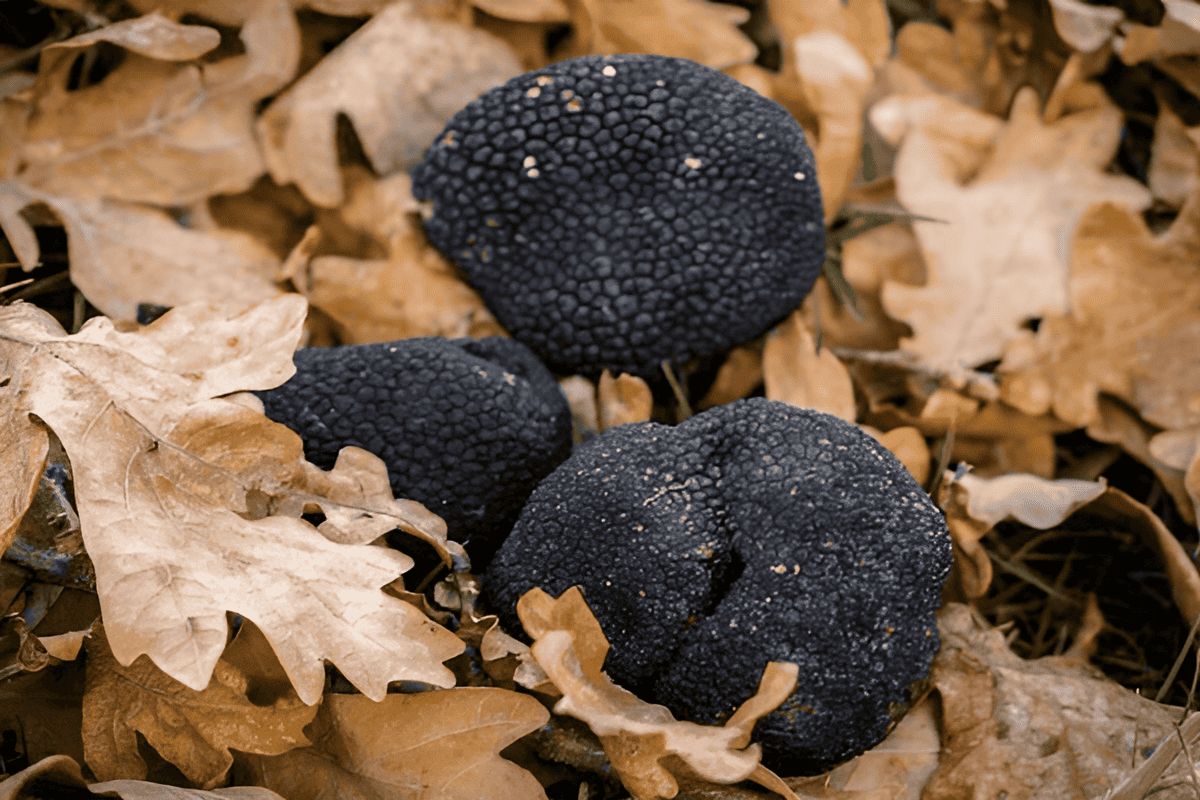
Black truffles—often called “diamond truffles”—are among the most widely cultivated and commercially successful truffle varieties in the world. They are primarily grown in Europe, especially in France, Spain, and northern Italy, where centuries of tradition have refined orchard techniques. These prized fungi develop in close symbiosis with the roots of English oak and other hardwood species, forming the foundation of modern truffle agroforestry systems.
Also known as Périgord truffles (Tuber melanosporum), black truffles are celebrated for their rich, earthy aroma and deep umami flavor. Unlike white truffles, they can be reliably cultivated in managed orchards, making them the primary focus of global truffle farming and investment. Today, successful orchards are expanding beyond Europe into the United States, Australia, and other suitable regions.
Black truffles grow in association with a range of host trees, including oaks, hazelnuts, and poplars. In particular, hazelnuts—part of broader nut tree systems—are widely used in commercial orchards due to their faster establishment, manageable canopy size, and compatibility with high-density planting designs.
Cultivating black truffles requires patience, expertise, and a long-term perspective. Success depends on soil quality, climate alignment, inoculation accuracy, and ongoing orchard care. However, for growers who get these variables right, black truffle orchards can become high-value, sustainable agricultural assets—combining premium culinary demand with regenerative tree-based land use.
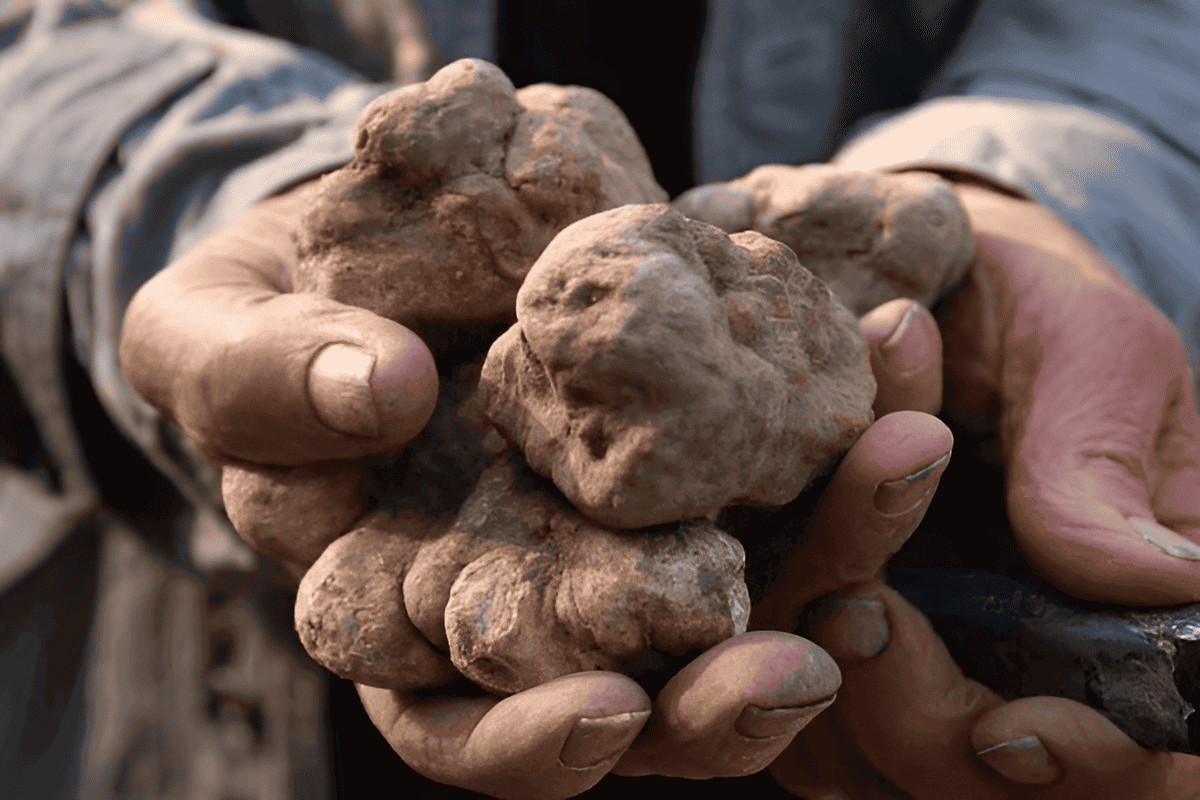
White truffles—most famously the Piedmont white truffle (Tuber magnatum)—are among the rarest and most valuable culinary ingredients in the world. Native primarily to Italy and parts of Southeastern Europe, these truffles are renowned for their intense, garlic-like aroma and complex flavor profile that can elevate even the simplest dishes.
Unlike black truffles, which are successfully cultivated in orchards, true white truffles are still largely wild-harvested and remain extremely difficult to cultivate commercially. They are most often found in natural forest ecosystems associated with oak trees, along with hazel, willow, and poplar species such as hybrid poplar. These trees form a delicate underground symbiotic relationship with truffle fungi, where both depend on precise soil chemistry and environmental balance.
Because of their rarity and the difficulty of cultivation, white truffles can command premium prices far exceeding black truffles, making them a high-risk, high-reward target for experimental growers and advanced agroforestry systems.
Below are key characteristics and considerations for understanding—and attempting to support—the growth of white truffles:
While commercial-scale cultivation of white truffles remains elusive, ongoing research and experimental orchards continue to explore how controlled environments and carefully selected host trees might unlock new opportunities. For now, they remain one of the most exclusive and mysterious products of forest ecosystems—highlighting the immense value of healthy, well-managed tree landscapes.
Prolonged drought and shifting climate patterns over the past decade have significantly reduced global truffle production, with annual yields dropping to roughly 100 tons worldwide. As climate change continues to disrupt traditional growing regions in Europe, production is expected to decline further, increasing scarcity and driving prices higher.
This supply imbalance presents a major opportunity: developing localized truffle orchards in favorable microclimates across the United States and other regions. By carefully selecting site conditions—soil pH, drainage, elevation, and climate—new plantations can help stabilize supply while creating long-term, high-value agricultural assets.
Australia has emerged as one of the most successful and fastest-growing modern truffle-producing regions in the world. Over the past two decades, carefully managed orchards in temperate regions have demonstrated that high-quality truffles can be cultivated outside of Europe with remarkable consistency. Today, many chefs and connoisseurs consider Australian-grown truffles to be on par with—if not indistinguishable from—traditional European varieties in both aroma and flavor.
These orchards are typically established using inoculated host trees, most commonly oak and hazelnut, planted in well-drained, alkaline soils and supported by precise irrigation and climate management. Australia’s ability to produce during the Northern Hemisphere’s off-season provides a strategic advantage, allowing growers to supply fresh truffles to premium markets in the United States and Asia when European supply is limited.
The success of Australian truffle farming also reflects a broader understanding of how trees, soil biology, and climate interact—principles that extend to other tree-based systems such as eucalyptus plantations and native landscape restoration tied to aboriginal tree knowledge. These integrated approaches highlight how region-specific ecology can be leveraged to create resilient, high-value agricultural systems.
As global supply remains constrained and demand continues to rise, Australia’s model demonstrates how well-designed truffle orchards in the right microclimate can become long-term, export-driven assets—offering both strong economic returns and a scalable blueprint for truffle cultivation in new regions worldwide.
Asian truffles—particularly those cultivated in Japan and parts of China—are often compared to the prized European black truffle (Tuber melanosporum). While they can appear visually similar, Asian varieties typically command lower prices due to differences in aroma complexity, flavor intensity, and culinary performance in high-end dishes. European black truffles are known for their deep, earthy fragrance and strong finishing profile, whereas many Asian varieties tend to have a milder scent and shorter aromatic persistence.
Despite these differences, Asian truffles play a significant role in the global market. Strong regional demand across Japan, China, and Southeast Asia supports a large and stable supply chain, particularly for domestic consumption and mid-tier culinary applications. In Japan, where precision agriculture and land stewardship are highly developed, truffle cultivation is increasingly being explored alongside traditional ornamental and forestry systems such as Japanese maples and broader Japanese tree cultivation practices.
These integrated systems reflect a growing trend toward diversified tree-based agriculture, where truffles are viewed not only as a luxury crop but as part of a larger ecological and economic landscape. As global demand for truffles continues to expand, Asian production—while distinct from European premium markets—remains a critical contributor to overall supply, helping to balance availability, pricing tiers, and accessibility across different regions.
In the Pacific Northwest of the United States, native truffle species grow naturally in association with Douglas fir trees, a unique exception to the typical hardwood-truffle relationship. These wild truffles are harvested seasonally and contribute to a growing domestic market, highlighting the potential for expanding truffle cultivation within North America using both native and introduced species.
Truffles are harvested either by careful hand digging or with trained animals, most commonly dogs. Dogs are preferred because of their accuracy and reliability, while pigs—traditionally used in Europe—can damage harvests by eating the truffles.
Proper harvesting techniques are critical. Skilled harvesters gently uncover the truffle while minimizing disturbance to the surrounding soil and root system. This preserves the delicate underground ecosystem and ensures continued production in future seasons. At the same time, careful handling protects the truffle’s highly volatile aroma compounds, which begin to degrade shortly after harvest.
Truffle orchard returns depend on site selection, host tree choice, inoculation quality, irrigation, orchard maintenance, and access to premium buyers. The table below is best used as a planning guide rather than a guaranteed financial forecast.
| Region | ROI Profile | Time to First Meaningful Harvest | Key Advantages | Key Risks | Best Fit |
|---|---|---|---|---|---|
| Europe | Most proven long-term ROI model, especially in established black truffle regions. | Often 5–10 years from inoculated seedlings under good management. | Deep production history, experienced growers, stronger buyer familiarity, and mature orchard systems. A large share of French truffles are now produced in orchards of inoculated oak and hazelnut trees. | Drought and climate stress can reduce yields and increase year-to-year volatility. | Investors or growers seeking the lowest biological uncertainty. |
| United States | Higher upside, higher risk because the industry is newer and outcomes are more site-specific. | Commonly modeled at 5–10 years, but orchard performance varies widely. | Suitable regions exist in North America, including Western Oregon, and there are already dozens of orchards in production. | Inoculation mistakes can materially reduce value; recent research in eastern U.S. orchards found some growers were producing lower-value winter truffles instead of the intended European black truffle. | Growers willing to manage more technical and establishment risk for premium domestic supply potential. |
| Australia | Strong premium-growth profile with export momentum and a rising reputation for quality. | Commercial production can take many years; industry materials note a long runway, with some guidance pointing to roughly a decade or more before commercial quantities. | Australia is now the world’s fourth-largest truffle producer, exported more than 11 tonnes in 2023 worth over $9 million, and is recognized for premium French black truffles. | Long establishment period, shelf-life logistics, and dependence on export channel quality. | Producers focused on premium exports and branded quality positioning. |
Bottom line: Europe offers the most established orchard model, the U.S. may offer the best frontier upside where soils and inoculation are right, and Australia stands out for premium export growth and a strong quality reputation. :contentReference[oaicite:1]{index=1}
Once a truffle is detected beneath the soil, the ground is gently opened by hand around the host tree’s roots until the truffle is fully revealed. This delicate work requires patience and precision, since careless digging can damage both the truffle and the fine root network that supports future harvests. Experienced truffle hunters aim to disturb the surrounding soil as little as possible, preserving the living partnership between tree and fungus.
Fresh truffles are prized for their intense aroma, but that fragrance begins to fade soon after harvest. For that reason, they are handled very carefully and are usually not fully washed until they are ready to be prepared by a chef. Instead, they are lightly brushed, cooled quickly, and protected from excess moisture and heat.
In high-end distribution channels, truffles may be chilled within minutes of leaving the ground and transported in temperature-controlled containers directly to wholesalers, specialty retailers, or restaurants. In some cases, a truffle harvested earlier in the day can be served that same evening in a fine-dining setting, delivering its peak flavor at the chef’s table.
Use our Truffle Orchard Calculator to project spacing, orchard size, and profit potential, or contact us for guidance on inoculated trees, soil pH, and orchard planning.
Yes. Truffles can be grown in the U.S. wherever the climate and soil are similar to the Mediterranean: mild winters, warm summers, and well-drained, alkaline soils. Successful truffle orchards already exist in parts of Oregon, California, North Carolina, Tennessee, and other regions where inoculated oak and hazelnut truffle trees perform well.
The most valuable culinary truffles are usually grown with oak trees—especially English oak, white oak, and French oak. Other species such as beech, Douglas fir, poplar, birch, and hazelnut can also host truffles, but are typically associated with slightly lower-value crops.
Truffles are rare, slow to establish, and highly perishable—so the global supply stays limited. They only form when the right fungus, host tree, soil pH, and climate all line up. Yields are unpredictable, harvesting requires trained dogs or pigs, and fresh truffles have a short shelf life. All of that scarcity sits on top of strong demand from gourmet kitchens, which pushes prices as high as $450 per pound or more.
Patience is essential. Even with quality inoculated truffle trees and ideal soil conditions, most orchards need 5–10 years before consistent harvests begin. Once production starts, a well-managed truffle plantation can continue fruiting for decades, giving long-term income from the same stand of trees.
Truffles grow best in well-drained, alkaline soils with a pH typically between 7.5 and 8.5. Many growers use lime or wood ash to gently raise pH before planting. Soils should be loose, aerated, and never waterlogged. Climate-wise, truffles prefer areas with mild winters, warm (not scorching) summers, and reliable irrigation to avoid prolonged drought stress on host trees.
Spacing depends on your host species and equipment, but many truffle orchards use a grid in the 12–20 ft range between trees and between rows. Wider spacing improves airflow and root development, while still leaving room for machinery. To play with layout and stocking rates, you can use the Tree Spacing Calculator to estimate trees per acre for your site.
Yes—intercropping is a smart way to generate income while your truffle trees mature. Many growers combine truffle orchards with agroforestry systems, planting shallow-rooted crops or grazing animals between rows. Just avoid deep tillage and heavy fertilizer or herbicide use near the root zone, as that can disrupt the delicate truffle–tree partnership.
Truffles are found using trained dogs or pigs that can smell ripe truffles underground. Once located, soil is carefully opened by hand, the truffle is lifted free, and the surrounding roots are left as undisturbed as possible. Gentle, precise digging protects both the tree and the mycorrhizal network that produces future truffle crops.
Copyright © All rights reserved Tree Plantation