


 INVEST
 PLANT
PLANT
 SOFTWOODS
 HARDWOODS
 CALCULATORS
 RESOURCES
 PROGRAMS

Softwoods
Learn More
American basswood (Tilia americana) is a fast-growing native hardwood valued for its lightweight wood, pollinator-friendly flowers, and strong regenerative ability.
Once widely used in early American timber markets, basswood is now being rediscovered as a high-potential species for biomass, sustainable forestry, and regenerative land systems.
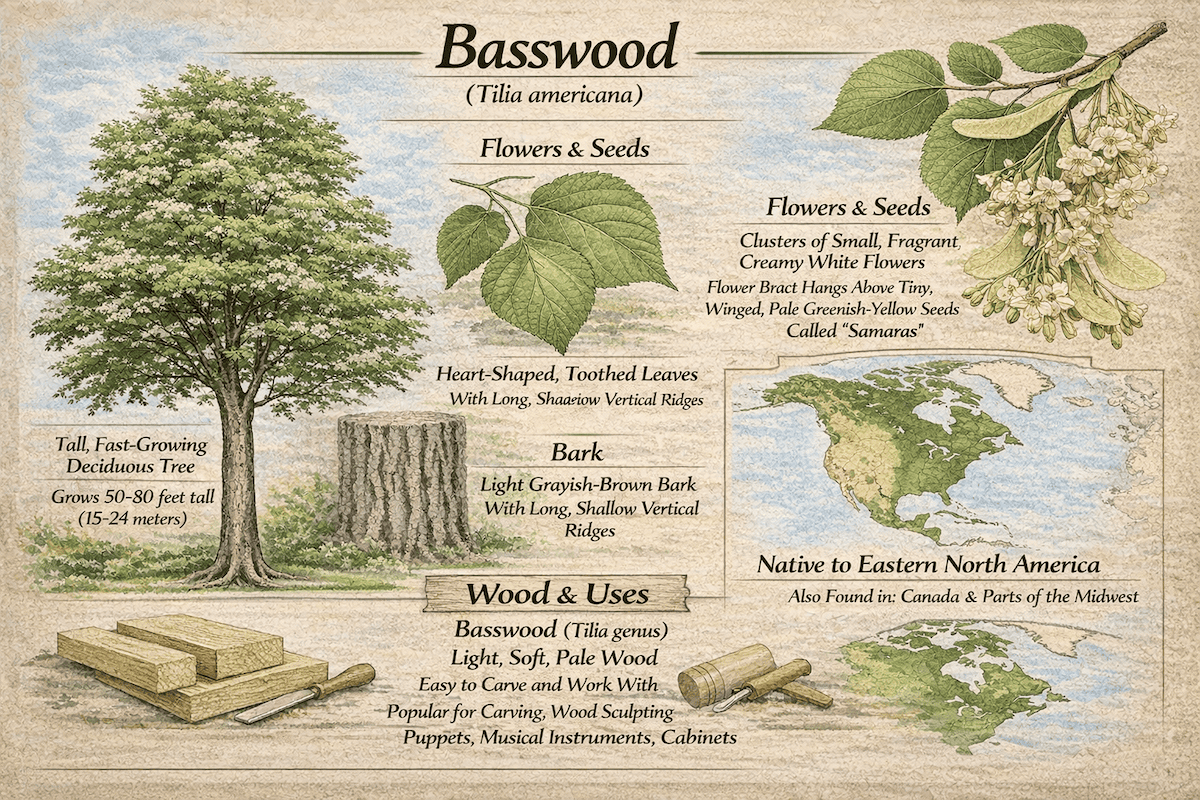
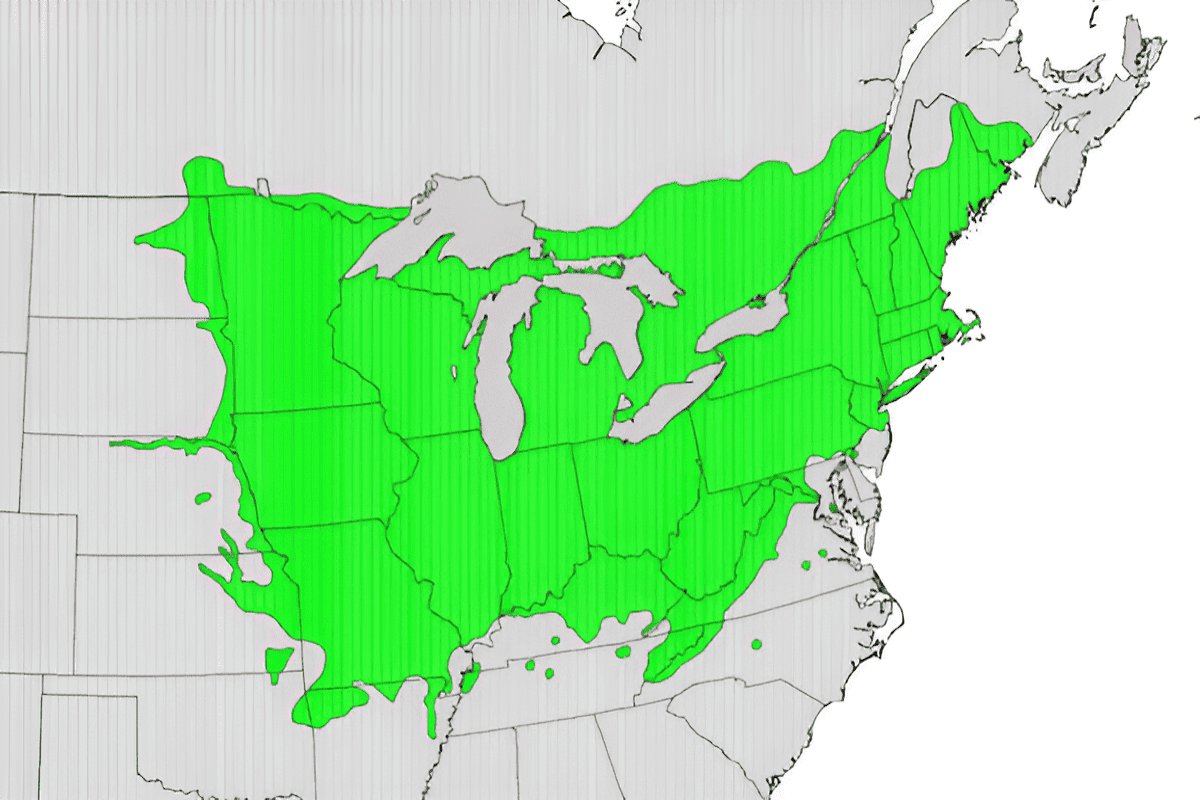
Basswood, also known as American linden (Tilia americana), is a deciduous hardwood tree native to much of eastern North America. It belongs to the Tilia genus, a group of trees commonly referred to as lindens or lime trees, many of which are valued for their beauty, shade, and ecological importance.
Basswood trees typically reach heights of 60 to 80 feet, though under optimal conditions they can grow well over 100 feet tall, similar in stature to species like balsawood. They develop a straight, upright trunk with a rounded, spreading crown. The bark is generally smooth and gray on younger trees, becoming more ridged and furrowed as the tree matures.
The leaves of basswood are easily recognizable—large, heart-shaped, and finely serrated, typically measuring 4 to 8 inches in length. In early summer, the tree produces clusters of fragrant, pale yellow flowers that are highly attractive to bees and other pollinators. In fact, basswood is considered one of the most important nectar-producing trees in its native range, often supporting honey production and local ecosystems.
Basswood thrives in moist, fertile, well-drained soils and is commonly found in mixed hardwood forests, along riverbanks, and in lowland areas throughout the eastern United States and southern Canada. It tolerates partial shade but performs best with adequate sunlight and moisture, making it suitable for both natural forests and managed plantations.
From a commercial standpoint, basswood is prized for its lightweight, soft, and straight-grained wood, which is easy to cut, shape, and finish. Historically, it was widely used in furniture making, carving, and utility products. In regions around the Great Lakes, it became known as the “tree time forgot”—a once-common commercial species that gradually fell out of favor as other hardwoods gained prominence.
Today, basswood is being reconsidered for its modern applications, particularly in biomass production, sustainable forestry, and regenerative agriculture systems. Its combination of fast growth, coppicing ability, ecological value, and versatility makes it a compelling candidate for both traditional wood uses and emerging climate-focused land strategies.
Feel free to share this basswood infographic on your website or blog. Please include a link back to this page as the source.
Often called the “Paulownia of the North”, basswood shares many of the same advantages as paulownia—including rapid growth, large leaves, and quick trunk development.
This combination makes basswood an ideal species for biomass production, timber plantations, and a wide range of wood products.
Basswood grows fast, straight, and tall, making it one of the most efficient temperate-climate species for both biomass and timber systems. Its comparison to paulownia comes from its ability to rapidly gain height and trunk diameter while producing large, energy-capturing leaves that support accelerated growth.
The wood itself is lightweight, straight-grained, and easy to work with. Basswood typically has a creamy white color, sometimes accented with subtle darker streaks depending on soil minerals and growing conditions. Its uniform grain structure allows it to split cleanly and process easily, while its moderate BTU value makes it a practical option for firewood and pellet production.
Because of its consistency and workability, basswood is one of the most versatile woods in North America and is used across a wide range of industries and crafts:
In summary, basswood combines fast plantation growth, regenerative potential, and exceptional usability into a single species. Whether grown for biomass, timber, or value-added wood products, it offers a rare balance of speed, versatility, and economic potential—making it a strong candidate for modern forestry and regenerative agriculture systems.
Basswood is increasingly recognized as a high-potential biomass species due to its rapid growth, coppicing ability, and low processing requirements.
With proper management, basswood plantations can deliver repeat harvest cycles, scalable yields, and strong carbon sequestration benefits, making them ideal for modern biomass and renewable energy systems.
Basswood is well suited for biomass production because it combines fast growth, adaptability, ease of harvesting, and regenerative capability. Whether grown in dedicated energy plantations or integrated into agroforestry systems, basswood offers a reliable and renewable source of wood fiber for chips, pellets, and other biomass applications.
In summary, basswood stands out as a renewable, regenerative, and economically attractive biomass crop. Its ability to grow quickly, regenerate through coppicing, and produce usable material with minimal processing makes it an excellent choice for energy production, carbon-focused projects, and sustainable forestry systems.
Estimate biomass yield, harvest cycles, coppicing performance, and per-acre profitability across multiple tree species and climate regions. Compare dry vs green tons and model short-rotation biomass systems with confidence.

Basswood (American linden) is emerging as a highly versatile plantation species, valued for its rapid growth, coppicing ability, and wide range of end uses—from biomass and pellets to high-quality lumber.
With the right spacing and management strategy, basswood plantations can deliver repeat harvest cycles, strong carbon sequestration potential, and scalable returns for both timber investors and regenerative growers.
Basswood plantations can be established using either parallel row systems or more advanced spiral planting designs, depending on the production goal. Row-based systems offer efficiency and compatibility with mechanical planting and harvesting, making them ideal for biomass production and large-scale operations. Spiral systems, on the other hand, are designed to maximize natural growth dynamics, encouraging trees to develop thicker trunks and faster vertical growth through strategic spacing and light competition.
Often referred to as a “tree time forgot,” basswood is rapidly gaining renewed attention as a high-performance plantation species. Its ability to regenerate through coppicing, combined with its adaptability and growth rate, makes it an attractive option for both timber investors and modern tree farmers seeking sustainable, long-term production systems.
For biomass production, basswood trees are typically spaced 6 feet apart in rows set 20 feet on center. This layout allows for easy equipment access and efficient harvesting. Trees are commonly harvested on 10-year cycles, after which new shoots regenerate from the cut stumps.
This coppicing response can significantly increase future yields, as multiple new stems emerge from each stump, effectively multiplying the next harvest cycle. By year 10, trees may also begin producing seed, which can be collected and used to expand the plantation or establish new growing areas.
In spiral plantation systems, basswood trees are spaced approximately 8 feet apart along a geometric spiral pattern, with loops typically set 20 feet apart. This design increases planting density while maintaining access corridors, creating a balanced system of competition and airflow.
The closer spacing encourages trees to grow rapidly as they compete for sunlight, often resulting in taller, straighter stems and improved trunk development. Spiral systems are particularly well suited for timber-focused plantations, where maximizing trunk size, wood quality, and long-term value is the primary goal.
Whether planted in rows or spirals, basswood plantations offer a compelling combination of speed, regeneration, versatility, and sustainability, making them a strong candidate for modern forestry, carbon-focused projects, and integrated agroforestry systems.

Coppicing allows certain trees to regrow after harvest by sending up fresh shoots from the cut stump, creating a long-term source of biomass, poles, firewood, and future timber.
Because the original root system remains alive and established, coppiced trees often regenerate quickly, making coppicing one of the most practical methods for sustainable wood production, habitat renewal, and resilient plantation management.
Coppicing is a traditional woodland management method that allows certain trees to regenerate after cutting by producing new shoots from the remaining stump. Rather than killing the tree, coppicing works with its natural ability to regrow, creating a renewable source of poles, biomass, firewood, craft wood, and other useful materials.
When a suitable tree is cut during the dormant season or in early spring, just as sap begins to rise, the remaining stump often responds by sending up multiple vigorous shoots, sometimes called rods or whips. Leaving a healthy stump above ground helps protect the regrowth point and encourages strong new sprouting. Because the root system is already well established, these new shoots can grow rapidly, often reaching 5 to 6 feet per year under favorable conditions.
Coppicing is valued not only for wood production, but also for its role in sustainable land management, wildlife habitat creation, and long-term woodland resilience. With proper rotation and species selection, a coppiced stand can remain productive for many years while continuously renewing itself from the same living root base.

Hardwood trees include some of the most valuable and versatile species found in temperate and tropical forests, providing timber, wildlife habitat, shade, food, and long-term ecological value.
Partner with us in a land management project to repurpose agricultural lands into appreciating tree assets. We have partnered with growingtogive.org, a 501c3 nonprofit, to create tree planting partnerships with land donors.
We have partnered with growingtogive.org, a Washington State nonprofit to create a land and tree partnership program that repurposes agricultural land into appreciating tree assets.
The program utilizes privately owned land to plant trees that would benefit both the landowner and the environment.
If you have 100 acres or more of flat, fallow farmland and would like to plant trees, then we would like to talk to you. There are no costs to enter the program. You own the land; you own the trees we plant for free and there are no restrictions; you can sell or transfer the land with the trees anytime.
Copyright © All rights reserved Tree Plantation