


 INVEST
 PLANT
PLANT
 SOFTWOODS
 HARDWOODS
 CALCULATORS
 RESOURCES
 PROGRAMS

Softwoods
Learn More
TREE FARMING • PROFIT • SPACING • LONG-TERM LAND VALUE
Wondering what a tree farm really is and whether it can become a profitable long-term asset? A tree farm is managed land where trees are grown as a crop for timber, Christmas tree sales, landscape use, specimen value, carbon storage, agroforestry, or a mix of these goals.
🌲 Quick answer: A profitable tree farm starts with the right land, the right trees, the right spacing, and the right market. Some farms are built for shorter 7–10 year rotations, while others are managed as 20–50 year living assets that grow in value over time.
Tree farming works best when you match your land and climate to a clear goal: Christmas trees, landscape and shade trees, palms, bonsai, timber rows, mixed-use agroforestry, or high-value specimen production. To estimate planting density early, it also helps to start with a tree spacing calculator .
👉 Jump to the section you need or scroll to explore how tree farms generate long-term value.
Some tree farms are managed for annual or seasonal cash flow, while others are designed so the largest value arrives later as trees gain height, caliper, canopy, and transplant value.
HOW TO START A TREE FARM • STEP-BY-STEP • LAND • WATER • MARKETS
Wondering how to start a tree farm? The process is easier when you think in stages. Start with the market first, then build the property and planting plan around that goal.
🛠️ Quick answer: Start by choosing your tree farm model, site, water source, spacing plan, and sales strategy, then phase planting so you are not forced into a single harvest window years later.
Do you want a Christmas tree farm, a timber-oriented woodlot, a landscape tree nursery, a desert palm farm, or a specialty tree operation focused on specimen trees or bonsai? Your answer changes everything from spacing and irrigation to labor needs and time to profit.
A good tree farm begins with good matching. Study your climate, hardiness zone, summer heat, winter lows, drainage, wind, and soil type. The best tree farm businesses are usually the ones that avoid fighting the site.
Water is one of the most important pieces of infrastructure on a tree farm, especially in arid and semi-arid regions. Before planting, think through wells, pumps, filtration, irrigation zones, hose bibs, access lanes, tractor movement, and loading areas.
Spacing influences trees per acre, airflow, pruning access, canopy development, root competition, digging access, and long-term value. Dense spacing may work for some crops, but high-value specimen trees usually need more room. Use your tree spacing calculator early so your field design is driven by numbers instead of guesswork.
Rather than planting everything at once, many successful growers stagger blocks or rows over several years. That helps create future harvest waves instead of one large cut-and-restart cycle.
A tree farm is not just a growing system. It is also a selling system. Decide whether you will sell retail, wholesale, direct to landscapers, to municipalities, to resorts, to developers, or seasonally to families. The closer you are to active buyers, the more valuable some tree farm models become.
A tree farm layout that feels efficient in year one can become expensive in year ten if rows are too tight for equipment, root balls, pruning, or transplant access.
TREE FARM TYPES • COMPARISON • ROTATION LENGTH • REVENUE MODELS
Not all tree farms work the same way. Some are built for faster turnover and seasonal revenue, while others are built for fewer but much larger sales.
| Tree Farm Type | Typical Time to First Meaningful Sales | Revenue Potential | Best Fit |
|---|---|---|---|
| Christmas tree farm | 7–10 years | Moderate, recurring seasonal sales | Cooler climates, family retail, choose-and-cut |
| Timber tree farm | 15–40+ years | Moderate to high, depending on species and market | Larger acreage, long rotations, wood value |
| Landscape tree farm | 5–8 years for smaller saleable stock | High | Near growing cities and development corridors |
| Specimen tree farm | 15–30+ years | Very high per tree | Long-term land holding and premium buyers |
| Palm tree farm | Several years to decades depending on size target | High to very high | Hot-climate and resort markets |
| Bonsai and specialty stock | A few years to decades | High per square foot | Low land area, high skill, niche buyers |
In practical terms, the “best” tree farm depends on how much land you have, whether you need shorter-term cash flow, and whether your market rewards bulk sales or premium specimen sales.
TREE FARM ROI • TREES PER ACRE • REVENUE • YIELD
Wondering how tree farm ROI works? The simplest way to think about it is this: spacing determines trees per acre, and the market determines value per tree. Profit comes from getting both right.
💰 Quick answer: A tree farm can be profitable on either a high-density / lower-value model or a lower-density / higher-value model. What matters is matching the planting plan to the end buyer.
| Spacing | Approx. Trees Per Acre | Typical Use |
|---|---|---|
| 6 ft x 6 ft | About 1,210 | Very dense planting, some nursery or early-stage stock |
| 8 ft x 8 ft | About 680 | Christmas trees and tighter production layouts |
| 10 ft x 10 ft | About 435 | General tree farm layouts and mixed production |
| 15 ft x 15 ft | About 193 | Larger landscape stock |
| 20 ft x 20 ft | About 108 | Specimen trees, large canopy development |
You can also bridge this section directly into your tree value calculator and tree carbon calculator so readers move from curiosity into planning.
Some of the highest-value tree farms intentionally plant at lower densities so each tree has room to become larger, cleaner, more symmetrical, and far more valuable.
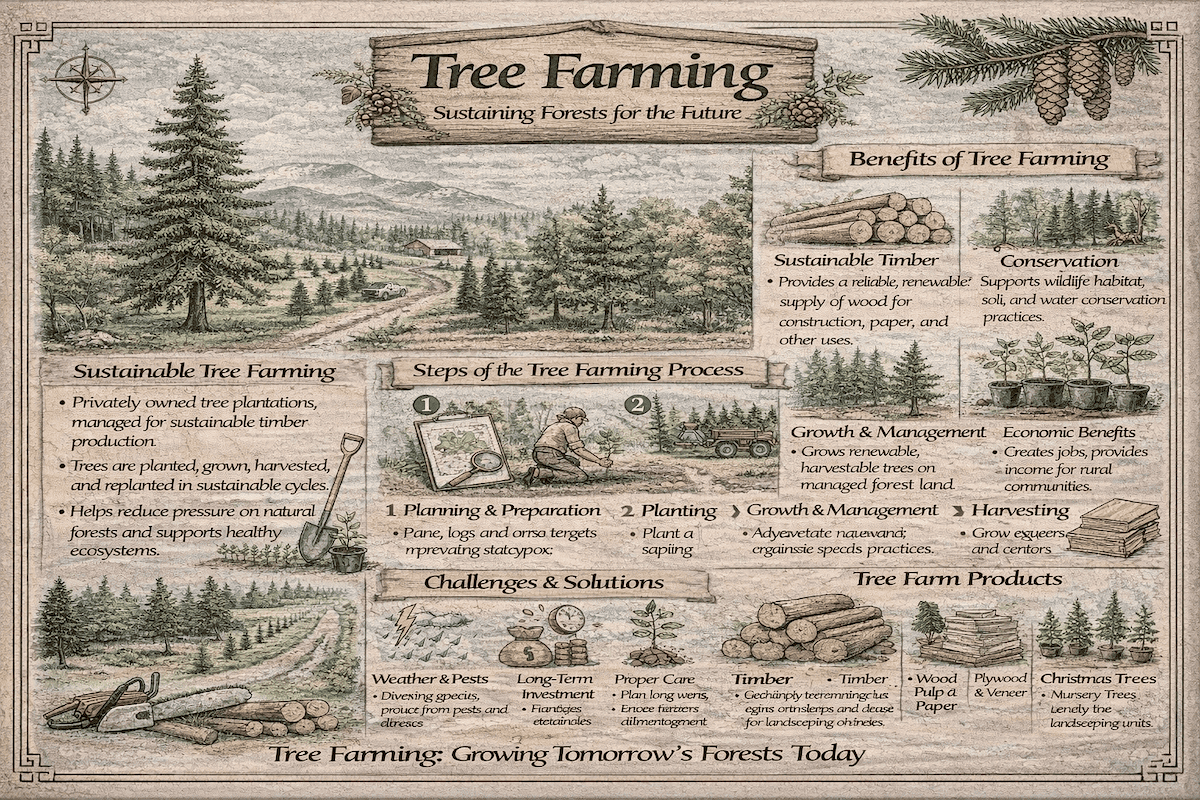
Feel free to share this tree farm infographic on your website or blog. Please include a link back to this page as the source.
TREE FARM CASE STUDY • 1 ACRE • REVENUE BREAKDOWN • ROI EXAMPLE
Wondering what a 1 acre tree farm might produce? A simple example helps show how spacing, tree count, and average sale price work together to shape tree farm revenue.
📊 Quick answer: At 10 ft x 10 ft spacing, a 1 acre tree farm can hold about 435 trees. If those trees average $500 each at sale, the gross revenue potential is about $217,500 per acre.
| Variable | Example Value | What It Means |
|---|---|---|
| Spacing | 10 ft x 10 ft | Balanced spacing for many general tree farm layouts |
| Trees Per Acre | 435 trees | Approximate number of trees that fit on 1 acre |
| Average Value Per Tree | $500 | Illustrative mid-range sale price for planning |
| Gross Revenue Per Acre | $217,500 | 435 × $500 = estimated gross revenue |
This example is not a guarantee. It is a planning model that shows how tree farm investment potential changes when you combine tree spacing with average finished value. If the average sale price rises, the revenue per acre rises. If the spacing widens, total tree count falls, but each tree may become larger and more valuable.
In real life, final returns depend on species, survival rate, irrigation, pruning, soil quality, local demand, labor, and time to maturity. That is why some farms earn more from fewer premium trees, while others rely on higher tree counts and faster turnover.
At 435 trees per acre, every additional $100 in value per tree adds about $43,500 in gross revenue per acre. That is why tree quality, form, health, and market timing matter so much.
To build your own numbers, compare this example with your expected spacing using the tree spacing calculator, then estimate individual tree worth with the tree value calculator. You can also connect long-term environmental value using the tree carbon calculator.
TREE FARM ROI • INVESTMENT • TREES PER ACRE • PROFIT TIMELINE
Wondering how profitable a tree farm can be? Tree farm ROI is driven by three core variables: trees per acre, value per tree, and time to harvest. When these align with market demand, a tree farm can become a powerful long-term income and land appreciation asset.
💰 Quick answer: Tree farm revenue ranges from $5,000 to $500,000+ per acre over time, depending on the species, spacing, and whether you focus on volume production or high-value specimen trees.
| Tree Farm Model | Trees Per Acre | Avg Value Per Tree | Estimated Revenue Per Acre | Timeline |
|---|---|---|---|---|
| Christmas Trees | 600–1,200 | $50–$150 | $30,000–$150,000 | 7–10 years |
| Landscape Trees | 200–400 | $300–$2,500 | $60,000–$500,000+ | 5–12 years |
| Specimen Trees | 50–150 | $5,000–$30,000+ | $250,000–$3,000,000+ | 15–30+ years |
| Timber Trees | 100–400 | $200–$5,000 | $50,000–$500,000+ | 15–40+ years |
Unlike many crops, trees increase in value as they grow. Larger caliper, canopy spread, and transplant maturity can dramatically increase per-tree pricing over time.
BEST TREES • PROFIT • CLIMATE • FAST GROWING VS HIGH VALUE
Wondering which trees are best for a tree farm? The answer depends on whether you are optimizing for speed, volume, or maximum value per tree.
🌳 Quick answer: Fast-growing trees like poplar and pine generate quicker returns, while slower-growing hardwoods and specimen trees often produce much higher long-term profits.
| Climate | Best Tree Types | Why They Work |
|---|---|---|
| Cold / Northern | Spruce, Fir, Pine | Ideal for Christmas trees and timber |
| Temperate | Oak, Maple, Walnut | High-value hardwood markets |
| Hot / Arid | Palms, Mesquite, Desert Trees | Drought tolerance and landscaping demand |
| Tropical | Teak, Mahogany | Premium export timber |
| Tree Type | Time to Harvest | Price Per Tree | Revenue Per Acre |
|---|---|---|---|
| Christmas Trees | 7–10 years | $50–$150 | $30K–$150K |
| Landscape Trees | 5–10 years | $300–$2,500 | $60K–$500K+ |
| Specimen Trees | 15–30+ years | $5K–$30K+ | $250K–$3M+ |
| Timber Trees | 15–40+ years | $200–$5K | $50K–$500K+ |
TREE FARM LAYOUT • SPACING • IRRIGATION • ACCESS
Good tree farms are designed, not just planted. A strong layout helps you manage equipment movement, irrigation, pruning, spraying, mowing, harvest access, and future tree size.
Leave enough width for tractors, carts, tree spades, trailers, and workers. Tight planting can look efficient early, but later it can become a bottleneck for maintenance and harvest.
Put similar species or similarly aged blocks on the same irrigation zone where possible. That helps prevent overwatering some trees while underwatering others.
The more your model depends on specimen value, the more important canopy room becomes. Large shade trees, palms, and premium landscape stock need room to develop balanced crowns, caliper, and strong visual form.
If your trees will be dug and transplanted, layout matters even more. Root balls, machinery, loading, and customer pickup all require working space.
This is why spacing is not just an agronomic decision. It is a profit decision. A smart layout also makes it easier to integrate agroforestry, windbreaks, carbon-oriented plantings, or mixed production blocks.
TREE FARMS BY CLIMATE • DESERT • TEMPERATE • TROPICAL
Wondering which tree farm model fits your region? Climate is one of the fastest ways to narrow your options.
In desert and hot-market regions, tree farms often focus on palms, hardy ornamental trees, and premium landscape stock. These markets can reward size and transplantability, especially near fast-growing cities, resorts, and golf communities.
Temperate climates can support a wide range of models, from Christmas tree production to larger oak, maple, spruce, and other landscape or timber-oriented systems.
Tropical and subtropical tree farms may be better suited to high-value hardwoods, palms, mixed agroforestry systems, or species grown for wood, shade, spice, essential oil, or restoration value.
The most profitable tree farm is rarely the one growing the most fashionable species. It is usually the one growing species that your site can support well and your buyers will pay for consistently.
SPECIMEN TREES • PALMS • BONSAI • HIGH-VALUE TREE FARMS
Wondering which types of tree farms make the most money? High-value tree farms focus on mature specimen trees, palms, and specialty trees like bonsai, where individual trees can command premium prices based on size, form, and rarity.
🌳 Quick answer: The most valuable tree farms typically grow large landscape trees, transplantable palms, and specialty trees, where a single tree can be worth thousands—or even tens of thousands—of dollars.
Examples: A mature landscape tree can sell for $30,000+, large palms are in high demand in desert markets, and bonsai trees can reach thousands of dollars due to craftsmanship and age.
These systems take time, but they offer some of the highest per-tree returns in forestry, especially when land is held long-term or managed as a multi-decade asset.
In high-end markets, a single mature specimen tree or bonsai can be worth more than dozens or even hundreds of smaller commodity trees.
Landscape tree farms grow trees for high-end residential and commercial projects. A mature tree in the right location can sell for $30,000 or more when transplanted, delivering instant shade, scale, and prestige.
In warm climates, palm and desert tree farms supply resorts, golf courses, luxury homes, and major commercial installs. Palms often transplant well even at larger sizes, which makes them especially valuable where buyers want immediate visual impact.
At the other end of the spectrum, bonsai trees can sell for thousands of dollars. This niche requires patience and artistry, but it can produce exceptional value per square foot.
TREE FARM ROI • LONG-TERM INVESTMENT • PROFITABILITY
Wondering if tree farming is profitable? Tree farming can generate strong returns, but it behaves more like a long-term investment or retirement asset than a quick-profit business.
💰 Quick answer: Tree farms can be profitable when you combine time, the right species, good land, strong local demand, and proper management.
Examples: Christmas tree farms provide seasonal income, while specimen tree farms and palms can produce high-value single sales after years or decades of growth.
Profitability depends on several key factors:
As trees grow, their value often increases non-linearly, meaning older, larger trees can be exponentially more valuable than younger ones.
A small Christmas tree farm may generate modest seasonal income, while a well-located specimen tree farm can produce very high-value individual sales over time.
TREE PLANNING • SPECIES SELECTION • LONG-TERM STRATEGY
Wondering how to plan and build a successful tree farm? Having a clear strategy— from species selection to spacing and long-term goals—can make the difference between “trees on land” and a true income-producing asset.
🌱 Quick answer: The best tree farms are built on clear goals, good site planning, proper spacing, and long-term thinking.
Our team at TreePlantation.com can help you:
The difference between an average tree farm and a high-performing one often comes down to planning, species selection, and long-term vision.
Whether you're planning a Christmas tree farm, a desert palm nursery, or a long-term specimen tree plantation, the right design can turn your land into a valuable, productive, and sustainable asset.
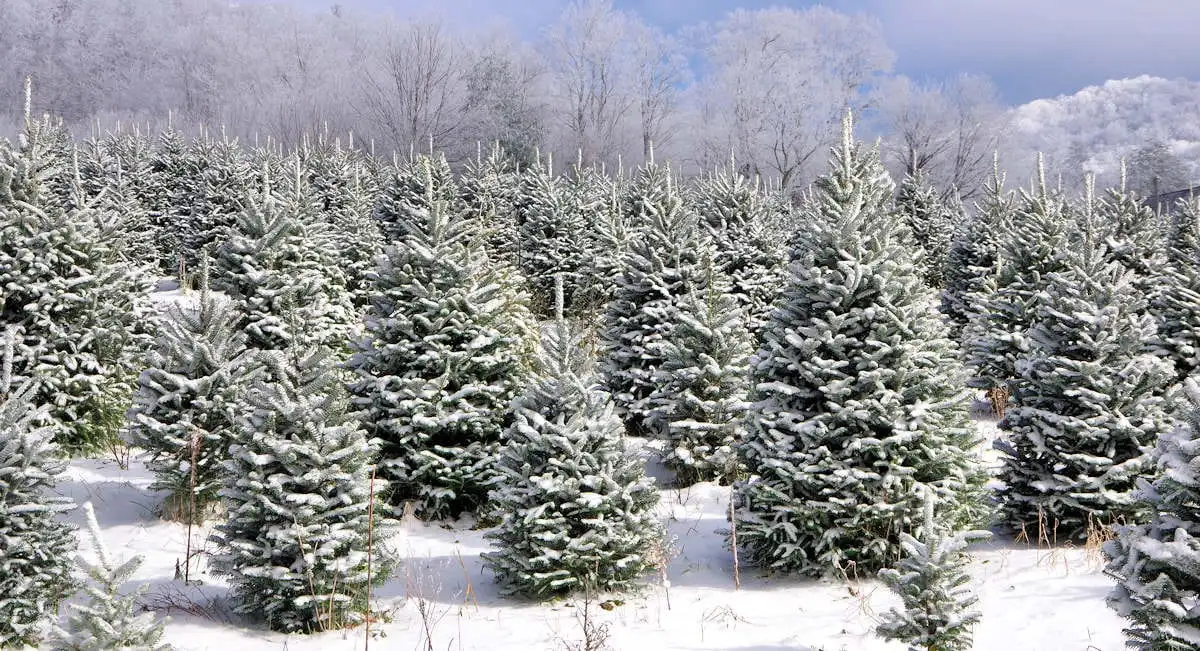
A tree farm is a managed piece of land where trees are grown as a crop. Depending on your market, that crop might be Christmas trees, shade and street trees for landscaping, palms for urban and resort projects, or specialty trees such as bonsai stock and specimen conifers. Trees are spaced, pruned, fertilized, and harvested on a schedule to generate long-term income while also providing wildlife habitat, carbon storage, and soil protection.
Start by defining your goal and market:
To explore different spacing and yield scenarios, you can also use online tree farm and plantation calculators.
Startup costs vary widely based on land, water, equipment, and the type of trees you grow. Small Christmas tree farms can often begin relatively modestly if land is already owned, while field-grown landscape trees, palm farms, and specimen-tree operations may require much more capital.
Profitability depends on your location and buyers, but in general:
It depends on the crop. Christmas trees may begin producing harvest income in 7–10 years, smaller landscape trees can be sold earlier, and large specimen trees or mature palms may take decades to reach their highest values.
Yes. Our team at TreePlantation.com can help you think through tree farm type, species selection, spacing, layout, timelines, and long-term value planning.
We can help you:
If you’d like guidance, reach out through the Tree Plantation contact page and let us know where you’re located, how much land you have, and what kind of tree farm you’d like to build.
Copyright © All rights reserved Tree Plantation