


 INVEST
 PLANT
PLANT
 SOFTWOODS
 HARDWOODS
 CALCULATORS
 RESOURCES
 PROGRAMS

Softwoods
Learn More
As concerns over climate change and rising atmospheric carbon dioxide continue to grow, researchers and clean-tech companies are developing new ways to remove excess CO₂ already present in the air. While reducing emissions at the source remains essential, many experts also see carbon dioxide removal as an important part of long-term climate strategy. One of the most discussed innovations in this field is the concept of artificial trees, also known as mechanical trees or direct air capture systems.
Unlike natural trees, which remove carbon through photosynthesis, artificial trees are engineered systems designed to capture carbon dioxide directly from the atmosphere using chemical sorbents, filters, or other advanced materials. These technologies are intended to complement natural forests rather than replace them, especially in areas where emissions are difficult to eliminate or where large-scale reforestation is not practical. This article explores the main types of artificial trees, how they work, their costs and effectiveness, and the energy required to operate them.
The term artificial trees can refer to several different carbon-removal technologies . Although they vary in design, most are built around the same goal: to remove dilute carbon dioxide from ambient air and either store it safely or use it in industrial applications.
One of the best-known types of artificial tree is the Direct Air Capture (DAC) system, sometimes described as a carbon capture tree. These devices pull air through specialized surfaces coated with chemical sorbents that bind to CO₂ molecules. Once the sorbent material becomes saturated, the system is heated or treated so the carbon dioxide can be released, collected, compressed, and prepared for storage or reuse.
Depending on the technology, these systems may use solid sorbents, such as porous filters, or liquid solvents that chemically react with carbon dioxide. Some designs use advanced materials like activated carbon, ion-exchange resins, or metal-organic frameworks (MOFs), which are valued for their large internal surface area and ability to selectively attract CO₂.
Examples of DAC technology include the Climeworks direct air capture system, which uses modular collector units, and Global Thermostat, which has developed systems designed to capture carbon dioxide from ambient air for sequestration or commercial use. In many cases, the captured CO₂ is either stored underground in geological formations or used in products such as synthetic fuels, building materials, or carbonated beverages.
A related concept is the mechanical tree, a design intended to mimic the passive exposure of leaves to moving air. Instead of relying heavily on fans, some mechanical tree systems expose large panels or discs coated with CO₂-absorbing material to the open air. This can reduce energy use during the air-contact stage because the wind naturally moves air across the capture surfaces. Once the panels are saturated, they are lowered into a chamber where moisture, heat, or pressure changes help release the captured carbon dioxide.
Mechanical trees are often promoted as a potentially more energy-efficient form of atmospheric carbon removal because they may require less forced airflow than traditional DAC units. Their modular design also suggests they could be deployed in arrays, much like a manufactured carbon-removal plantation.
Another important carbon-removal approach is Bioenergy with Carbon Capture and Storage (BECCS). Although BECCS does not resemble an artificial tree in a physical sense, it is often discussed alongside other carbon removal methods because it combines biological carbon uptake with industrial carbon capture.
In a BECCS system, plants, trees, or algae absorb CO₂ through photosynthesis as they grow. That biomass is then harvested and used to generate heat, electricity, or fuel. During combustion or processing, the carbon dioxide released is captured before it enters the atmosphere and then stored, usually in deep underground geological formations. If managed properly, the overall process can result in net carbon removal, because the carbon originally came from the atmosphere through plant growth.
A commonly cited example is the use of carbon capture systems at facilities such as Drax Power Station in the United Kingdom, where biomass energy and carbon capture have been explored as part of a broader decarbonization strategy.
Artificial trees do not perform photosynthesis like living trees. Instead, they rely on chemical and physical processes to selectively remove CO₂ from the air. Because atmospheric carbon dioxide is relatively dilute, at roughly a few hundred parts per million, capturing it efficiently requires materials that can pull out carbon dioxide even when it is present in low concentrations.
In most DAC systems, ambient air is drawn across a capture material that binds to CO₂. After enough carbon dioxide has accumulated, the material is regenerated by applying heat, reducing pressure, or adding moisture. The released CO₂ is then collected in concentrated form, making it easier to transport, use, or inject underground for long-term storage.
This process usually involves four main steps: air contact, CO₂ capture, material regeneration, and carbon storage or utilization. The efficiency of the system depends on the sorbent material, local climate, access to low-carbon energy, and whether the captured carbon is permanently stored or later re-released.
One of the biggest challenges facing artificial tree technology is cost. Direct air capture remains significantly more expensive than many conventional emissions-reduction strategies because carbon dioxide is so diffuse in the atmosphere. Building, operating, and maintaining capture equipment requires advanced materials, energy input, and supporting infrastructure for transport and storage.
Even so, supporters argue that artificial trees may play an increasingly valuable role in sectors where emissions are difficult to eliminate completely, such as aviation, cement, steel, and certain chemical industries. They may also help address legacy emissions, meaning carbon dioxide that has already accumulated in the atmosphere over decades of fossil fuel use.
Effectiveness depends not only on how much CO₂ a system can capture, but also on what happens after capture. If the carbon dioxide is permanently mineralized or injected into stable geological formations, the climate benefit can be substantial. If it is reused in a way that later releases it back into the atmosphere, the benefit may be smaller or temporary.
Artificial trees and DAC systems require energy for fans, pumps, heat, compression, and carbon processing. For this reason, the climate value of the technology depends heavily on the energy source used. If a DAC facility runs on fossil-fuel-based electricity without offsets, some of the climate benefits can be reduced. If it operates on renewable or low-carbon energy, its overall carbon removal potential is much stronger.
There are also practical limitations related to land use, water requirements, infrastructure, and the need for secure long-term storage. While artificial trees use much less land than large-scale reforestation for the same volume of carbon capture , they are not a simple or low-cost substitute for natural ecosystems. Natural forests provide many added benefits that machines do not, including wildlife habitat, cooling, erosion control, biodiversity support, and water-cycle regulation.
Artificial trees and natural trees serve very different roles. Living trees provide shade, habitat, oxygen production, watershed protection, and countless ecological benefits in addition to carbon storage. Mechanical trees, by contrast, are specialized industrial tools built specifically to remove atmospheric carbon dioxide in a controlled way.
Rather than viewing one as a replacement for the other, many climate experts see them as potentially complementary. Natural forests remain essential for ecosystem health and long-term planetary resilience, while engineered carbon-removal systems may help address emissions that cannot be avoided and carbon already accumulated in the atmosphere.
Interest in mechanical trees, direct air capture, and related carbon-removal technologies is expected to grow as countries and industries search for ways to reach net-zero and net-negative emissions goals. Continued innovation may improve sorbent materials, reduce energy needs, lower costs, and make carbon storage more scalable.
Although artificial trees are not a silver bullet, they represent an important area of climate technology research. Combined with emissions reductions, reforestation, better land management, and cleaner energy systems, they may become one part of a broader strategy to stabilize atmospheric CO₂ and reduce the long-term risks of climate change.
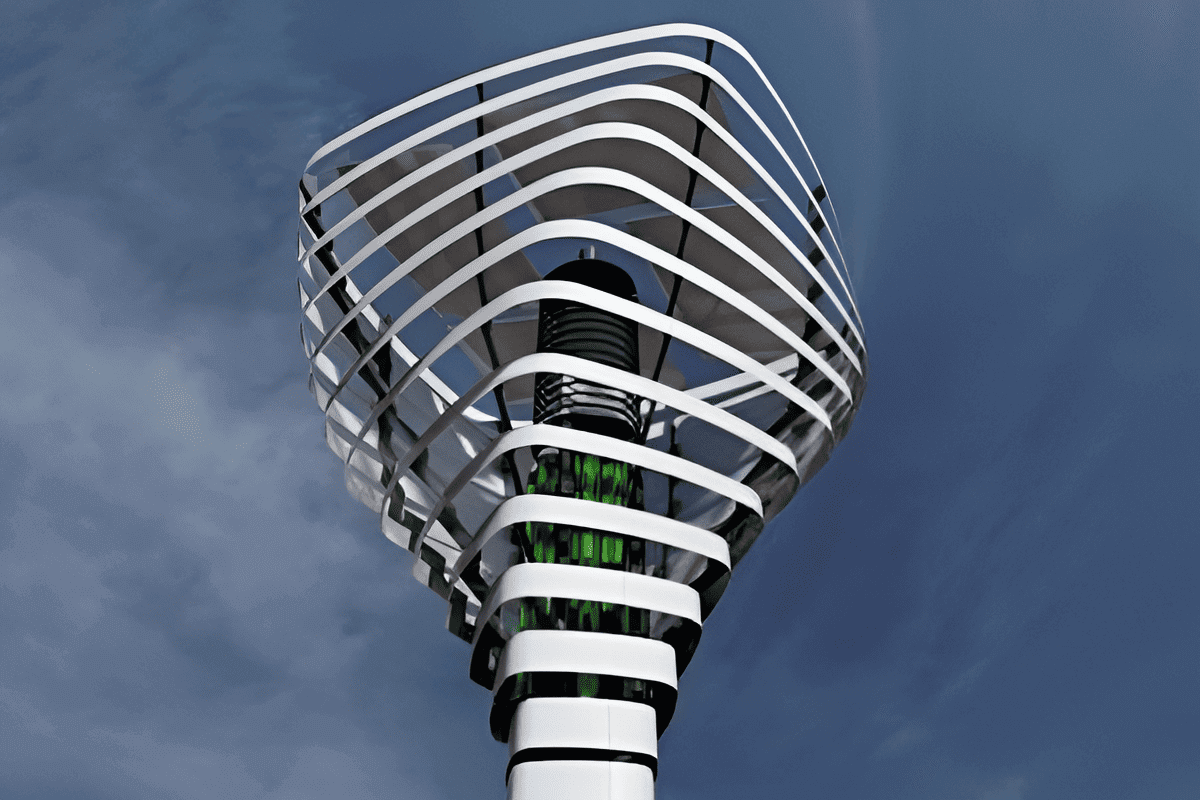
Mechanical carbon sequestration refers to engineered systems designed to remove carbon dioxide (CO₂) directly from the atmosphere using chemical and physical processes. Unlike natural trees, which rely on photosynthesis, artificial trees use advanced materials and industrial methods to capture, concentrate, and store CO₂ at scale.
These systems are often grouped under Direct Air Capture (DAC) technologies and are being developed to complement natural climate solutions by addressing emissions that are difficult to eliminate or that have already accumulated in the atmosphere.
Adsorption-based systems use solid materials with extremely high surface areas—such as activated carbon, ion-exchange resins, or metal-organic frameworks (MOFs)—to attract and bind CO₂ molecules from ambient air. These materials act like sponges at the molecular level.
Once the material becomes saturated, it is regenerated using heat, vacuum pressure, or humidity changes, releasing concentrated CO₂ for collection and storage. This approach is widely used in modular DAC systems, including those developed by companies like Climeworks.
Absorption-based systems rely on liquid chemical solutions—commonly amine-based solvents—that react with CO₂ when air is passed through them. The CO₂ becomes chemically bound within the liquid and is later released through a heating process known as solvent regeneration.
After separation, the CO₂ can be compressed and transported for geological storage or reused in industrial applications. A well-known example of CO₂ utilization is CarbonCure Technologies, which injects captured carbon dioxide into concrete to improve strength while permanently mineralizing the carbon.
One of the most important considerations in carbon removal is cost per metric ton of CO₂ captured. Natural systems and mechanical systems operate at very different price points:
While artificial trees are currently more expensive, they offer key advantages: they can operate continuously, require less land per unit of carbon captured, and can be deployed near emissions sources or storage sites. As technology advances, costs are expected to decline significantly.
The effectiveness of mechanical carbon sequestration depends on system design, scale, and operating conditions. Current technologies vary widely in their capture capacity:
This comparison highlights the high-intensity capture potential of mechanical systems relative to individual trees. However, natural forests still provide unmatched ecological benefits beyond carbon storage.
The number of artificial trees required to capture a specific amount of carbon depends on the system’s capture rate:
In contrast, it would take roughly 45–50 mature trees to capture one ton of CO₂ annually, depending on species and growing conditions.
The cost to operate artificial trees varies based on location, energy source, labor, and system efficiency. Current estimates suggest:
Costs can decrease when systems are colocated with renewable energy sources or industrial waste heat, improving overall efficiency.
Energy use is one of the most critical factors in mechanical carbon sequestration. Capturing CO₂ from the atmosphere requires both thermal energy (for regeneration) and electrical energy (for fans, pumps, and compression).
Because of these energy demands, it is essential that artificial tree systems are powered by renewable or low-carbon energy sources. If powered by fossil fuels, a portion of the captured CO₂ benefit could be offset by emissions from energy production.
Despite their promise, artificial trees face several challenges:
Additionally, mechanical systems do not provide the ecosystem services that natural forests deliver, such as biodiversity support, soil regeneration, water cycling, and temperature regulation.
Artificial trees are not a replacement for natural forests, they are a complementary technology. While reforestation and regenerative agriculture remain among the most cost-effective and multifunctional climate solutions, mechanical carbon capture may play a critical role in:
As innovation continues, advances in materials science, energy integration, and system design are expected to reduce costs and improve efficiency. When combined with natural climate solutions, artificial trees could become an important tool in a broader, multi-layered approach to stabilizing atmospheric carbon levels.
Copyright © All rights reserved Tree Plantation