



 INVEST
 PLANT
PLANT
 SOFTWOODS
 HARDWOODS
 CALCULATORS
 RESOURCES
 PROGRAMS

Softwoods
Learn More
Great landscaping is where creativity meets nature. It is the art of shaping outdoor spaces so that every tree, shrub, and flower works together to create beauty, balance, and year-round appeal. Few ornamental trees make a stronger impression than cherry trees. With their graceful form, seasonal color, and unforgettable spring bloom, they can transform an ordinary yard into a truly memorable landscape . Learning how to landscape with cherry trees is both a design choice and a horticultural skill—one that blends placement, timing, and proper care.
Whether you are refreshing a compact courtyard, designing a larger estate garden, or adding a striking focal point to an existing landscape, cherry trees offer exceptional value throughout the seasons. In spring, they burst into clouds of delicate cherry blossoms. In summer, they provide texture, greenery, and shade. In fall, many varieties light up with warm tones of gold, bronze, and red. Some types even reward you with a crop of sweet or tart cherries. This guide explores how to choose the best flowering cherry trees, how to plant and care for them successfully, and how to use them in landscape designs that feel elegant, welcoming, and timeless.
From clouds of pink and white blossoms to elegant branching structure and rich autumn color, cherry trees for landscaping deliver beauty in every season. They can soften hard edges, define garden rooms, frame walkways, and create a dramatic focal point that makes a landscape feel more inviting, memorable, and alive.
Planting a cherry tree is about far more than filling an empty space in the yard. It is about introducing color, movement, fragrance, wildlife activity, and seasonal drama into the landscape. Known botanically as Prunus spp., cherry trees include both ornamental and fruit-bearing trees, making them one of the most versatile and rewarding choices for home gardens and professional landscape designs alike.
When used thoughtfully, cherry trees for landscaping can do far more than decorate a yard. They can frame an entrance, soften a patio, line a driveway, highlight a garden path, or create a breathtaking blossom allée that becomes one of the most admired features on the property. A well-placed cherry tree brings both beauty and identity to the landscape.
Feel free to share this cherry trees infographic on your website or blog. Please include a link back to this page as the source.
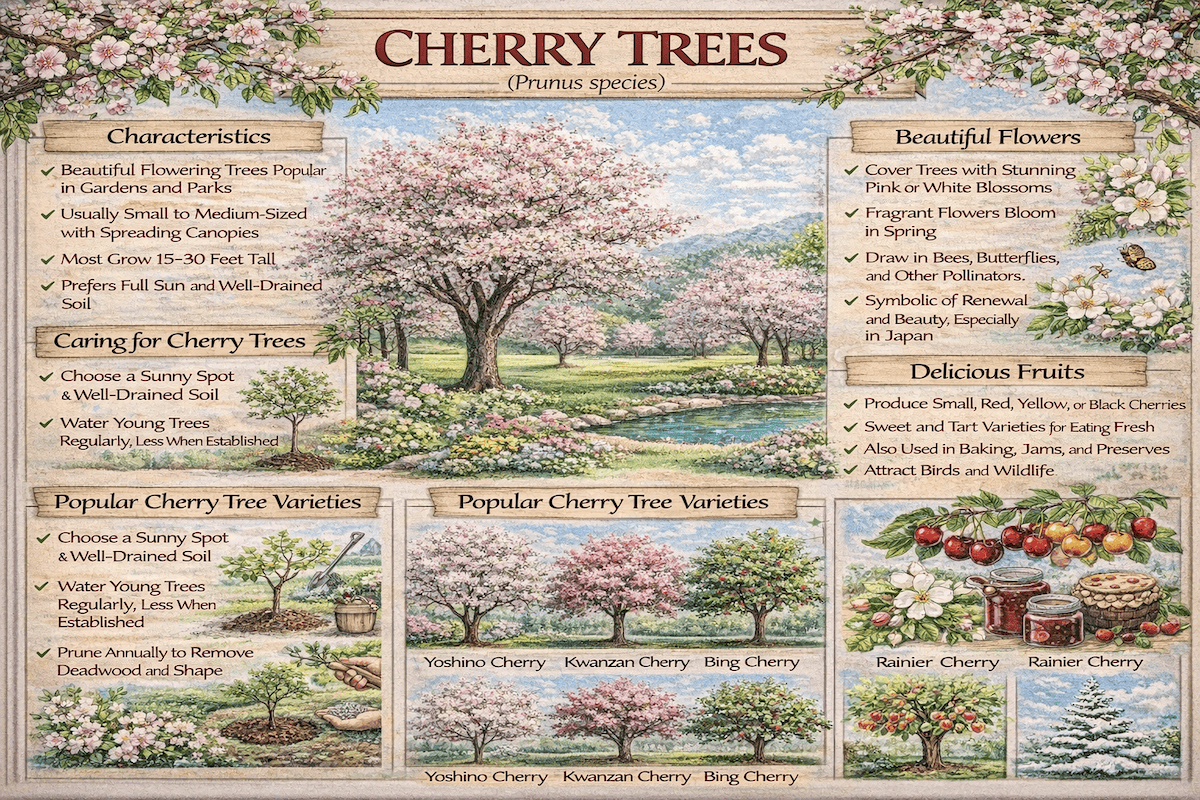

Cherry trees are members of the rose family (Rosaceae) and are native to regions across Asia, Europe, and North America. This diverse group includes both fruit-bearing and ornamental species, ranging from classic orchard trees to highly refined flowering cultivars grown almost exclusively for their beauty. While most share the iconic five-petaled blossom—often appearing in single or double forms—each species and cultivar offers its own unique combination of growth habit, bloom timing, hardiness, and landscape value.
Today, cherry trees are widely used in residential and commercial landscapes for their elegance, seasonal impact, and versatility. Some varieties are prized for edible fruit, while others are selected for their dramatic spring displays, graceful structure, and compact forms suited to smaller spaces.
Popular ornamental cherry trees include:
In addition to ornamental types, many fruiting species—such as sweet cherry (Prunus avium) and sour cherry (Prunus cerasus)—can be incorporated into landscapes where both beauty and productivity are desired. These dual-purpose trees offer spring blossoms followed by a seasonal harvest, making them especially valuable in edible landscapes and backyard orchards. For deeper species insights, explore our guide to the black cherry tree.
Among all flowering trees, cherry blossoms hold a special place. In early spring, branches become covered in clouds of white, blush, or rose-pink flowers, transforming landscapes into living works of art. This fleeting display has inspired centuries of cultural tradition—most notably Japan’s Hanami, or flower-viewing celebrations, which honor both the beauty and impermanence of life.
Beyond their visual appeal, cherry blossoms provide important ecological benefits. Their early-season blooms supply critical nectar and pollen for bees, butterflies, birds, and other pollinators at a time when food sources are limited. A single mature cherry tree can produce thousands of blossoms, making it a powerful contributor to pollinator support and biodiversity in the landscape. Incorporating cherry trees into your design not only enhances beauty—it also strengthens the health of the broader ecosystem.

One of the greatest advantages of landscaping with cherry trees is their ability to deliver both breathtaking seasonal beauty and practical value. Many cultivars offer a dual-purpose experience—an unforgettable spring blossom display followed by a productive harvest later in the growing season.
In early spring, delicate blossoms emerge along bare branches, often before leaves appear. This creates the iconic “cotton candy” canopy seen in gardens, parks, and cherry festivals around the world. As the petals fall, the tree transitions into fruit production, with small green cherries gradually ripening into vibrant shades of red, yellow, or deep purple depending on the variety.
When you select edible cultivars, cherry trees provide a rewarding combination of beauty and usefulness:
This balance of ornamental appeal and productivity makes fruit-bearing cherry trees one of the smartest choices for homeowners who want landscape trees that also function as small-scale orchard assets.
With so many cherry tree varieties available, selecting the right one begins with defining your goals. Are you looking for a dramatic focal point, a compact tree for a smaller space, edible fruit, or an extended bloom season? By matching tree characteristics to your design vision, you can create a landscape that is both visually striking and well-balanced.
Japanese cherry trees (Prunus serrulata) are among the most iconic ornamental trees used in landscape design. Commonly featured in traditional gardens and urban plantings , they develop elegant canopies that may be vase-shaped, rounded, or gently spreading—ideal for anchoring lawns, framing views, and defining outdoor spaces.
The Yoshino cherry (Prunus × yedoensis) is one of the most widely planted varieties worldwide. Its soft blush-pink blossoms appear almost white from a distance, creating a light, airy canopy that feels both refined and timeless. Yoshino cherries are especially effective in avenue plantings, near water features, or in grouped arrangements where a unified, romantic effect is desired.
The Kwanzan cherry (Prunus serrulata ‘Kwanzan’) is known for its dramatic presence. Its double-petaled pink blossoms resemble miniature peonies, forming dense clusters along each branch. Combined with its upright, vase-shaped form, Kwanzan creates a strong focal point in front yards, entryways, and formal garden settings.
The Okame cherry (Prunus × incamp ‘Okame’) offers a different advantage—timing. As one of the earliest blooming cherry trees, it produces vibrant pink flowers when winter is just beginning to fade. This makes it especially valuable for extending seasonal interest and bringing early color to smaller gardens or mixed plantings.
Not all cherry trees grow upright. Weeping cherry trees introduce a softer, more romantic form into the landscape, with long, arching branches that cascade gracefully toward the ground.
The classic weeping cherry (Prunus subhirtella ‘Pendula’) creates a flowing, fountain-like silhouette. When in bloom, its cascading branches are covered in pink or white flowers, forming a living curtain of blossoms. Planted near a patio, pathway, or seating area, it becomes a natural focal point and visual centerpiece.
The Snow Fountain cherry (Prunus × ‘Snowfozam’) offers a compact alternative. This dwarf, weeping variety is completely draped in white blossoms during peak bloom, creating the illusion of a flowering waterfall. It is ideal for smaller landscapes, courtyard gardens, and tight spaces where maximum visual impact is desired without a large footprint.

While most cherry varieties are stars of early spring, some extend the season or offer surprise blooms at unexpected times.
Autumn cherry (Prunus subhirtella ‘Autumnalis’), often called winter-flowering cherry, produces light flushes of blossoms in fall and winter whenever temperatures warm slightly, then blooms more heavily in spring. The effect is magical—soft pink or white flowers scattered through a bare, wintry garden.
Double-flowered cherry trees such as Prunus avium ‘Plena’ and Prunus serrulata ‘Shirofugen’ carry fully double blossoms with many layers of petals. The blooms resemble fluffy pom-poms or small roses rather than typical single cherry flowers. Their lush appearance adds a sense of luxury and abundance to formal landscapes, courtyards, and entry gardens.
By mixing early, mid-season, and extended-bloom varieties like autumn cherry, you can stretch your “cherry blossom season” from late winter into mid-spring and enjoy waves of color instead of a single short flush.
Successful cherry tree landscaping starts with correct planting. Here’s a simple, practical checklist:
For extra detail on planting techniques and spacing, see our general tree planting guide.

Once planted, cherry trees need consistent but not complicated care. Good maintenance means better bloom, healthier foliage, and longer life.
Watering: Deep, infrequent watering is better than frequent, shallow sprinklings. In most climates, young trees need weekly watering during dry spells; established trees can tolerate short droughts but will bloom and fruit better with consistent moisture.
Fertilizing: Apply a balanced, slow-release fertilizer formulated for fruit or ornamental trees in early spring. Avoid overdoing nitrogen, which promotes leafy growth at the expense of flowers and fruit.
Mulching: Maintain a wide mulch ring under the canopy to conserve moisture, suppress weeds, and regulate soil temperature. Refresh mulch yearly, but keep it off the trunk.
Pest management: Monitor for aphids, caterpillars, and cherry fruit flies. Encourage natural predators, use horticultural oils or insecticidal soaps when needed, and promptly remove any heavily infested twigs.
Disease monitoring: Common cherry problems include leaf spot, powdery mildew, and bacterial canker. Remove infected leaves and twigs, rake and discard fallen debris, and use appropriate fungicides or pruning sanitation where necessary.
Frost protection: In regions with late frosts, protect open blossoms by covering smaller trees overnight with lightweight frost cloths or floating row covers. This can mean the difference between a bumper crop and no fruit at all.
Pruning is essential for keeping landscape cherry trees safe, open, and blooming well.
Smaller pruned branches can be saved for DIY projects—see our tree branch craft ideas for creative ways to use them.
Bees are the primary engine behind cherry production. As they move from flower to flower, they transfer pollen that allows fruit to set. In many cases, planting more than one compatible cherry variety improves pollination and yield. Creating a pollinator-friendly garden with flowering shrubs, herbs, and wildflowers supports bees when cherries are not in bloom. You can learn more about pollinators and how to support them in our partner resources.
With their graceful forms and dramatic blossoms, cherry trees are natural design anchors. Here are a few ways to use them effectively in your landscape:
Whether you’re an experienced gardener or just starting out, adding cherry trees to your landscape is an investment in beauty, biodiversity, and seasonal joy. Their blossoms, fruit, and graceful branching form ensure that cherry trees will remain some of the most cherished trees in gardens around the world.
Sweet cherries (Prunus avium) are typically grown for fresh eating and require more summer heat to develop their rich flavor. Most cultivars need a compatible pollinizer planted nearby for reliable fruit set. In contrast, sour or tart cherries (Prunus cerasus) are commonly used for pies, preserves, and processing. They are more cold-hardy and often self-fertile, with varieties like ‘Montmorency’ producing fruit without a second tree. For more, see spring blooming and fruit-bearing cherry trees.
Most sweet cherry varieties require cross-pollination from another compatible cultivar that blooms at the same time. A few varieties, such as ‘Stella’ and ‘Lapins’, are self-fertile but still tend to produce heavier crops when paired with another tree. Many tart cherries are self-fruitful, though they also benefit from nearby pollinators and additional cherry trees. Learn more in the ecology of cherry blossoms.
Chill hour requirements vary by cultivar. Many sweet cherries need approximately 500–900 chill hours, while tart cherries often require 700–1,000 hours. In regions with mild winters, selecting low-chill varieties is essential for consistent flowering and fruiting. Choosing the right variety is discussed in exploring cherry tree varieties.
Prune cherry trees lightly after harvest or during a dry late-winter period. Focus on creating an open, balanced canopy that allows light and airflow to reach all branches. Remove dead, diseased, or crossing limbs first, then thin crowded growth. Avoid heavy pruning, as large cuts can stress the tree and increase disease risk. Proper shaping ties directly into long-term success covered in landscaping with cherry trees.
Common issues include brown rot, bacterial canker, and cherry leaf spot. Preventative care is key: remove infected fruit and plant debris, prune for airflow, and avoid overhead watering during bloom. Selecting resilient varieties and maintaining overall tree health greatly reduces disease pressure. These practices are part of building a resilient landscape system, as discussed in cherry blossom ecology.
Spacing depends on rootstock and tree vigor. As a general guideline:
Proper spacing ensures adequate sunlight, airflow, and long-term tree health. For design considerations, refer to landscape variety selection.
Dwarf and semi-dwarf cherry trees typically begin producing light crops within 3–4 years, while standard trees may take 4–7 years to reach full bearing age. Consistent fruiting depends on proper pollination, pruning, sunlight, and ongoing care. Understanding growth timelines aligns with selecting the right tree type, covered in dual-purpose cherry trees.
Copyright © All rights reserved Tree Plantation



