



 INVEST
 PLANT
PLANT
 SOFTWOODS
 HARDWOODS
 CALCULATORS
 RESOURCES
 PROGRAMS

Softwoods
Learn More
Bean trees are trees and large shrubs associated with the Fabaceae family, also known as the legume family. This diverse plant group includes species valued for their ornamental beauty, ecological benefits, seed pods, and in some cases, edible fruits or seeds. While not every so-called bean tree produces beans that people eat, many develop distinctive pod-like seed structures that make them easy to recognize and highly useful in gardens, food systems, and restoration projects.
For centuries, legume trees have played an important role in both cultivated and natural landscapes. They provide shade, seasonal flowers, wildlife habitat, and soil-building benefits, while many species are also admired for their fast growth and resilience. Some are planted primarily for beauty, some for fodder, timber, or fuelwood , and others for their edible pods, seeds, or medicinal value.
This guide explores the world of bean trees in greater depth, including the difference between ornamental and edible species, how these trees support soil fertility, and why they are increasingly important in sustainable gardening, agroforestry, and regenerative land design. Whether you are a home gardener, a tree enthusiast, or someone interested in practical planting strategies, understanding bean trees can help you make smarter choices for your landscape.
From warm-climate species grown for food production to hardy landscape trees valued for their flowers and nitrogen-fixing abilities, bean trees offer a unique combination of beauty, productivity, and environmental value. For both experienced growers and beginners, they can be one of the most rewarding tree categories to plant.
The Fabaceae family is one of the largest and most economically important plant families in the world. It includes peas, beans, lentils, clovers, acacias, locust trees, tamarind, and countless other species ranging from small herbs to towering trees. What connects them is their characteristic seed pod and, in many cases, their remarkable ability to form a beneficial relationship with soil bacteria that helps capture atmospheric nitrogen.
This nitrogen-fixing ability is one of the major reasons legume trees are so valuable. Through a symbiotic relationship with bacteria in their root nodules, many Fabaceae species can convert nitrogen from the air into a plant-available form in the soil. This natural process improves soil fertility, supports surrounding plants, and reduces the need for synthetic fertilizers.
Because of this, bean trees are often considered support species in mixed plantings. They can enrich degraded soils, improve the growing conditions for neighboring crops, and contribute to healthier, more balanced ecosystems. In gardens, farms, food forests, and reforestation projects, they are often used to help jump-start soil regeneration while also providing shade, structure, and organic matter.
Beyond soil improvement, the Fabaceae family is also important because it includes species with significant ornamental, culinary, medicinal, ecological, and commercial value. Some bean trees are prized for their dramatic flowers, others for their edible pods or seeds, and others for their usefulness in erosion control, pollinator support, and land restoration. This makes them one of the most versatile tree groups available to growers.
The benefits of growing bean trees extend far beyond appearance. While many species are attractive landscape trees with elegant foliage, fragrant blooms, or unusual pods, they also offer practical advantages that make them especially valuable in productive and environmentally conscious gardens.
One of the greatest benefits is their potential to improve soil naturally. Bean trees that fix nitrogen can gradually build fertility in the surrounding ground, helping nearby plants grow more vigorously. This makes them especially useful in areas where soils are poor, depleted, sandy, or in need of biological improvement.
Bean trees can also contribute to microclimate improvement. Their canopy provides shade, reduces soil temperature, and helps conserve moisture during hot weather. In mixed plantings, this can reduce plant stress and create a more favorable growing environment for understory crops, companion plants, or young trees.
Many species support pollinators and wildlife by offering nectar-rich flowers, protective branching structure, and seed pods that feed birds or other animals. In this way, bean trees can strengthen biodiversity in both urban and rural landscapes, making them useful for habitat restoration and pollinator-friendly planting plans.
Some bean trees also provide direct human benefits through edible pods, seeds, animal fodder, fuelwood, medicinal compounds , or useful timber. Others are valued for wind protection, erosion control, living fences, or as companion species in agroforestry systems. Their multi-purpose nature makes them especially attractive to gardeners and land stewards looking for plants that do more than one job.
In summary, growing bean trees can help you build a landscape that is not only more beautiful, but also more productive, resilient, and ecologically balanced. Their ability to enrich the soil, support biodiversity, provide shade, and in some cases produce food or other usable materials makes them a smart choice for anyone interested in long-term garden health and sustainable planting design.
Feel free to share this bean tree infographic on your website or blog. Please include a link back to this page as the source.
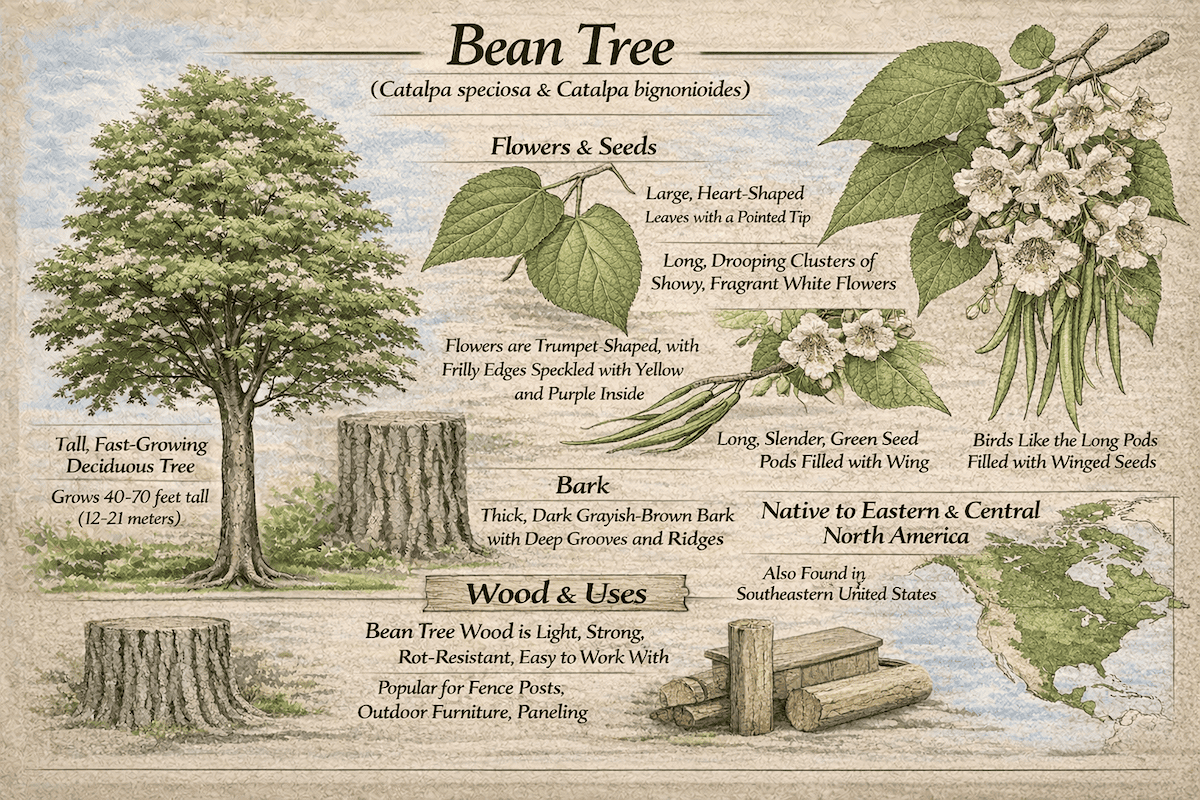

One of the most practical advantages of bean trees is their ability to perform well in challenging growing conditions. Many species are naturally resilient and well adapted to heat, poor soils, and periods of limited rainfall. This makes them especially valuable in regions where water conservation is important and long-term landscape durability matters.
Bean trees often develop deep and extensive root systems that help them tap into moisture stored farther below the soil surface. Because of this, many species are better able to endure dry spells than shallow-rooted ornamentals or thirsty shade trees. Their drought tolerance makes them a strong choice for xeriscaping, water-wise gardens, and low-input planting systems designed to reduce irrigation needs while still providing shade, beauty, and ecological function.
In addition to their water-wise qualities, bean trees can make a meaningful contribution to wildlife habitat. Their foliage, flowers, branching structure, and seed pods support a variety of insects, birds, and small mammals. Flowering species often attract bees, butterflies, and hummingbirds, while dense canopies can provide nesting cover and seasonal refuge. By planting bean trees, you are not only enhancing the beauty of your yard or garden, but also creating a more dynamic and supportive habitat for native fauna.
For gardeners, growers, and land stewards looking to combine beauty with function, bean trees represent a powerful multi-purpose category. They can provide shade, pollinator value, soil improvement, visual interest, and climate resilience all at once, making them an excellent fit for modern sustainable landscapes.
Choosing native bean trees is often one of the best ways to create a more sustainable and low-maintenance garden. Because these species have adapted over time to local soils, rainfall patterns, pests, and temperature ranges, they are often easier to establish and less susceptible to stress or disease than non-native alternatives. Native species also tend to provide stronger habitat value for local pollinators, birds, and beneficial insects.
Examples of notable native or regionally adapted bean trees include the Kentucky coffeetree, mescal bean, scarlet wisteria tree, honey mesquite, and the poinciana tree in warmer climates. Each offers a different combination of landscape and ecological benefits. Some are especially known for drought tolerance, others for their bold flowers, distinctive seed pods, filtered shade, or usefulness in dryland planting systems.
Native bean trees can also help strengthen regional identity in the landscape. Instead of relying only on imported ornamentals, planting native or climate-adapted legumes can create gardens that feel more connected to the local environment while requiring fewer outside inputs to stay healthy and attractive.
Not all bean trees are grown for food. Many are planted primarily as ornamental trees because of their elegant form, seasonal flowers, decorative pods, or attractive foliage. These species are ideal for homeowners and designers looking to add visual interest, filtered shade, and biodiversity to a landscape without focusing on edible harvests.
Popular ornamental bean tree species include the coral bean, American wisteria, Kentucky yellowwood, Texas mountain laurel, and retama. These trees and large shrubs are often chosen for their colorful blossoms, sculptural branching habits, and ability to attract pollinators. In bloom, many create dramatic seasonal displays that bring movement, color, and fragrance into the garden.
Ornamental bean trees can work especially well in foundation plantings, pollinator gardens, dryland landscapes, and naturalistic designs. In addition to their beauty, they often provide valuable ecosystem services such as shade, habitat, erosion control, and support for beneficial insects.
One of the most remarkable and ecologically important traits of many bean trees is their ability to fix nitrogen. Through a symbiotic relationship with specialized soil bacteria, these trees can help convert atmospheric nitrogen into forms that plants can use. This natural process improves soil fertility and can benefit the health and vigor of surrounding plants.
For gardeners and growers, this means bean trees can act as living soil builders. Instead of relying entirely on synthetic fertilizers, landscapes that include nitrogen-fixing species may gradually become richer and more biologically active over time. This is especially valuable in degraded soils, food forests, permaculture systems, and regenerative gardens where long-term soil health is a central goal.
Adding nitrogen-fixing bean trees to a planting design can also support companion species by improving the growing environment around them. Fallen leaves, pruned branches, and root interactions all contribute to a healthier soil ecosystem, making bean trees one of the most useful support plants in sustainable landscape design.
In dry regions or areas facing water restrictions, it is especially important to select trees that can succeed with limited irrigation. Many bean trees, much like black locust, are known for their ability to withstand drought once established. Their deep-rooted growth habit allows them to access moisture unavailable to more shallow-rooted species, helping them remain productive and attractive even in difficult conditions.
This makes drought-tolerant bean trees excellent candidates for water-wise landscapes, rural windbreaks, erosion-control plantings, and low-maintenance home gardens. In xeriscaping, they can serve as structural anchor plants that provide filtered shade, visual character, and habitat value while helping reduce overall landscape water demand.
By incorporating drought-tolerant bean trees into your yard or garden, you can create a landscape that is not only beautiful and functional, but also more resilient, climate-adapted, and sustainable. Their combination of water efficiency, ecological value, and long-term durability makes them one of the most useful categories of trees for future-focused planting design.

While many bean trees are grown for shade or ornament, a number of species also produce edible pods, seeds, or beans that have been used for generations in traditional diets. These trees offer a unique opportunity to combine food production with landscape design, making them especially valuable in food forests, homesteads, and regenerative agricultural systems.
Some well-known examples include the Kentucky coffeetree and honey mesquite, both of which produce seeds or pods that can be processed into a coffee-like beverage. When roasted and ground, these seeds create a rich, earthy drink that has historically been used as a caffeine-free alternative to coffee. In addition to beverages, mesquite pods can also be milled into a naturally sweet flour that is used in baking, porridges, and traditional foods in arid regions.
Other bean trees produce edible pods that can be used more directly in cooking. Certain species—such as the scarlet wisteria tree (when properly identified and prepared) and tropical relatives like the poinciana tree—have pods or seeds that can be incorporated into salads, stir-fries, or specialty dishes. These ingredients are often valued not only for their flavor, but also for their novelty and cultural significance.
It is important to note that not all bean tree pods are edible, and some species contain compounds that require proper preparation—or should not be consumed at all. Careful identification and knowledge of the specific species is essential before using any pods or seeds for food. When properly selected, however, edible bean trees can become a highly rewarding addition to a productive landscape.
From a broader perspective, edible bean trees represent a powerful concept in modern land design: multi-functional trees that provide both ecological benefits and food. They can contribute to long-term food security while simultaneously improving soil, supporting pollinators, and enhancing biodiversity.
In addition to their culinary value, many bean trees have a long history of use in traditional and indigenous medicine. Different parts of these trees—including seeds, bark, leaves, and roots—have been used in various cultures for their perceived therapeutic properties.
For example, the mescal bean (commonly associated with the Texas mountain laurel) has historically been used by Native American communities in ceremonial and medicinal contexts. Some traditions attribute antimicrobial, analgesic, or anti-inflammatory properties to preparations derived from certain legume species, although many of these uses are highly specialized and not suitable for casual application.
The coral bean is another example of a leguminous plant with a history of medicinal use. In traditional practices, parts of the plant have been associated with diuretic, sedative, or fever-reducing (antipyretic) properties. However, like many plants in the Fabaceae family, it can also contain potent compounds, and improper use may be unsafe.
Because of this, it is essential to approach the medicinal use of bean trees with care, knowledge, and respect for traditional practices. Many species contain bioactive compounds that can be beneficial in controlled settings but harmful if misused. Modern research continues to explore these compounds, offering potential insights into future pharmaceutical or natural health applications.
Overall, the medicinal dimension of bean trees highlights their broader value beyond landscaping. They are not only ecological workhorses and food-producing species, but also part of a long-standing relationship between humans and plants—one that connects agriculture, culture, and natural medicine.

Bean trees are powerful contributors to wildlife conservation and biodiversity, making them an excellent choice for gardeners and land stewards who want to support healthy ecosystems. Their layered structure—roots, trunk, branches, leaves, flowers, and seed pods—creates multiple opportunities for wildlife to find food, shelter, and nesting space throughout the year.
The dense foliage of many bean trees provides shade and protection for birds and small mammals, while their branching structure offers ideal locations for nesting and roosting. During flowering periods, bean trees produce abundant nectar that attracts pollinators such as bees, butterflies, and hummingbirds. These pollinators play a critical role in maintaining healthy plant communities and supporting food production systems.
As seed pods develop, they become a valuable food source for birds, insects, and wildlife. Some species produce pods that persist into the dry season, offering nourishment when other food sources are scarce. In addition, fallen leaves and organic matter from bean trees enrich the soil and support beneficial microorganisms, further strengthening the ecosystem from the ground up.
By incorporating bean trees into your landscape, you can create a living habitat corridor that supports local species and enhances ecological resilience. Whether planted in a backyard, garden, or larger land system, these trees help transform a simple landscape into a thriving, interconnected environment that benefits both wildlife and people.
There are many bean tree species to choose from, each offering a unique combination of ornamental beauty, ecological value, and practical use. Selecting the right species depends on your climate, soil conditions, and overall planting goals—whether that’s shade, food production, pollinator support, or visual impact.
The Kentucky coffeetree is known for its bold structure, coarse branching, and distinctive bark, making it a striking focal point in larger landscapes. The mescal bean (Texas mountain laurel) stands out for its glossy foliage and vibrant red seeds, along with its fragrant purple flowers that bloom in early spring.
The scarlet wisteria tree produces cascading clusters of vivid red flowers that attract butterflies and hummingbirds, while the honey mesquite is highly valued in dry climates for its drought tolerance, filtered shade, and edible pods. In tropical and subtropical regions, the poinciana tree delivers dramatic seasonal color with its bright orange-red blooms.
Other popular choices include the coral bean, American wisteria, Kentucky yellowwood, Texas mountain laurel, and retama. These species are often selected for their ornamental flowers, adaptability, and ability to attract pollinators, making them ideal for both decorative and ecological planting designs.
When thoughtfully selected and placed, bean trees can serve as anchor species in your landscape, providing structure, seasonal interest, and long-term environmental benefits. Whether your goal is to create a pollinator garden, a food-producing system, or a resilient low-water landscape, there is a bean tree species well suited to your needs.

Successful bean tree growth starts with proper planting and early care. Choosing the right location is critical—most bean trees prefer full sun and well-draining soil. While many species are adaptable, avoiding poorly drained or compacted soils will significantly improve long-term performance.
Before planting, prepare the site by loosening the soil and incorporating organic matter such as compost. This improves soil structure, encourages beneficial microbial activity, and supports early root development. Dig a planting hole that is 2–3 times wider than the root ball, but no deeper than the root mass itself.
When placing the tree, ensure the root collar (where the trunk meets the roots) is level with or slightly above the surrounding soil. Planting too deep is one of the most common causes of poor tree performance. Backfill gently, firm the soil lightly, and water thoroughly to eliminate air pockets.
During the first year, consistent watering is essential to help the tree establish a strong root system. Applying a layer of mulch (2–4 inches thick) around the base—while keeping it away from the trunk—helps retain moisture, regulate soil temperature, and suppress weeds.
Once established, most bean trees become low-maintenance and resilient, requiring minimal intervention while continuing to provide ecological and landscape benefits.
Pruning plays an important role in maintaining tree health, structure, and productivity. Regular, thoughtful pruning helps remove dead, damaged, or diseased branches, improves air circulation, and allows sunlight to reach deeper into the canopy.
Start by removing any broken or crossing branches. Then selectively thin crowded areas to improve structure and reduce competition between limbs. For young trees, early structural pruning helps establish a strong central framework that will support future growth.
Always use clean, sharp pruning tools to make precise cuts and minimize stress on the tree. Avoid excessive pruning, as removing too much foliage can weaken the tree and make it more vulnerable to pests, disease, and environmental stress.
When shaping bean trees, work with their natural growth habit rather than against it. A balanced approach encourages healthy development while preserving the tree’s natural form and long-term vitality.
Although many bean trees are known for their drought tolerance, proper watering is still essential—especially during the establishment phase. Young trees require consistent moisture until their root systems expand deep enough to access natural soil reserves.
Watering needs will vary depending on factors such as soil type, climate, rainfall, and tree size. Sandy soils may require more frequent watering, while heavier soils retain moisture longer. Always adjust your watering schedule based on real conditions rather than a fixed routine.
A proven method is to water deeply but infrequently. This encourages roots to grow downward rather than staying near the surface, resulting in stronger, more drought-resistant trees. Allow the top layer of soil to partially dry between watering sessions.
Be careful not to overwater. Excess moisture can lead to root rot, reduced oxygen in the soil, and overall decline. Well-drained soil and proper watering balance are key to long-term success.
Once established, bean trees are among the most adaptable and rewarding trees to grow. Their ability to thrive with minimal inputs, improve soil health, support wildlife, and in some cases provide food or usable materials makes them ideal for both traditional gardens and regenerative systems.
With proper planting, occasional pruning, and mindful watering, bean trees can become long-lasting assets in your landscape, offering shade, beauty, ecological value, and resilience for years to come.
Whether you are planting for beauty, productivity, or sustainability, bean trees offer a powerful combination of function and form. By applying these best practices, you can create a thriving, low-maintenance landscape that benefits both your garden and the environment.
Copyright © All rights reserved Tree Plantation



