



 INVEST
 PLANT
PLANT
 SOFTWOODS
 HARDWOODS
 CALCULATORS
 RESOURCES
 PROGRAMS

Softwoods
Learn More
LANDSCAPE TREES • PROPERTY VALUE • DESIGN
Wondering if landscape trees increase property value? Landscape trees can enhance curb appeal, provide shade, improve energy efficiency, and increase property value—often by 10–15% when properly selected and placed. Beyond aesthetics, trees improve comfort, support wildlife, and create more functional outdoor spaces.
🌳 Well-placed trees are one of the highest-return landscape investments — combining beauty, shade, and long-term value.
On this page, we’ll explore how landscape trees improve outdoor spaces, which types to choose, and how strategic planting can boost both aesthetics and long-term property value.
Homes with mature, well-maintained trees often sell faster and at higher prices because buyers associate trees with comfort, privacy, and established landscapes.
Note: The value trees add depends on species selection, placement, maintenance, and how well they complement the surrounding property and climate.
Landscape trees are one of the most effective ways to increase the value and desirability of a property. Mature trees signal stability, care, and long-term investment, making homes and commercial properties more appealing to buyers and visitors.
Properly placed trees improve curb appeal, create focal points, and define outdoor spaces. Popular choices such as flowering dogwood, Japanese maple , oak, magnolia, and evergreen conifers provide seasonal color, structure, and year-round interest.
Beyond aesthetics, trees act as natural infrastructure. Shade trees reduce heat buildup around homes, lowering cooling costs, while windbreaks help reduce winter heat loss. Trees also improve soil stability, support water management, and provide habitat for birds and pollinators.
Feel free to share this landscape trees infographic on your website or blog. Please include a link back to this page as the source.
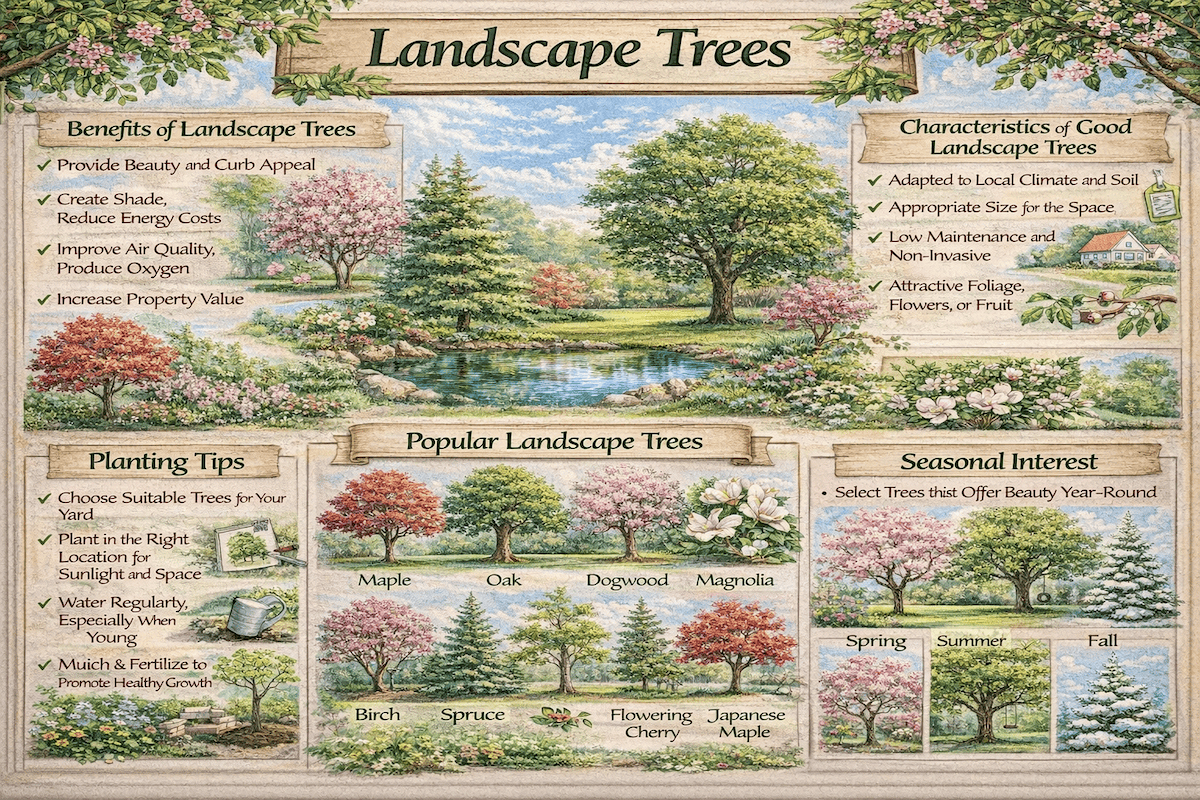
The inclusion of landscape trees can significantly increase the value and desirability of a property. Urban forestry and real estate studies consistently show that homes with mature, healthy trees often sell for more than comparable properties with little or no landscaping. In many markets, professionally landscaped yards that include well-placed trees can raise perceived property value by as much as 10–20%. Beyond the numbers, trees help buyers instantly visualize a welcoming outdoor environment—cool shade, privacy, and natural beauty that make a property feel established and inviting.
This value boost extends well beyond residential real estate. Commercial properties also benefit greatly from thoughtful tree planting. Landscape trees soften large buildings, shade parking areas, and create comfortable outdoor spaces where customers and employees can relax. Offices, medical centers, schools, and retail areas with attractive tree cover often appear more welcoming, professional, and environmentally responsible. To fully realize these benefits, property owners should consider species selection, mature size, long-term maintenance, and proper placement. Trees that are poorly chosen or incorrectly located can cause structural conflicts or maintenance issues, while well-planned plantings can provide decades of beauty and economic value.
Landscape trees form the architectural framework of a beautiful yard or streetscape. They introduce height, color, texture, and seasonal variation, transforming flat outdoor spaces into layered, visually interesting environments. A well-placed tree can frame a front entrance, line a driveway, shade a patio, or anchor a mixed planting bed. Their changing seasonal character—fresh leaves in spring, cooling shade in summer, vibrant autumn color, and sculptural winter branches—keeps a landscape engaging throughout the entire year.
Beyond visual beauty, landscape trees shape the emotional experience of a place. The rustling of leaves in the wind, birds nesting in branches, and dappled sunlight under a broad canopy create a calming atmosphere that people instinctively appreciate. These subtle sensory benefits can increase the perceived value of a property even before a formal appraisal takes place. At the community level, tree-lined streets and park landscapes improve walkability, encourage outdoor activity, and foster a stronger sense of neighborhood identity and pride.
Landscape trees fall into several broad categories, each offering distinct aesthetic and functional benefits. A successful landscape design usually blends multiple tree types to provide shade, seasonal color, structure, wildlife habitat, and year-round visual interest. Common groupings include ornamental trees, shade trees, street and urban trees, park and boulevard trees, and specialty trees such as specimen, accent, native, drought-tolerant, or edible landscape trees.
Ornamental trees are selected primarily for their decorative qualities. These trees may feature showy blossoms, colorful foliage, distinctive branching patterns, interesting bark, or attractive fruit. Even in compact landscapes, a single ornamental tree can become the visual centerpiece that ties an entire garden design together.
Because of their visual impact, ornamental trees often improve curb appeal quickly—sometimes within a single growing season. Classic favorites such as flowering dogwoods, crape myrtles, and Japanese maples are widely used for this reason. When planted near entryways, patios, or windows, these trees provide year-round beauty and create a memorable first impression for visitors and potential homebuyers alike.

Dogwoods are a timeless favorite among ornamental landscape trees, admired for their graceful form and spectacular spring blooms. Their delicate white or pink flowers appear before many other trees leaf out, creating a striking early-season display. In addition to their blossoms, dogwoods feature layered horizontal branching that adds architectural beauty throughout the year, along with clusters of bright red fruit that provide an important food source for birds and other wildlife.
Japanese maples are another beloved ornamental choice, valued for their intricate leaf shapes and dramatic color variations. Their foliage ranges from deep burgundy and rich crimson to glowing orange, gold, and lime green depending on the variety and season. Because of their relatively compact size and elegant branching structure, Japanese maples are ideal for courtyards, entry gardens, patios, and small landscapes where they can serve as refined focal points.
Flowering cherry trees bring one of the most celebrated seasonal displays in ornamental landscaping. Each spring they burst into clouds of delicate pink or white blossoms that transform streets, parks, and residential gardens into breathtaking landscapes. When planted thoughtfully with other ornamental trees, dogwoods, maples, and flowering cherries can create layered plantings that provide visual interest, seasonal color, and memorable garden scenes throughout the year.
Shade trees are prized for their large, spreading canopies and their ability to transform outdoor spaces into cooler, more comfortable environments. Strategically placed shade trees can reduce heat on roofs, patios, and driveways, lower energy costs, and improve overall landscape livability.
Wondering which shade trees are best for your yard? The most popular shade trees combine fast growth, strong structure, wide canopies, and long-term durability.
Each of these shade tree varieties offers unique advantages depending on your climate, soil conditions, and available space. Larger trees like oaks and sycamores are ideal for expansive properties, while species like honey locust or linden may be better suited for residential yards where filtered light and manageable size are preferred.
When selecting a shade tree, consider mature size, root spread, growth rate, maintenance needs, and proximity to structures. Proper placement ensures that your tree provides maximum shade benefits without causing conflicts with foundations, driveways, or overhead lines.

Lastly, elm trees remain one of the most iconic shade trees in landscape history. Their graceful vase-shaped form and wide, arching canopy create generous shade and striking visual structure. Modern disease-resistant cultivars have restored elms as a practical and beautiful option for urban landscapes.
At their core, shade trees such as oaks, maples, and elms offer far more than relief from the summer sun. Mature canopy trees cool homes and streets, reduce energy consumption, improve air quality, and create valuable habitat for wildlife.
Street trees are planted along sidewalks and roadways to improve urban environments and provide shade for pedestrians.
Urban trees thrive in compacted soils, heat, and pollution found in city environments.
Park trees provide large-scale shade and define open recreational spaces.
Boulevard trees create visual rhythm and identity along wide streets and medians.
Special-purpose trees are selected for specific design or environmental goals.
Specimen trees act as focal points within a landscape.
Accent trees highlight specific landscape features and add contrast.
Canopy trees form the upper layer of the landscape and provide extensive shade.
Evergreen trees provide year-round structure, privacy, and wind protection.
Deciduous trees provide seasonal interest and shade in summer.
Native trees support local ecosystems and biodiversity.
Drought-tolerant trees thrive with minimal water once established.
Low-maintenance trees require minimal care and resist pests and disease.
Flowering trees bring seasonal color and support pollinators.
Trees prized for fall color add vibrant seasonal interest.
For more information, explore the Hardwoods, Softwoods, and resource sections throughout the site.

Boulevard tree planting offers a powerful example of how thoughtfully designed landscapes can transform both the visual character and economic vitality of a neighborhood. In one community-led initiative, residents partnered with city planners and urban forestry professionals to line several major streets with boulevard trees. A carefully selected mix of maple, oak, and linden species created a diverse yet harmonious streetscape designed to provide beauty, shade, and long-term ecological resilience.
Within just a few years, the results became clear. Homes located along the newly planted boulevards began selling at noticeably higher prices than similar properties on nearby streets without trees. Real estate agents reported that shaded sidewalks, mature-looking tree canopies, and a cohesive streetscape helped buyers envision a welcoming and established neighborhood. Properties along the tree-lined corridors also tended to sell more quickly, highlighting the strong influence that urban tree canopy can have on curb appeal and perceived value.
The benefits extended far beyond real estate. Boulevard trees helped create cooler streets during summer months, improved walkability, and encouraged residents to spend more time outdoors. Birds and pollinators returned as the canopy matured, and residents reported a stronger sense of neighborhood identity and pride. From an environmental perspective, the trees intercepted stormwater, filtered pollutants from the air, and helped reduce the urban heat island effect that often affects densely built areas.
Arboretums—often described as living tree museums—play a unique role in modern cities. These carefully curated landscapes serve simultaneously as parks, outdoor classrooms, research centers, and conservation repositories. A well-designed arboretum can become a signature public destination, attracting visitors for walking, birdwatching, photography, and seasonal events while supporting scientific study and plant conservation.
Most arboretums showcase a wide diversity of tree species, including both native trees and carefully selected international varieties. This diversity creates a dynamic landscape that changes with the seasons, displaying blossoms in spring, deep green shade in summer, vibrant foliage in autumn, and striking branching structure in winter. Beyond their visual beauty, arboretums deliver measurable urban benefits by improving air quality, cooling surrounding neighborhoods, and providing habitat for birds, pollinators, and other wildlife.
Equally important, arboretums function as testing grounds for urban forestry. By observing how different tree species perform under real city conditions—tracking growth rates, drought tolerance, pest resistance, and storm durability—urban foresters gain valuable data that helps guide future tree planting programs. In this way, arboretums help cities develop healthier, more resilient urban forests.
Edible landscape trees bring together two of the most desirable qualities in urban planting: beauty and productivity. Instead of serving purely ornamental purposes, these trees also produce fruit or nuts that residents can harvest and enjoy. Common examples include apple trees, cherries, figs, persimmons, plums, and walnuts, along with regionally adapted varieties that thrive in local climates.
Incorporating edible trees into parks, schoolyards, and residential landscapes can strengthen local food awareness while enriching the visual character of a neighborhood. Spring blossoms attract pollinators, summer foliage provides shade, and seasonal harvests offer fresh produce that connects people more directly to the landscape around them. When thoughtfully integrated into urban design, edible trees demonstrate how productive landscapes can coexist beautifully within cities.

Planting edible trees in urban environments can transform ordinary lawns, park strips, and public green spaces into productive mini-orchards that provide fresh, ultra-local food. Community food forests and public orchard initiatives use fruit and nut trees to support neighborhood food security, educational programs, and seasonal events. Harvest days, pruning workshops, and preserving classes bring people together, turning tree planting into a shared experience that strengthens social connections and deepens a community’s sense of place.
The benefits of edible landscape trees extend far beyond the harvest. Like other landscape trees, they provide cooling shade, improve air quality, store carbon, and help regulate local temperatures. Their blossoms attract pollinators such as bees and butterflies, while fruit and shelter support birds and beneficial wildlife. When integrated into parks, school grounds, streetscapes, and neighborhood rights-of-way, edible trees become a powerful form of green infrastructure—combining beauty, nutrition, climate resilience, and community value in a single landscape element.
Choosing the right landscape tree is one of the most important long-term decisions you can make. The right tree, planted in the right place, can provide shade, privacy, beauty, and increased property value for decades. Poor selection, however, can lead to maintenance issues or conflicts with structures and utilities. Use the checklist below to guide your decision.
By planning ahead and selecting the right trees for your space, you can create a landscape that is not only beautiful, but also productive, sustainable, and valuable for generations to come.
Yes. Healthy, well-placed landscape trees can noticeably boost curb appeal and perceived quality of a property. In many markets, homes with mature shade and ornamental trees sell faster and for more than similar properties without trees, because buyers value established neighborhoods, cooler yards, and attractive outdoor living areas.
Start with your main goal: shade, privacy, seasonal color, wildlife habitat, or edible harvest. Then match the tree to your climate zone, soil type, sun exposure, and available space. Always check the mature height and spread so roots and branches will not conflict with buildings, driveways, or power lines. For spacing and long-term layout, tools like the Tree Spacing Calculator and Tree Value Calculator can help you plan before you plant.
As a general rule, plant large shade trees at least 20–30 feet (6–9 m) from buildings and smaller ornamental trees 10–15 feet (3–4.5 m) away. Give extra room to trees with very broad canopies or aggressive surface roots so they won’t damage foundations, sidewalks, or underground utilities over time.
Evergreen trees are best for year-round privacy because they keep foliage through winter and block views in every season. Deciduous trees provide summer screening and shade, then let in more winter light after leaf drop. Many landscapes use a layered mix: tall evergreens in back for constant screening, with deciduous shade trees and flowering trees in front to add color and seasonal interest.
The ideal time is during the dormant season—fall or early spring—when roots can establish before summer heat. In hot or arid regions, late fall through winter is often safest. Avoid planting during the hottest part of summer unless you can provide deep, consistent watering and mulch to reduce stress.
Regionally adapted species usually perform best. In dry and semi-arid climates, options such as desert willow, honey locust, certain live oaks, mesquites, and palo verdes can thrive once established with minimal irrigation. Pair drought- tolerant trees with smart design practices like agroforestry and mulching to further reduce water use and protect soil.
Choose species known for strong branching, good pest resistance, and minimal messy fruit or seed drop. Match each tree to the site so it doesn’t outgrow the space, use a 2–3 inch layer of organic mulch over the root zone (kept off the trunk), and water deeply but infrequently to encourage deep roots. Light, regular structural pruning in the early years—following the guidelines in Pruning Trees—will keep future maintenance lower than occasional heavy pruning.
Street and urban trees need to tolerate compacted soil, heat from pavement, air pollution, and limited rooting space. Look for species with strong central leaders, flexible or deep root systems, and good pest resistance. Smaller maples, zelkovas, some lindens, and carefully selected ornamental trees can perform very well along sidewalks, in parking lot islands, and in tight courtyard spaces when they’re matched to your local climate.
Native trees are often an excellent first choice because they’ve evolved with local climate, soils, insects, and wildlife. They typically provide the strongest ecological benefits—supporting birds, pollinators, and other beneficial species throughout their life cycle. In some designs, a mix of tough natives and non-invasive ornamental or edible trees gives you the best blend of beauty, resilience, and biodiversity.
Tree value depends on species, size, health, location, and contribution to the overall landscape. Large shade trees that frame a home, provide energy savings, or anchor a front yard can be surprisingly valuable. For rough estimates and planning purposes, you can experiment with the Tree Value Calculator to understand how trees contribute to long-term property value.
Copyright © All rights reserved Tree Plantation



