


 INVEST
 PLANT
PLANT
 SOFTWOODS
 HARDWOODS
 CALCULATORS
 RESOURCES
 PROGRAMS

Softwoods
Learn More
TREES • CLIMATE • LONG-TERM VALUE
A tree plantation is a managed area of land where trees are planted and cared for in an organized system to produce timber, restore ecosystems, capture carbon, reduce erosion, and create long-term environmental and economic value.
Tree plantations are increasingly recognized as one of the most practical forms of social impact investment, creating measurable value for the environment, communities, and long-term land productivity. By investing in a tree plantation, individuals, businesses, and governments can support reforestation , carbon sequestration, soil improvement, and wildlife habitat restoration.
But that is only part of the story.
A well-designed tree plantation can also become a productive, biodiverse forest system that generates valuable wood products such as veneer logs, sawtimber, specialty hardwoods, biomass feedstock, and other forest-based resources. In the right setting, a plantation can function as both an ecological asset and a renewable source of long-term value.
This combination of planet, purpose, and productivity is what makes tree plantations so compelling. They can help restore degraded land, strengthen climate resilience, provide shelter for wildlife, and create a lasting legacy for future generations.
Tree plantations can serve many different purposes depending on the species planted, the management strategy, and the environmental goals of the project. Some plantations are designed for timber production, while others focus on restoring ecosystems, capturing carbon, supporting wildlife, or integrating trees with agriculture. The following are several common types of tree plantation systems.
Many modern tree plantations combine several of these approaches, producing renewable timber while also restoring ecosystems, capturing carbon, and creating long-term environmental and economic value.
Feel free to share this tree plantation infographic on your website or blog. Please include a link back to this page as the source.
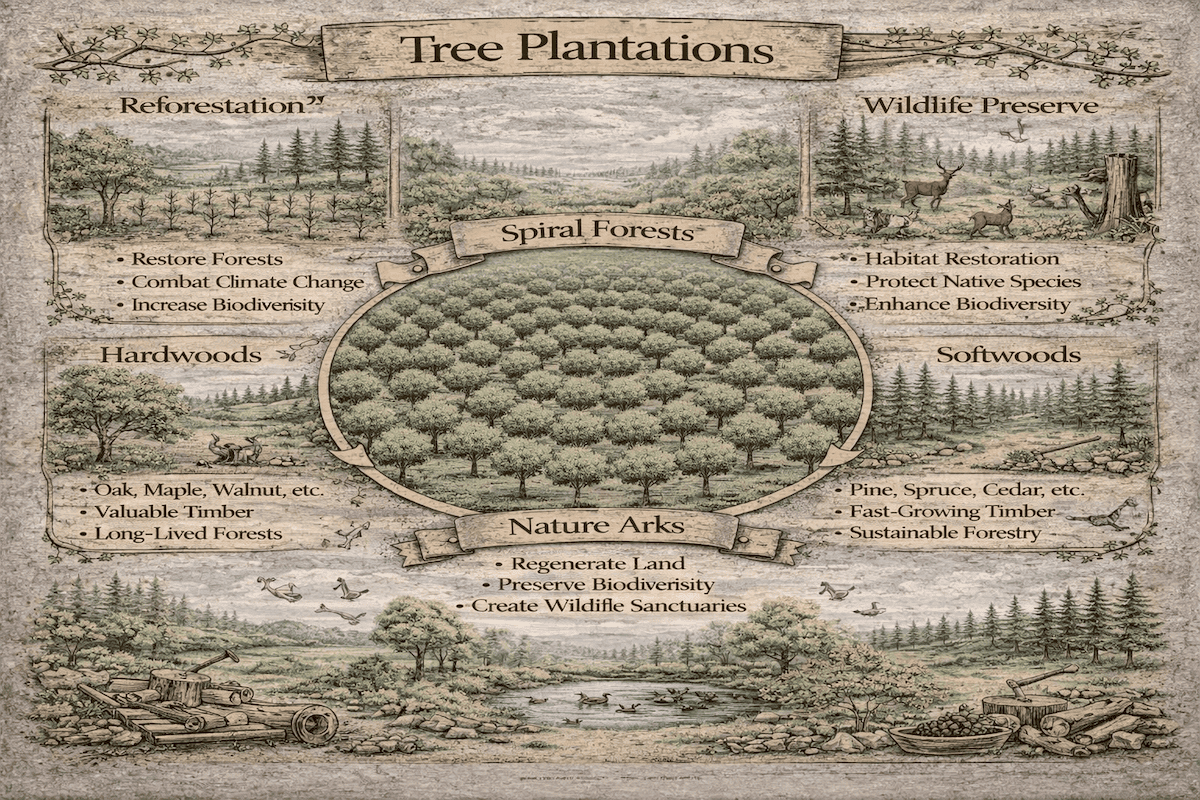
Well-managed tree plantations provide environmental, economic, and social benefits. When trees are planted strategically and maintained over time, they can restore landscapes, capture carbon, support wildlife, and supply renewable materials used around the world.
Softwood tree plantations are among the most widely planted forest systems in the world. These plantations typically grow fast-growing coniferous or lightweight hardwood species that produce timber, fiber, biomass, and ecological benefits within relatively short rotation cycles. Because many softwood trees establish quickly and tolerate a range of climates, they are commonly used for commercial forestry, reforestation projects, and landscape restoration.
The following softwood and fast-growing plantation species are commonly cultivated for their timber value, adaptability, and environmental benefits.
Loblolly pine is one of the most widely planted commercial forestry species in North America. Native to the southeastern United States, this fast-growing pine thrives in a wide range of soils and climates, making it ideal for large-scale tree plantations.
Loblolly pine plantations are commonly grown for polewood, construction lumber, plywood, and pulpwood used in paper production. The trees develop tall, straight trunks that make them well suited for utility poles, structural timber, and other long wood products.
In addition to timber, loblolly pine plantations are frequently managed for pine straw. The long, durable needles naturally shed from the trees and are harvested as a popular landscaping mulch that helps suppress weeds, retain soil moisture, and prevent erosion. This dual-purpose use—timber production and pine straw harvesting—makes loblolly pine one of the most economically versatile plantation species.
Because of its rapid growth and multiple revenue streams, loblolly pine is often considered one of the most profitable plantation trees in the southeastern United States.
Douglas fir is one of the most important structural timber trees in North America and is widely grown in softwood plantations across the Pacific Northwest and other temperate regions.
Douglas fir produces exceptionally strong lumber used in framing, heavy construction, and engineered wood products such as gluelams. The tall, straight trunks of plantation-grown trees make them ideal for producing large structural beams used in modern architecture and timber-frame buildings.
Because Douglas fir grows relatively quickly while producing dense, high-strength wood, it has become one of the most valuable softwood species in commercial forestry.
Western red cedar is prized for its naturally rot-resistant wood and exceptional durability, making it one of the most valuable softwood species grown in coastal and temperate forest regions. Cedar trees thrive in moist climates and can grow into large, long-lived trees that produce high-quality timber.
The wood from cedar plantations is commonly used for outdoor construction, including wood siding, decking, fencing, and exterior trim. Cedar’s natural oils help protect the wood from insects, moisture, and decay, making it especially suitable for structures exposed to the elements.
Western red cedar is also widely used to produce wood shakes and cedar shingles used in roofing. These materials provide excellent weather resistance while giving buildings a natural and traditional architectural appearance.
Because of its durability, aroma, and resistance to rot, western red cedar remains one of the most sought-after softwoods for construction, architectural wood products, and specialty woodworking applications.
Eastern white pine has been a cornerstone of North American forestry for centuries. Known for its tall straight trunks and lightweight wood, white pine plantations are commonly established to produce lumber, interior trim, and construction timber while also providing wildlife habitat.
Spruce trees are widely planted across Europe, North America, and northern climates for pulpwood, construction lumber, and specialty wood products. Spruce grows straight and relatively quickly in cooler climates, making it a reliable species for plantation forestry.
The wood produced from spruce plantations is commonly milled into dimensional lumber used in framing, structural construction, and general building applications. Because spruce boards are lightweight, stable, and easy to work with, they are widely used in residential and commercial construction.
Spruce lumber is also frequently milled into shiplap boards used for interior paneling and decorative wall finishes.
Pacific yew is a slower-growing species known for its dense, durable wood and historical importance in medicine. The bark of Pacific yew contains compounds used to produce life-saving cancer treatments.
Hybrid poplar plantations are commonly grown for biomass energy, pulpwood, and fast landscape restoration. These trees grow extremely quickly—often reaching harvest size in 10–15 years.
Paulownia , often called the empress tree, is one of the fastest-growing timber trees in the world. Its lightweight yet strong wood is highly valued for furniture, musical instruments, and specialty woodworking.
When managed properly, softwood tree plantations can produce renewable timber while improving soil stability, supporting wildlife habitat, and contributing to carbon sequestration.
Feel free to share this softwood tree plantation infographic on your website or blog. Please include a link back to this page as the source.
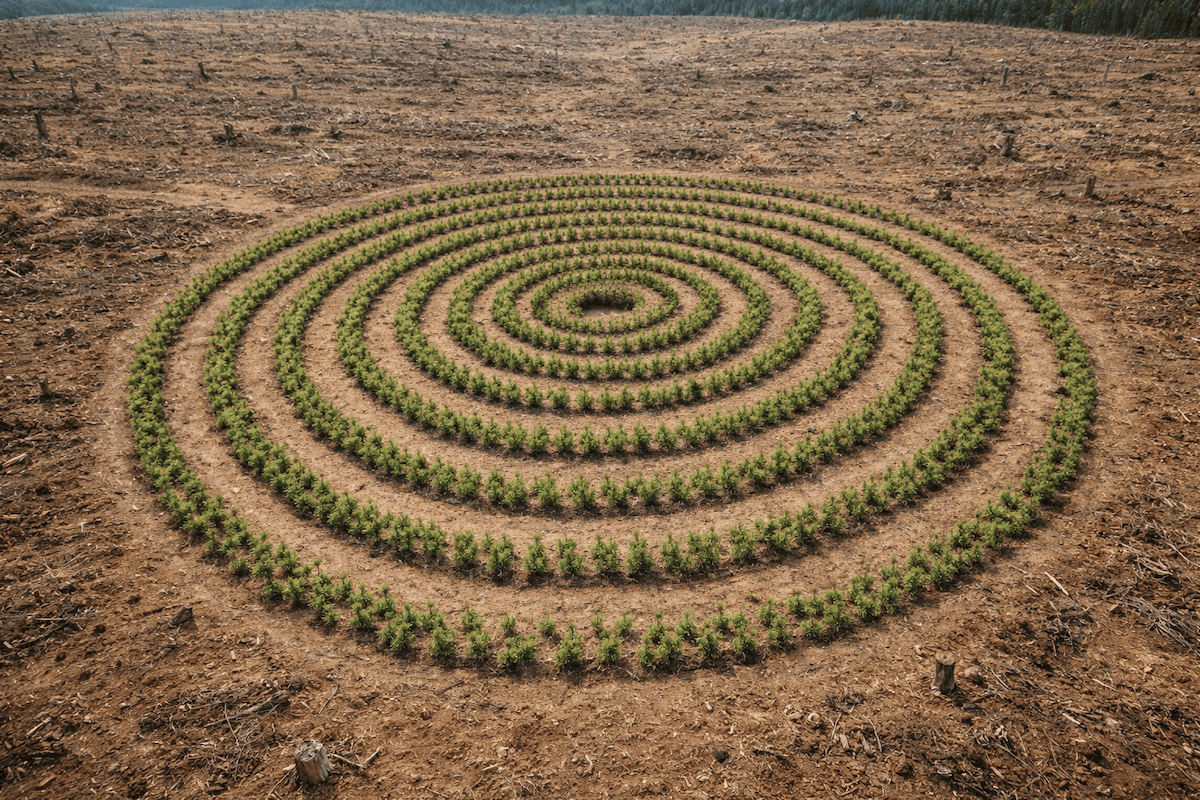
Hardwood trees are widely planted in forestry plantations because they produce some of the most valuable timber in the world. These trees typically grow slower than softwoods, but the dense wood they produce is prized for furniture making, flooring, cabinetry, specialty woodworking, and veneer. Hardwood plantations are often managed over longer time horizons, allowing the trees to develop large trunks and high-quality lumber.
The following hardwood species are commonly grown in plantations for their strength, durability, ecological value, and commercial demand.
Ash trees are valued for their strong yet flexible wood, which is widely used in tool handles, baseball bats, furniture, and flooring. Ash plantations are often established because the trees grow relatively quickly for a hardwood and produce straight trunks suitable for milling into durable lumber.
Beech trees produce a dense, fine-grained wood used for furniture, cabinetry, and flooring. Beech plantations are often grown in temperate climates where the trees thrive in well-drained soils and contribute to stable forest ecosystems.
Birch trees are planted for their attractive light-colored wood and fast establishment. Birch lumber is commonly used for plywood, furniture, interior trim, and specialty woodworking projects.
Black cherry is one of the most valuable native hardwoods in North America. Cherry wood is prized for its rich color, smooth grain, and ability to age beautifully over time. Plantation-grown cherry trees are often used to produce premium furniture and cabinetry lumber.
Black locust is one of the most durable hardwoods grown in plantation systems. The wood is naturally rot-resistant, making it ideal for fence posts, decking, outdoor structures, and erosion-control plantings. Because the tree grows quickly and improves soil fertility through nitrogen fixation, it is widely planted in restoration projects.
Black walnut is among the most valuable hardwood plantation species. Its dark, richly colored wood is highly sought after for fine furniture, gunstocks, veneer, and luxury woodworking products. Walnut plantations are often established as long-term investments because mature trees can produce extremely valuable timber.
Chestnut trees are planted for both timber and nut production. Chestnut wood is naturally resistant to decay and historically used for fence posts, beams, and structural lumber. Modern chestnut plantations also provide edible nuts and wildlife habitat.
Maple trees are grown for their dense, durable wood used in flooring, cabinetry, butcher blocks, and musical instruments. Maple plantations can also produce maple syrup, making them a versatile forestry species with both timber and agricultural value.
Oak trees are among the most iconic and widely planted hardwoods. Oak wood is exceptionally strong and durable, making it popular for flooring, furniture, cabinetry, and barrel making. Oak plantations are often managed over long rotations to produce large-diameter sawlogs and high-value veneer.
Hardwood plantations play an important role in sustainable forestry by producing renewable timber while supporting biodiversity, stabilizing soil, and creating long-term ecological and economic value.
Feel free to share this spiral forest tree plantation infographic on your website or blog. Please include a link back to this page as the source.
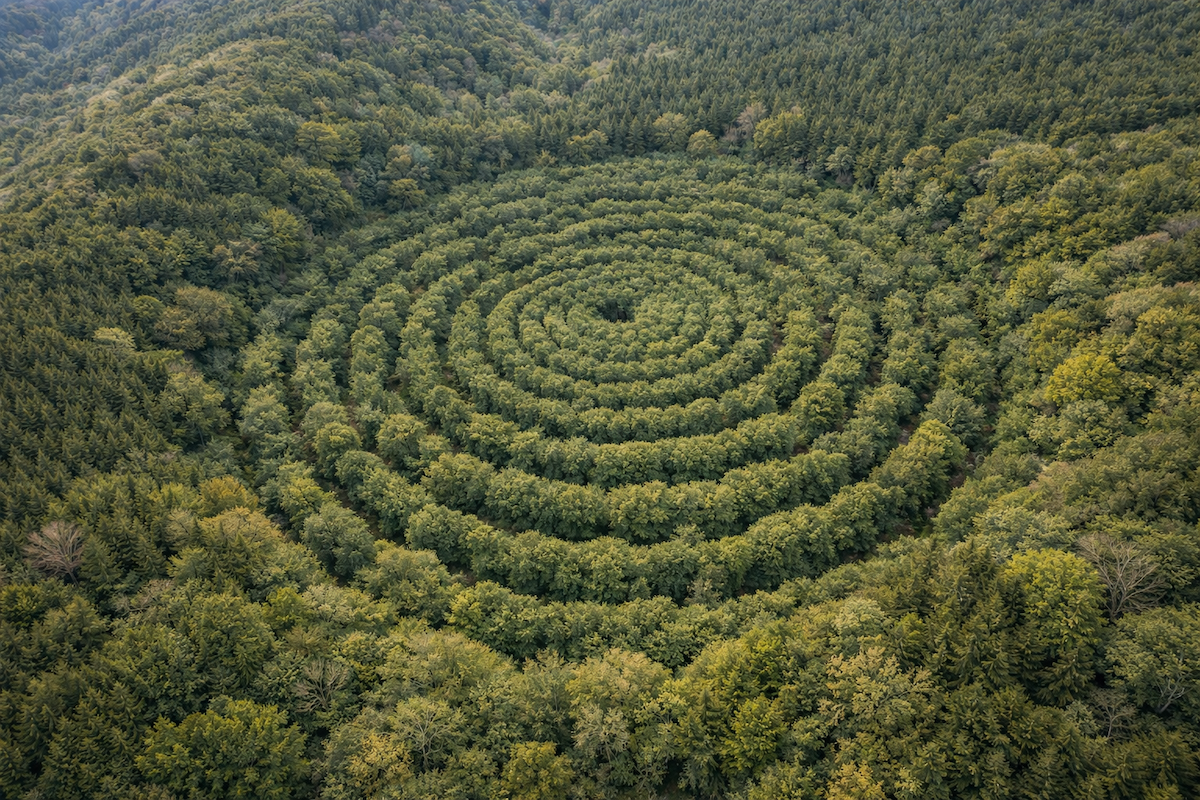
A legacy forest is a long-term tree plantation designed to grow in ecological, financial, and generational value over time. Legacy forests combine reforestation, biodiversity, land stewardship, and high-value tree planting to create living assets that can benefit both the planet and future generations.
A legacy tree plantation is more than a planting project—it is a long-term investment in land, family, and the future. By establishing a legacy forest, you create a living asset that can grow in beauty, ecological value, and financial worth over time while leaving something meaningful for your children and your children’s children.
Our legacy plantations are designed to combine stewardship, sustainability, and long-horizon value creation. Depending on the species, climate, and location, trees may be planted on your land or within a managed plantation project. In North America, legacy plantations may include species such as black locust, black walnut, and black cherry. In Australia, plantations may focus on sandalwood and black ebony. In Central America, carefully selected projects may include teak, mahogany, and rosewood as part of long-term reforestation and restoration strategies.
Over time, these plantations can evolve into productive forest ecosystems that support biodiversity, improve soil health, store carbon, protect water resources, and provide habitat for wildlife. A well-managed legacy forest is not just a timber asset—it is a living system that contributes to environmental renewal while also strengthening estate planning and generational wealth strategies.
By planting valuable tree species within a stewardship-based model, legacy plantations offer a rare opportunity to unite environmental responsibility with long-term family benefit. They help transform underused or degraded land into resilient forest landscapes that can endure for decades and continue creating value across generations.
Explore how legacy forests can support long-term stewardship, family wealth planning, biodiversity, and reforestation goals.
Explore Legacy ForestsModern forestry and tree plantation management increasingly rely on data-driven planning. Our collection of tree calculators helps landowners, foresters, gardeners, and conservation planners estimate planting density, tree value, carbon capture, and wood yields. These tools make it easier to plan sustainable forests, estimate timber production, and understand the environmental benefits of growing trees.
Explore the following calculators designed to support tree planting, forest management, and wood product planning.
The Tree Spacing Calculator helps determine the optimal distance between trees in a plantation or forest planting. Proper spacing ensures healthy growth, maximizes sunlight exposure, and improves long-term timber quality while reducing competition between trees.
The Tree Value Calculator estimates the potential financial value of a tree based on species, size, timber grade, and market demand. It provides a useful way to understand how mature trees can become valuable long-term forestry assets.
The Tree Carbon Calculator estimates how much carbon dioxide a tree can capture and store during its lifetime. This tool helps illustrate the role trees play in carbon sequestration and climate change mitigation.
The Woodlot Estimator calculates how many trees can be planted on a parcel of land and estimates potential timber yields based on spacing and acreage. This tool is useful for planning tree plantations and small forestry projects.
The Firewood Calculator estimates how much usable firewood can be produced from a tree or log. It helps determine cordwood yield based on log diameter, length, and splitting size.
The Fence Post Calculator helps determine how many posts are required for a fencing project based on property size and spacing. It is particularly useful for estimating the number of durable hardwood or treated wood posts needed.
The Wood Pellet Estimator calculates how much pellet fuel can be produced from raw wood material. This tool is useful for understanding biomass energy potential and the efficiency of converting wood into renewable heating fuel.
The Windbreak Calculator helps determine the number of trees required to create an effective windbreak. Properly designed windbreaks protect crops, reduce soil erosion, and improve microclimates in agricultural landscapes.
Together, these calculators provide practical tools for planning tree plantations, managing forests, and understanding the economic and environmental value of growing trees.
Beyond traditional forestry, modern tree plantations now include a wide range of specialty systems designed for high-value crops, regenerative agriculture, and ecological restoration. These innovative plantation models combine productivity with biodiversity, creating forests that generate both economic and environmental returns.
Many modern tree plantation projects combine several of these specialty systems, creating diversified forests that produce food, fiber, medicine, and renewable materials while restoring ecosystems and improving land resilience.
This well-known proverb captures an important truth about forests and the future of our planet. While we cannot go back in time to plant the trees that should already be growing today, we can begin planting the forests that future generations will depend on.
Tree plantations offer a practical way to restore landscapes, capture carbon, improve biodiversity, and produce renewable timber resources. When carefully designed and responsibly managed, plantations can become long-term environmental assets while also providing sustainable economic returns.
A well-planned tree plantation represents a rare opportunity where environmental restoration and responsible investment align. By planting trees today, we create forests that will provide ecological benefits, valuable timber resources, and long-term land improvement for decades to come.
We currently have several tree plantation projects open for participation. In these projects, investor funds are pooled to plant carefully selected tree species chosen for their long-term wood value and environmental benefits. Participants may choose to support a single plantation or diversify across multiple forestry projects.
In many cases, investments are backed by the trees themselves and the land on which they grow. Interests in the project may also be transferable during the life of the plantation, providing flexibility while supporting long-term forest growth.
If you would like to learn more about our tree plantation initiatives, available projects, or partnership opportunities, we would be happy to discuss how you can participate in growing forests for the future.
Contact Us to Learn MoreTree plantations are increasingly recognized as a powerful form of long-term investment, combining financial returns with environmental impact. Investors, landowners, and organizations are turning to timber investment, carbon forestry, and sustainable land management as resilient asset classes that grow in value over time.
Unlike traditional investments, tree plantations offer a unique combination of biological growth and market appreciation. As trees mature, they increase in size, quality, and market value—creating a compounding effect that can generate returns through multiple revenue streams.
Tree plantations are often considered a stable, inflation-resistant asset because biological growth continues regardless of short-term market fluctuations. Timber demand remains strong globally, driven by construction, packaging, and renewable material trends.
In addition, carbon forestry investment is gaining momentum as governments and corporations seek natural climate solutions. This creates new financial incentives for planting and maintaining forests, further strengthening the long-term value of tree-based assets.
Whether you are planting a small woodlot or developing a large-scale plantation, tree-based systems offer a rare opportunity to align profitability, sustainability, and long-term land stewardship.
A tree plantation is a managed forest where trees are planted and cultivated for specific purposes such as timber production, carbon sequestration, land restoration, and biodiversity support.
Tree plantations can be profitable depending on species, location, and management strategy. High-value hardwoods like black walnut and fast-growing species like loblolly pine are commonly grown for commercial returns.
Tree plantations provide multiple benefits including carbon capture, soil stabilization, renewable timber production, wildlife habitat, and climate resilience.
Softwood plantations typically grow faster and are used for construction lumber and paper products, while hardwood plantations grow more slowly and produce dense, high-value timber used for furniture and specialty wood products.
The amount of carbon a tree captures depends on species, age, and growing conditions. You can estimate this using our tree carbon calculator.
A legacy forest is a long-term tree plantation designed to grow in ecological and financial value while creating a lasting benefit for future generations.
Crop circle tree plantations are a regenerative planting system where trees are arranged in geometric patterns such as spirals, circles, or arcs instead of traditional rows. These formations improve sunlight distribution, airflow, and land efficiency while creating visually distinct and ecologically resilient forest systems.
Yes. Trees planted in circular or spiral formations can create natural wind buffering systems. The outer rows help reduce wind speed, protecting inner trees and minimizing stress, breakage, and moisture loss. This makes crop circle plantations more resilient in windy or exposed environments.
Crop circle tree plantations can create microclimate zones within the planting system. These zones help regulate temperature, retain moisture, and reduce evaporation, creating more stable growing conditions that support healthier tree development and improved soil biology.
In many cases, trees planted in optimized geometric layouts can grow 10–20% faster depending on species, spacing, and location. Improved light exposure, reduced wind stress, and better airflow all contribute to more efficient growth and stronger tree structure.
Crop circle tree systems encourage biodiversity and ecosystem development by creating varied planting densities and natural habitat zones. These environments support pollinators, birds, beneficial insects, and soil microorganisms, helping establish a more balanced and resilient ecosystem.
Crop circle plantations offer several advantages over traditional row planting, including improved land use efficiency, reduced wind exposure, enhanced microclimates, and greater ecological diversity. While traditional systems are easier to mechanize, geometric planting designs can deliver stronger long-term environmental and growth benefits.
Copyright © All rights reserved Tree Plantation