
Softwoods
Learn More
Driftwood is one of nature’s most beautiful reclaimed materials. Shaped by moving water, sunlight, wind, and time, it develops a weathered character that makes every piece unique. Whether it is used in rustic home decor, carvings, garden features, aquariums, or one-of-a-kind furniture, driftwood brings natural texture and coastal charm into any setting. To better understand how driftwood forms and why it varies so much in appearance, it helps to look at the two main categories: freshwater driftwood and saltwater driftwood.
Jump to key sections covering types, uses, furniture, safety, and how driftwood forms.
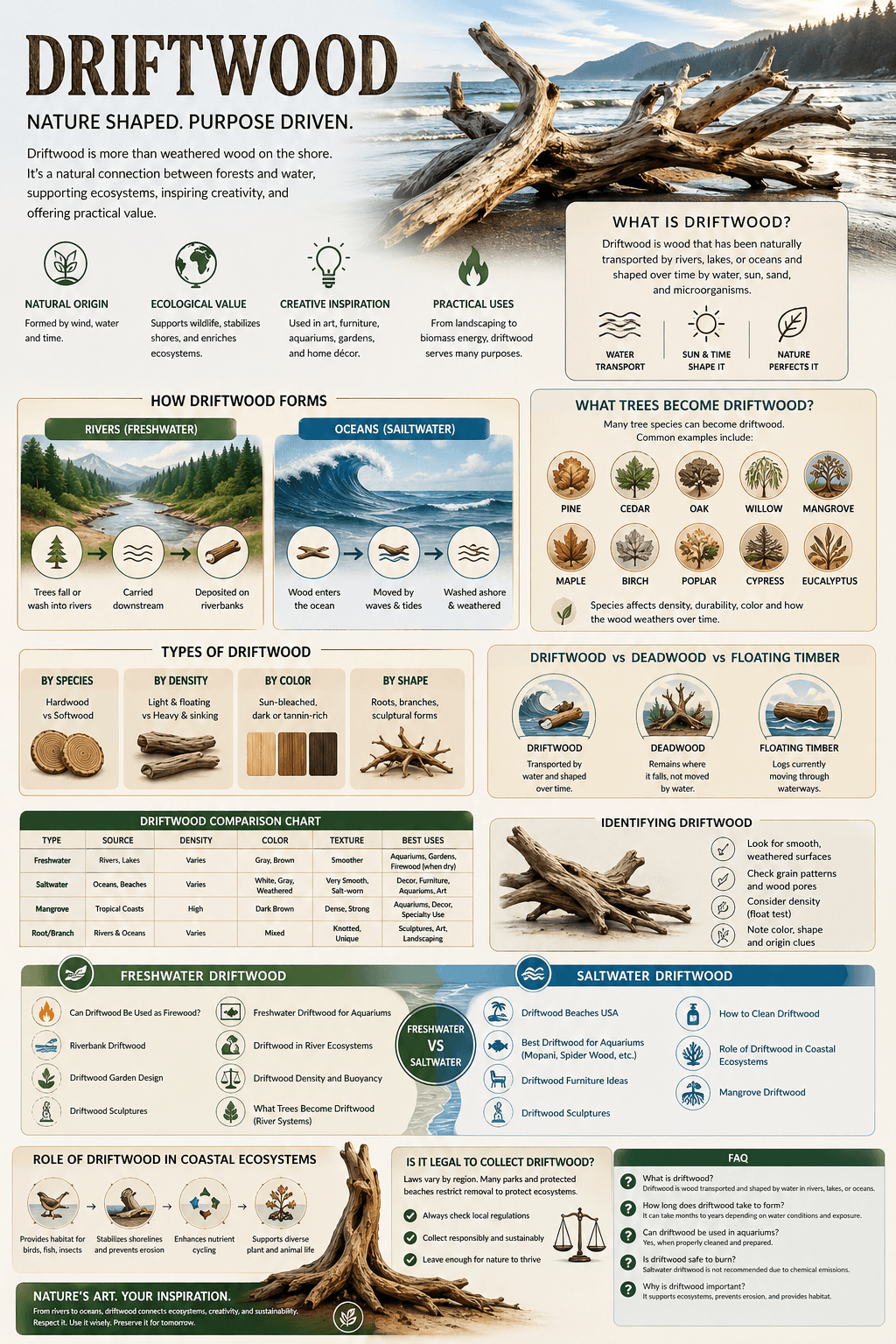
Driftwood is commonly divided into freshwater driftwood and saltwater driftwood. Both types begin as trees, limbs, roots, or logs that enter the water through storms, flooding, erosion, or natural aging. Once in the water, they are shaped by their environment. The difference lies in where they drift and how that environment changes the wood.
Freshwater driftwood is often smoother and more natural in color, while saltwater driftwood is usually more bleached, rugged, and sculptural. Rivers and lakes tend to wear wood down more gently, but ocean waves, salt, sand, and sun often create a more dramatic weathered look.
Freshwater driftwood is typically found along rivers, streams, lakes, and reservoirs. It often comes from trees growing near the water’s edge that fall in because of storms, bank erosion, or seasonal flooding. As the wood travels downstream or settles in calm water, it is gradually smoothed by current and abrasion before washing up on shorelines or riverbanks.
One of the defining qualities of freshwater driftwood is its generally smoother surface and softer coloration. Because it has not been exposed to salt, it often retains more of its original grain and may show attractive gray, tan, brown, or silvery tones. This can make it especially desirable for natural decor, aquascaping, and crafts where a more organic woodland appearance is preferred.
Freshwater driftwood can come from a wide range of hardwood and softwood species. In some regions, pieces may originate from trees such as black cherry trees, maples, beech trees, and birch trees. These species can produce driftwood with interesting bark loss patterns, fine grain detail, and elegant branch structure, especially after years of exposure to moving freshwater.
Because freshwater driftwood is often less aggressively weathered than ocean driftwood, it may remain more solid and stable for longer periods. That said, each piece should still be inspected for softness, cracking, or hidden decay before being used for furniture, shelving, art, or indoor display.
Saltwater driftwood is found along beaches, bays, inlets, and coastal shorelines, where wood may spend years being pushed and pulled by tides and surf. Some of it begins its journey inland and travels down rivers to the sea, while other pieces break away directly from coastal forests and shorefront trees. Once in the ocean environment, the wood is exposed to salt, wave action, sand abrasion, and intense sunlight.
This harsher environment often gives saltwater driftwood its signature look. It is usually more weathered, more heavily bleached, and more textured than freshwater driftwood. The constant action of waves and sand can create twisted forms, sculpted hollows, polished ridges, and dramatic curves that make saltwater driftwood especially popular for coastal decor, statement pieces, and artistic displays.
On many Pacific and northern shorelines, saltwater driftwood may come from iconic coastal conifers such as western red cedar, spruce trees, and Douglas fir. These species are well known for producing large, durable pieces of driftwood that can survive long periods of exposure to surf and shoreline conditions. Their wood often develops striking shapes and a classic sun-worn coastal appearance.
Before using saltwater driftwood indoors, it is often wise to clean it thoroughly and allow it to dry completely. This helps remove trapped salt, sand, and organic residue while making the piece better suited for long-term decorative or practical use.
Choosing Between Freshwater and Saltwater Driftwood
The best type of driftwood depends on the look and function you want. Freshwater driftwood is often chosen when a smoother, subtler, and more natural woodland appearance is desired. Saltwater driftwood is often preferred when a piece with stronger texture, lighter weathered tones, and dramatic coastal character is the goal.
In either case, driftwood is valued because no two pieces are ever exactly alike. Every curve, knot, groove, and weathered edge tells a story of movement, exposure, and time, turning fallen wood into a natural sculpture shaped by the water itself.
Feel free to share this driftwood infographic on your website or blog. Please include a link back to this page as the source.
Saltwater driftwood originates from trees, branches, and root systems that enter oceans, seas, and coastal waterways through storms, erosion, river outflows, or shoreline collapse. Once in a marine environment, the wood is subjected to a powerful combination of salt, tidal movement, wave energy, sand abrasion, and intense sunlight, all of which dramatically influence its appearance and structure over time.
One of the most recognizable characteristics of saltwater driftwood is its bleached, sun-worn coloration, often ranging from pale gray and silver to almost white. Continuous tumbling in waves and exposure to sand acts like natural sandpaper, smoothing some surfaces while carving out grooves, hollows, and sculptural contours in others. This process creates the dramatic, artistic shapes that make saltwater driftwood especially prized for coastal decor, statement pieces, and landscape design.
Saltwater driftwood is commonly derived from durable coastal and river-fed species, including western red cedar, spruce trees, and Douglas fir. These species are known for their ability to withstand prolonged exposure to moisture and marine conditions, often resulting in larger, more resilient driftwood pieces that can travel long distances before reaching shore.
Over time, the saltwater environment can cause the wood to become more porous, lightweight, and occasionally brittle, especially after extended exposure. Salt crystals may also remain embedded within the wood fibers, and organic matter such as algae or marine residue can accumulate in crevices. For this reason, saltwater driftwood typically benefits from thorough cleaning and drying before being used indoors, particularly for furniture, shelving, or craft applications.
Despite these changes, saltwater driftwood remains highly valued for its raw, sculptural beauty and unmistakable coastal character. Whether used as a centerpiece, wall art, garden accent, or part of a custom furniture design, each piece reflects years—sometimes decades—of transformation shaped by the movement of the sea.
Saltwater driftwood works best as a focal point. Its bold texture, lighter tones, and sculptural forms make it ideal for statement pieces like wall installations, coffee tables, mirrors, or garden features where its natural character can stand out.
Driftwood comes from a variety of tree species, each with its own distinct characteristics and appearance. Here are some of the most common tree species that can be found as driftwood:
Cedar
Cedar driftwood is highly sought after for its beautiful reddish-brown color and the distinct scent it emits. The wood is naturally resistant to decay, making it a durable choice for both indoor and outdoor use. Cedar driftwood often features intricate grain patterns and interesting textures, making it a popular choice for sculptures and carvings.
Oak
Oak driftwood is known for its strength and durability. It has a rich, deep brown color and a distinctive grain pattern that adds a touch of elegance to any decor. Oak driftwood is often used in the creation of furniture pieces and can be left in its natural state or finished with varnish or other protective coatings.
Pine
Pine driftwood is lighter in color compared to cedar and oak, often featuring a pale yellow or light brown hue. It has a softer texture and is easier to carve, making it a popular choice for intricate sculptures and carvings. Pine driftwood can be used to create unique and eye-catching decor pieces that bring a sense of nature into your home.
Willow
Willow driftwood is known for its graceful and flexible nature. It has a light, almost whitish color, which adds a delicate and ethereal touch to any space. Willow driftwood is often used in the creation of wreaths, floral arrangements, and other decorative pieces that require a more delicate and natural look.
Other Tree Species
In addition to cedar, oak, pine, and willow, there are many other tree species that can be found as driftwood, including birch, beech, maple, arbutus and eucalyptus. Each tree species brings its own unique characteristics and aesthetic appeal to driftwood, offering a wide range of options for home decor enthusiasts.
Driftwood possesses several distinctive characteristics that make it a captivating and versatile material for home decor. Understanding these characteristics can help you appreciate and utilize driftwood in creative and innovative ways.
Texture
The texture of driftwood varies depending on factors such as the tree species it originated from, the length of time it has been exposed to water, and the type of water it has been submerged in. Freshwater driftwood tends to have a smoother and less weathered texture, while saltwater driftwood often has a more rugged and worn appearance.
Color
Driftwood comes in a range of colors, from light and pale hues to rich and dark tones. The color of driftwood is influenced by factors such as the type of wood, the length of time it has been exposed to water, and the natural pigments present in the wood itself. Cedar driftwood, for example, often has a reddish-brown color, while pine driftwood tends to be lighter in color.
Shape and Size
The shape and size of driftwood can vary greatly, depending on the tree species and the forces of nature that shaped it. Driftwood can be found in a multitude of forms, from small and delicate pieces to large and imposing logs. The unique shapes and contours of driftwood make it ideal for creating visually striking decor pieces and sculptures.
Durability
Despite its exposure to the elements, driftwood can be surprisingly durable. Freshwater driftwood, in particular, tends to be more resistant to decay due to the absence of saltwater exposure. However, it is important to note that the durability of driftwood can vary depending on factors such as the tree species, the length of time it has been submerged, and the conditions it has been exposed to.
Uniqueness
One of the most captivating aspects of driftwood is its inherent uniqueness. Each piece of driftwood tells a story, bearing the marks and scars of its journey through water and time. No two pieces of driftwood are exactly alike, making them truly one-of-a-kind additions to your home decor.
The shapes of driftwood found in nature are as diverse as the tree species they originate from and the forces of nature that shape them. Here are some of the common shapes and forms of driftwood you may come across:
Logs and Branches
Logs and branches are perhaps the most recognizable forms of driftwood. They can range in size from small and slender twigs to large and sturdy logs. Logs and branches can be used as standalone decorative elements, placed in vases, or repurposed into functional pieces such as shelves or coat racks.
Roots and Stumps: Nature’s Sculptural Driftwood
Roots and stumps are among the most visually striking forms of driftwood, often created when entire trees are uprooted by storms, erosion, or shifting riverbanks and carried downstream or out to sea. Unlike straight branches, these pieces retain the complex architecture of a tree’s underground network—resulting in dramatic, twisted, and highly textured forms that feel more like natural sculptures than wood remnants.
Over time, exposure to water, sand, sunlight, and microorganisms smooths rough edges while preserving the intricate grain patterns and organic curves. This weathering process enhances their character, giving each piece a one-of-a-kind appearance shaped entirely by natural forces.
In home and garden design, root and stump driftwood is highly sought after for its bold presence and versatility. Larger pieces can be transformed into statement furniture such as coffee tables, console bases, or garden seating, while smaller sections are ideal for planters, aquascaping, terrariums, or artistic centerpieces. Their irregular shapes create depth and movement, making them perfect focal points in both rustic and modern spaces.
Beyond aesthetics, these pieces also tell a story of resilience and transformation—once part of a living tree anchoring soil and supporting ecosystems, now reimagined as functional art. Whether used indoors or outdoors, roots and stumps bring a raw, organic energy that connects your space back to nature.
Driftwood That Looks Like Animals: Nature’s Living Sculptures
Driftwood shaped by the forces of nature often takes on remarkably lifelike forms, and it’s not uncommon to find pieces that resemble animals. This phenomenon is the result of years—sometimes decades—of exposure to moving water, abrasive sand, salt, sunlight, and microbial activity. Together, these elements sculpt and refine the wood, bending, smoothing, and carving it into shapes that can appear strikingly familiar.
Along shorelines, riverbanks, and lake edges, beachcombers frequently discover driftwood that resembles a wide range of animals—from serpents and sea creatures to birds in mid-flight, leaping dolphins, grazing deer, or even crouching lions. Knotted roots may mimic antlers, curved branches can resemble wings, and hollowed sections may form the illusion of eyes or mouths. Each piece is entirely unique, shaped by unpredictable natural forces that transform ordinary wood into something extraordinary.
These naturally formed “animal sculptures” captivate the imagination and invite interpretation. What one person sees as a horse’s head, another might see as a dragon or mythical creature. This element of perception adds to their charm, making driftwood not just a decorative material, but an interactive and ever-changing art form.
Many collectors and artists seek out these pieces for display in homes, gardens, or galleries, often preserving their natural form with minimal alteration. Others incorporate them into larger artistic creations, using the animal-like shape as inspiration for carvings, mixed-media sculptures, or landscape features. Whether left untouched or enhanced, driftwood that resembles animals serves as a powerful reminder of nature’s creativity—where time, motion, and chance collaborate to produce works of art no human hand could replicate.
Smooth and Polished Pebble-Like Shapes
Some driftwood pieces undergo such extensive weathering that they take on smooth, rounded forms resembling river stones or ocean-polished pebbles. These shapes are created through years of tumbling in water, abrasion from sand and sediment, and constant exposure to wind and sun. The result is driftwood with softened edges, silky textures, and naturally sculpted contours that feel as calming as they look.
These pebble-like driftwood pieces are highly versatile in design applications. They can be displayed in decorative bowls, arranged in glass vessels as minimalist centerpieces, or incorporated into spa-inspired interiors to evoke tranquility and balance. Their smooth surfaces also make them ideal for tactile uses such as worry stones, handcrafted beads, or organic jewelry pieces. When paired with rougher materials like shells, stone, or raw wood, they create a striking contrast that enhances both textures. Their understated elegance complements a wide range of aesthetics—from coastal and Scandinavian to rustic and bohemian—bringing a subtle yet refined natural accent into any space.
Delicate and Fragile Forms
Not all driftwood is bold or heavy—many pieces are delicate, lightweight, and intricately formed. These fragile shapes often originate from fine branches, roots, or thin bark that have been gently shaped by water rather than aggressively worn down. Their airy, lace-like structures create a sense of movement and softness, making them ideal for decorative accents that require a lighter visual touch.
Delicate driftwood pieces are perfect for crafting wreaths, hanging mobiles, wall art, and fairy garden features. Their organic irregularity adds a whimsical, almost ethereal quality to a space, especially when combined with natural fibers, dried botanicals, or soft lighting. Because of their fragility, they are best suited for indoor use or protected outdoor environments where their intricate beauty can be preserved.
Driftwood’s organic shapes, rich textures, and natural patina make it an exceptional medium for sculpture and carving. Each piece arrives pre-sculpted by nature, offering artists a foundation that inspires creativity rather than starting from a blank slate. The knots, curves, and grain patterns guide the artistic process, allowing makers to work with the wood rather than against it.
Sculptures
Driftwood sculptures span a wide spectrum—from abstract, contemporary forms to highly detailed representations of animals, human figures, and natural scenes. Artists often embrace the inherent character of each piece, allowing its existing shape to influence the final creation. This results in artwork that feels both intentional and organic, blending human craftsmanship with natural design.
Notable examples include life-sized driftwood horses inspired by the work of artists like Heather Jansch, as well as intricate, flowing installations reminiscent of Jeffro Uitto’s creations. These works highlight how driftwood can be transformed into dynamic, expressive forms while still preserving its natural essence. The interplay between raw material and artistic vision gives each sculpture a unique identity.
Driftwood sculptures are incredibly adaptable in their placement. Indoors, they serve as striking focal points in modern, rustic, or coastal interiors. Outdoors, they integrate seamlessly into gardens, pathways, and landscape features, echoing the surrounding environment. Beyond their visual appeal, these pieces tell a deeper story—one of transformation, resilience, and the beauty that emerges when nature and creativity intersect.
Carvings: Transforming Driftwood into Living Art
Driftwood carving is a distinctive and expressive art form that blends natural design with human craftsmanship. Unlike traditional wood carving, where artists begin with uniform lumber, driftwood carving starts with material already shaped by years of exposure to water, wind, and sand. This pre-sculpted foundation challenges artists to work in harmony with the wood’s existing curves, knots, and textures—revealing forms that feel both intentional and organically evolved.
Renowned artists such as Jeff Uitto and Daryl Cox exemplify the creative potential of driftwood carving. Uitto is widely recognized for his ability to transform weathered wood into intricate, lifelike sculptures that often depict wildlife, flowing movement, and natural scenes. His work reflects a deep sensitivity to the material, allowing each piece of driftwood to guide the final composition. Rather than imposing a design, he uncovers what is already hidden within the wood.
Daryl Cox, known for his innovative “Fusion Frames,” takes a different yet equally compelling approach. By carving and shaping driftwood around mirrors and frames, he merges organic textures with functional design elements. The result is a seamless integration of nature and craftsmanship, where the irregular edges of driftwood soften and elevate otherwise conventional objects.
Driftwood carvings span a wide artistic spectrum. Some pieces are highly detailed, featuring carefully defined animal figures, human faces, or botanical motifs, while others lean toward abstract interpretations that emphasize flow, balance, and texture. The natural coloration—ranging from sun-bleached silvers to deep, water-darkened browns—along with visible grain patterns and weathered surfaces, adds depth and character that cannot be replicated with processed wood.
The carving process itself often requires a delicate balance between refinement and preservation. Artists may sand, chisel, or lightly shape the wood, but they typically avoid overworking it, allowing the raw essence of the driftwood to remain intact. This restraint is what gives driftwood carvings their authenticity and emotional resonance.
Whether displayed as standalone sculptures, incorporated into functional art, or used as statement décor, driftwood carvings capture a powerful narrative of transformation. What was once a fallen branch or root, shaped by the elements over time, becomes a timeless piece of art—bridging the gap between nature’s unpredictability and human creativity.
Driftwood furniture represents a perfect fusion of sustainability, artistry, and natural design. Crafted from wood that has already been shaped by the elements, each piece carries a story of transformation—weathered by water, sculpted by sand, and refined by time. By repurposing driftwood into functional furniture, designers and artisans not only reduce waste but also create one-of-a-kind pieces that bring organic beauty and environmental consciousness into the home.
Unlike mass-produced furniture, no two driftwood pieces are ever identical. The natural curves, knots, textures, and tones of the wood ensure that every table, desk, or decorative element is completely unique. This individuality makes driftwood furniture especially appealing for those seeking statement pieces that blend rustic charm with modern sophistication.
Tables and Desks
Driftwood tables and desks are among the most popular and visually striking applications of this material. Designers often preserve the raw, sculptural qualities of the wood, using it as a base or structural framework while incorporating materials such as glass, steel, or stone to enhance functionality. The result is a harmonious balance between rugged natural forms and clean, contemporary design.
One notable artist in this field is Marc Dibeh, whose work showcases driftwood in its natural, unrefined state. His tables and desks frequently feature intricate arrangements of interwoven branches and roots, topped with glass surfaces that allow the complexity and artistry of the wood to remain fully visible. Each piece functions not only as furniture but also as a sculptural centerpiece.
Similarly, the design studio Bleu Nature has gained international recognition for blending reclaimed driftwood with modern materials. Their collections emphasize contrast—pairing raw, weathered wood with sleek glass or polished metal—to create furniture that feels both grounded in nature and aligned with contemporary interiors. Their tables and desks often highlight the organic geometry of driftwood, turning natural irregularities into defining design features.
Beyond aesthetics, driftwood tables and desks offer practical benefits. The wood is typically well-seasoned due to prolonged exposure to the elements, making it stable and durable when properly treated. Additionally, using reclaimed driftwood supports eco-friendly design practices by reducing the demand for newly harvested timber.
Whether used as a coffee table, dining table, writing desk, or console, driftwood furniture introduces warmth, texture, and authenticity into any space. It serves as a conversation piece, a functional work of art, and a reminder of the beauty that can emerge when nature and design intersect.
Chairs and Benches: Functional Art Rooted in Nature
Driftwood chairs and benches represent a remarkable intersection of comfort, craftsmanship, and natural artistry. Unlike conventional seating, these pieces are shaped as much by the forces of nature as by the hands of the designer. The result is furniture that feels alive—each curve, grain pattern, and weathered surface telling a story of time, movement, and transformation.
Renowned artists such as Alain Mailland have elevated driftwood seating into the realm of fine art. Known for his sculptural approach, Mailland creates chairs and benches with fluid, organic lines that echo natural forms found in forests and along shorelines. His work blurs the boundary between furniture and sculpture, producing pieces that are both visually captivating and fully functional.
Similarly, designer Brent Comber is celebrated for his ability to transform reclaimed and driftwood materials into refined, contemporary furniture. His benches and chairs often emphasize simplicity and balance, allowing the raw textures and natural imperfections of the wood to take center stage while still delivering durability and usability. The result is a rugged yet sophisticated aesthetic that fits seamlessly into both modern and rustic environments.
What sets driftwood seating apart is its inherent individuality. No two pieces are ever the same—each chair or bench is shaped by the unique characteristics of the wood, including its twists, knots, and natural contours. Designers often work with these features rather than against them, highlighting the wood’s organic geometry and turning irregularities into defining design elements.
Beyond their visual appeal, driftwood chairs and benches offer a meaningful connection to sustainability. By repurposing naturally fallen or reclaimed wood, these pieces reduce the demand for newly harvested timber and give new life to materials that would otherwise be discarded. Many pieces are also naturally seasoned, having been exposed to the elements for years, which contributes to their stability and longevity when properly finished.
The experience of using driftwood seating is uniquely tactile and immersive. The subtle variations in texture, the gentle curves shaped by water and time, and the warmth of natural wood create a sensory connection that standard furniture cannot replicate. Whether placed indoors as a statement piece or outdoors in a garden or patio setting, driftwood chairs and benches bring a sense of calm, authenticity, and grounded beauty to any space.
More than just places to sit, these pieces serve as functional works of art—celebrating the collaboration between nature’s forces and human creativity, and transforming reclaimed wood into timeless design.
Shelves and Storage Units: Functional Design with Natural Character
Driftwood shelves and storage units offer a distinctive blend of functionality and organic beauty, transforming everyday storage into a design feature. Unlike conventional shelving, driftwood pieces introduce irregular shapes, natural textures, and weathered tones that create visual depth and character. Each shelf becomes a unique composition, shaped by the wood’s journey through water and time.
Designers often arrange driftwood pieces in asymmetrical or free-form layouts, resulting in shelving units that feel dynamic and sculptural. Whether mounted as floating shelves, integrated into wall installations, or built into freestanding units, driftwood adds a rustic yet refined touch to any room. These pieces work equally well in living rooms, bedrooms, kitchens, and bathrooms—providing practical storage while serving as a natural focal point.
Smaller driftwood elements can also be incorporated as hooks, brackets, or accent supports, enhancing both form and function. The contrast between smooth, weathered wood and modern materials like glass, metal, or white walls creates a balanced aesthetic that suits coastal, farmhouse, bohemian, and contemporary interiors alike.
Bed Frames and Headboards: Bringing Nature into Your Sanctuary
Driftwood bed frames and headboards elevate bedroom design by introducing sculptural, nature-inspired elements into one of the most personal spaces in the home. These pieces are more than furniture—they are statement artworks that anchor the room with warmth, texture, and authenticity. The natural curves, knots, and tones of driftwood create a calming visual rhythm that promotes relaxation and a deeper connection to the outdoors.
Artists such as Paul Schick are known for crafting bespoke driftwood headboards that seamlessly integrate intricate wood forms into elegant, functional designs. His work transforms the bed into a centerpiece, where each branch and contour is thoughtfully positioned to highlight the wood’s natural beauty. Similarly, Karen Miller of Devon Driftwood Designs creates handcrafted bed frames and headboards using driftwood sourced from the Devonshire coastline. Her pieces capture the rugged, windswept essence of the sea, bringing a sense of coastal tranquility into the home.
The interplay between driftwood’s weathered texture and soft bedroom textiles—such as linen, cotton, or wool—creates a rich sensory experience. The contrast enhances both elements: the wood feels more grounded and organic, while the fabrics appear even softer and more inviting. This balance contributes to a peaceful, restorative environment ideal for rest and rejuvenation.
Driftwood bed frames and headboards are also highly versatile. They can be customized to fit any mattress size and adapted to suit a wide range of interior styles, from rustic and coastal to minimalist and modern. Whether left in their natural state or lightly finished for durability, these pieces retain their unique character and story—each one shaped by years of natural forces before becoming part of your home.
As interest in sustainable and eco-friendly home décor continues to grow, driftwood furniture stands out as an environmentally conscious choice. By repurposing naturally fallen wood, these designs reduce the need for new timber while celebrating the beauty of reclaimed materials. The result is furniture that not only enhances your space but also reflects a commitment to sustainability and thoughtful living.
Driftwood furniture is not only visually captivating but also an environmentally responsible choice. By repurposing wood that has already fallen and been naturally weathered, you help reduce the demand for newly harvested timber and support sustainable design practices. Each piece carries a unique history—shaped by water, wind, and time—bringing authenticity, character, and a deep connection to nature into your living space.
Burning driftwood has been practiced for centuries in coastal communities for heating and cooking. While it may appear to be a convenient and natural fuel source, there are important advantages and risks to consider before using driftwood for firewood.
Pros of Burning Driftwood
Renewable and Readily Available: Driftwood is continuously replenished by rivers, lakes, and oceans. For those living near shorelines, it can be an abundant and low-cost fuel source that reduces reliance on commercially harvested firewood or fossil fuels.
Atmosphere and Aesthetic Appeal: Driftwood fires can create a warm, rustic ambiance. The unique shapes and textures of the wood, combined with the crackling sound of burning, enhance the sensory experience and add to the charm of outdoor fires or beach settings.
Lightweight and Easy to Handle: Many pieces of driftwood are dried and partially hollowed by natural processes, making them easier to carry, cut, and ignite compared to freshly cut wood.
Cons of Burning Driftwood
Toxic Emissions: One of the most significant concerns is the release of harmful chemicals when driftwood is burned—particularly saltwater driftwood. The salt content can lead to the formation of toxic compounds such as dioxins and furans, which pose risks to human health and the environment, especially in enclosed or poorly ventilated areas.
Salt Damage to Equipment: Salt embedded in driftwood can corrode metal components in fireplaces, wood stoves, and chimneys. Over time, this can lead to costly damage and reduced lifespan of heating systems.
Unpredictable Burning Behavior: Driftwood varies widely in moisture content and density. Some pieces may burn too quickly, while others smolder and produce excessive smoke, making it difficult to maintain a consistent and controlled fire.
Before burning driftwood, it is important to check local regulations, as some areas restrict its use due to environmental concerns. If used, it should be burned outdoors in well-ventilated settings, and saltwater driftwood should generally be avoided for indoor fires.
How long does it take for driftwood to form? The answer depends on a combination of environmental factors, including water movement, climate, wood type, and exposure conditions. Driftwood formation is not an overnight process—it is a gradual transformation shaped by nature over time.
When a tree or branch falls into a body of water, it enters a process known as fluvial or tidal transport. As it moves with currents, waves, and tides, the wood is slowly stripped of bark, softened, and sculpted by abrasion from sand, rocks, and sediment. Sunlight and microorganisms further contribute to its aging and bleaching.
In freshwater environments such as rivers and lakes, this process is typically slower due to gentler flow conditions. It may take several months to several years for wood to develop the smooth, weathered characteristics associated with driftwood. In contrast, saltwater environments—where tides, waves, and salt exposure are more intense—can accelerate the transformation. In some cases, recognizable driftwood can form within months, though more refined shapes still take years to develop.
The type of wood also plays a role. Softer woods tend to weather more quickly, while dense hardwoods can endure longer journeys, often resulting in more intricate and sculptural forms.
It is important to remember that driftwood is part of a larger natural ecosystem. It provides habitat for wildlife, helps stabilize shorelines, and contributes to nutrient cycles. When collecting driftwood, always follow local guidelines and prioritize sustainable, responsible sourcing.
From smooth freshwater pieces to rugged, salt-sculpted forms, driftwood showcases an incredible range of textures, shapes, and uses. Whether transformed into furniture, sculptures, décor, or simply appreciated in its natural state, driftwood remains a powerful symbol of nature’s ability to shape beauty over time.
Copyright © All rights reserved Tree Plantation