



 INVEST
 PLANT
PLANT
 SOFTWOODS
 HARDWOODS
 CALCULATORS
 RESOURCES
 PROGRAMS

Softwoods
Learn More
BIRDS • HABITAT • BACKYARD ECOLOGY
Wondering how to attract birds to your backyard? The most effective way is to plant bird-friendly trees that provide food, shelter, nesting sites, and year-round habitat.
🐦 Quick answer: A bird-friendly yard combines native trees, layered vegetation, water sources, and seasonal food to support birds throughout the year.
Examples: Trees that produce berries, seeds, nectar, and insect habitat— such as dogwood, oak, berry trees, and flowering species—can attract dozens of bird species over time.
Start by planting a mix of trees that provide resources across all seasons, then layer shrubs and ground cover to create a complete habitat system.
🦅 Key insight: The more layers your landscape has (trees, shrubs, ground cover), the more bird species it can support.
Bird trees are tree species that provide essential habitat and resources for birds, including food, nesting sites, shelter, and protection.
Did you know? A well-designed bird-friendly landscape can support dozens of bird species year-round by providing seasonal food sources and layered habitat.
Bird trees—trees that provide food, shelter, nesting sites, and safe perches—are the foundation of a thriving bird habitat. Whether in natural forests or urban landscapes, these ecosystems support birds with insects, nectar, fruits, seeds, and year-round cover.
Planting even a single bird-friendly tree in your backyard can transform your space into a small wildlife refuge. Over time, a mix of species creates a self-sustaining habitat that attracts both seasonal and resident birds.
The benefits extend beyond birds. A healthy bird habitat helps control insect populations, supports pollinators, and improves the resilience of your landscape.
There are also human benefits. Exposure to birdsong and natural soundscapes has been linked to reduced stress, improved well-being, and a stronger connection to nature.
Flowering trees are especially valuable. Consider planting nectar-rich species such as dogwood, linden (basswood), black locust, tulip trees, and flowering fruit trees. These attract hummingbirds, warblers, and pollinators while boosting ecosystem productivity.
Feel free to share this bird trees infographic on your website or blog. Please include a link back to this page as the source.
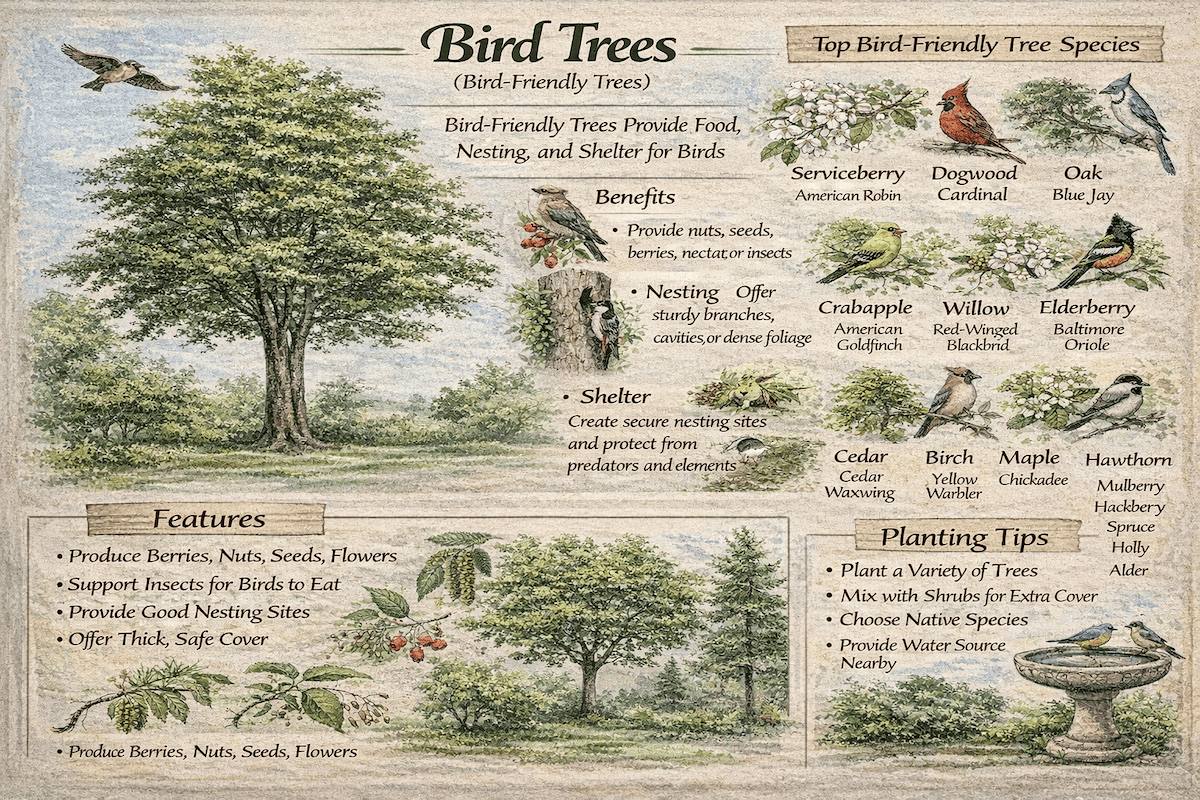

Bird trees play a critical role in supporting biodiversity and ecological balance—even in small backyard landscapes. By providing reliable sources of food, shelter, and nesting sites, these trees support a wide range of bird species, including migratory visitors such as swallows, robins, warblers, martins, bluebirds, hummingbirds, and blackbirds.
The presence of diverse bird populations is one of the clearest indicators of a healthy ecosystem. Birds help disperse seeds from your nut trees and fruit trees, assist with pollination, and naturally regulate insect populations. These interactions strengthen soil biology, improve plant health, and create more resilient, self-sustaining garden systems.
Bird trees also support a broader web of life, including beneficial insects, small mammals, reptiles, and amphibians. This interconnected ecosystem—driven by the relationships between trees, insects, and birds—enhances overall environmental stability. Protecting mature trees and planting new bird-friendly species is one of the most effective ways to restore biodiversity, starting right in your own backyard.
Not all bird trees provide the same benefits. Some species excel at producing nectar and attracting insects, while others offer fruits, seeds, or dense shelter. By combining a variety of tree types, you can create a layered, bird-friendly habitat that provides food and cover throughout the entire year—from early spring blooms to winter seed sources.
Trees that produce nectar-rich flowers are essential for attracting birds and pollinators. Species such as dogwood, red bottlebrush, tulip trees, and flowering fruit trees are excellent choices for creating a vibrant, wildlife-friendly landscape.
Flowering dogwood, with its showy white or pink bracts, attracts a variety of songbirds while also supporting insects that serve as an important food source. Later in the season, its berries provide additional nutrition.
Red bottlebrush, known for its bright, cylindrical blooms, is especially attractive to hummingbirds and nectar-feeding species. In warmer climates, it can bloom multiple times per year, extending the feeding season.
Planting nectar-producing trees for birds transforms your landscape into a dynamic ecosystem. During bloom periods, these trees become hubs of activity—supporting feeding, nesting, and pollination as birds move through your garden.
Trees that offer both food and structural protection are essential for creating a complete bird habitat. Species such as wild cherry, hawthorn, and oak are particularly valuable across many temperate regions.
Wild cherry trees produce nutrient-rich fruit that attracts thrushes, robins, waxwings, and many other species. Their branching structure and dense foliage also provide excellent nesting sites and protection.
Hawthorn trees produce clusters of berries that sustain birds through fall and winter. Their dense, thorny branches create a natural defense against predators, offering safe refuge for smaller birds.
Oak trees are among the most important wildlife-supporting trees. Their acorns feed jays, woodpeckers, nuthatches, and ground-feeding birds, while their leaves support hundreds of caterpillar species—an essential food source for nestlings. If space allows, planting a native oak tree can serve as the foundation of a highly productive bird habitat.
By planting trees for birds, you effectively create a small forest ecosystem in your backyard—one that provides year-round habitat, supports multiple species, and enhances the health of your landscape. In return, you gain a thriving, dynamic environment and a daily connection to nature through the presence and activity of birds.
Choosing the right bird trees depends on your local climate and ecosystem. Native and regionally adapted species provide the best food sources, nesting opportunities, and long-term habitat stability. Below are some of the most effective bird-friendly trees by region:
Tip: For the best results, plant a mix of trees that provide nectar, fruit, seeds, and shelter across different seasons. This creates a continuous food supply and supports birds year-round while strengthening your local ecosystem.

Pollinating trees such as eucalyptus, jacaranda, linden (basswood), and crabapple play a dual role in supporting both birds and pollinators. Their abundant blossoms provide rich sources of nectar and pollen, while the insects they attract become essential, protein-rich food for birds—especially during nesting season when feeding young.
Many of these trees depend on birds, bees, and other pollinators to transfer pollen between flowers. By planting pollinating trees, you help build a complete ecological food web—one that supports birds, bees, butterflies, and the long-term health of your entire landscape.
Different bird species rely on different types of trees depending on their nesting behavior and habitat needs. Cavity-nesting birds—such as woodpeckers, nuthatches, and chickadees—prefer trees with natural hollows or softened heartwood where they can excavate nesting cavities. When safe, leaving a few aging trees or snags can dramatically increase habitat value.
In contrast, species like orioles and tanagers favor trees with open, airy canopies that provide space for hanging or cup-shaped nests near the branch tips. Larger birds such as jays and crows typically select tall trees with strong branch structure and clear visibility for protection.
Understanding these preferences—such as nesting height, canopy density, and food sources—allows you to design a more effective bird habitat. A diverse mix of maples, birches, fruit trees, and native shrubs creates layered structure, supporting birds across multiple seasons and life stages.
Planting pollination-supporting trees is one of the most effective long-term strategies for improving garden productivity and biodiversity. To attract a wide range of pollinators—and the birds that depend on them—combine flowering trees with understory shrubs and perennial plants.
Crabapple trees produce spectacular spring blossoms that serve as an early-season nectar and pollen source. Their small fruits persist into fall and winter, providing valuable food for birds.
Lindens (basswood trees) are among the most powerful pollinator trees. Their fragrant, nectar-rich flowers attract large numbers of bees and beneficial insects, creating a feeding ground for insect-eating birds.
Chaste trees, with their striking purple flower spikes, bloom in late summer when few other nectar sources are available. This helps extend the feeding season for bees, butterflies, and hummingbirds.
By planting trees that support pollination, you enhance both the beauty and productivity of your landscape while strengthening the entire ecosystem. The result is improved fruit set, higher yields, increased biodiversity, and a more resilient, self-sustaining garden that benefits birds, pollinators, and people alike.

A truly bird-friendly landscape provides food, shelter, and nesting support throughout the year—not just during one season. By planting a mix of flowering, fruiting, seed-bearing, and evergreen trees, you can create a continuous habitat calendar that supports birds from early spring through winter.
| Season | What Birds Need | Best Tree Types | Bird Benefits |
|---|---|---|---|
| Spring | Nectar, insects, nesting sites | Dogwood, tulip trees, fruit trees, linden | Supports nesting birds, pollinators, and insect-eating species |
| Summer | Shade, insects, cover, early fruit | Wild cherry, mulberry, maple, birch | Provides canopy cover, fruit, and feeding habitat for young birds |
| Fall | Fruit, seeds, migration fuel | Hawthorn, serviceberry, oak, nut trees | Helps migratory birds refuel and supports seed-eating species |
| Winter | Shelter, persistent fruit, evergreen cover | Cedar, holly, pine, spruce, hawthorn | Offers refuge from weather and food when other sources are scarce |
Tip: The best bird habitats combine trees that bloom, fruit, seed, and shelter at different times of year. This creates a living calendar that keeps your landscape active and ecologically productive in every season.
A Crop Circle Bird Habitat Layout is a unique way to combine biodiversity, beauty, and function in one integrated planting design. Instead of planting bird trees randomly or in straight rows, the Crop Circle approach arranges trees in intentional circular patterns that improve spacing, habitat diversity, and year-round resource availability.
In a bird-focused Crop Circle system, the outer ring can be planted with taller canopy trees for nesting, shade, and safe perches. The middle ring can include flowering and fruiting trees that provide nectar, berries, and insect habitat. The inner zone can be layered with shrubs, pollinator plants, water features, or groundcovers that support insects, amphibians, and smaller bird species.
Outer Ring: Tall habitat trees such as oak, maple, cedar, or pine for canopy cover, nesting, and predator lookout points.
Middle Ring: Bird-attracting trees such as dogwood, hawthorn, crabapple, wild cherry, and fruit trees for blossoms, berries, and insect life.
Inner Ring: Native shrubs, flowering perennials, seed-bearing plants, and water elements to support pollinators, frogs, songbirds, and beneficial insects.
Center Zone: A small open area, bird bath, pollinator patch, or observation space that makes the habitat both functional and accessible.
This circular approach creates multiple habitat layers in a compact footprint, supporting birds at different heights, feeding preferences, and life stages. It also makes your landscape more resilient by increasing biodiversity, strengthening pollination, improving microclimates, and creating a richer web of life.
A Crop Circle bird habitat is more than a planting pattern—it is a living ecosystem design that turns your backyard, garden, or restoration site into a multi-species sanctuary.
Once established, bird trees require thoughtful, ongoing care to remain healthy, productive, and habitat-rich for decades. Strategic pruning and structural maintenance helps develop strong branching patterns, removes dead or hazardous limbs, and preserves safe nesting sites. Avoid excessive pruning—birds depend on a balance of dense foliage for cover and open branches for perching and access.
Regular monitoring is essential for early detection of disease, stress, or insect outbreaks. Issues such as tent caterpillars can rapidly defoliate trees, reducing canopy density and limiting habitat value. When intervention is needed, prioritize wildlife-friendly management practices and avoid broad-spectrum insecticides that can harm beneficial insects, pollinators, and the birds that rely on them.
Healthy soils, proper watering during establishment, and mulching around the root zone all contribute to long-term tree vitality. A well-maintained bird tree not only lives longer but continues to provide food, shelter, and ecological stability year after year.
Bird trees are one of the most effective and accessible tools for supporting bird conservation at home. By planting a diverse mix of nectar-producing, fruit-bearing, nut-producing, and cavity-forming trees, you create a layered habitat system that supports birds across all seasons.
Even small landscapes can function as vital habitat when designed intentionally. Combining trees with shrubs, native grasses, and a reliable water source creates a stepping-stone ecosystem that supports both migratory and resident species. These backyard habitats play an important role in larger ecological networks, helping birds move safely along regional flyways.
Whether you plant flowering fruit trees, productive nut trees, or foundational canopy species like oak trees, your landscape becomes part of a broader conservation effort—supporting biodiversity while enhancing the beauty and productivity of your space.
By understanding the needs of local bird species and designing your landscape accordingly, you can create a resilient, bird-friendly habitat that delivers long-term ecological value, strengthens your garden ecosystem, and connects your property to the wider natural world.
Choose native, fruiting and seed-bearing trees that match your region. High-value “bird trees” include serviceberry (Amelanchier), crabapple (Malus), hawthorn (Crataegus), mountain ash/rowan (Sorbus), oaks for acorns and caterpillars, eastern red cedar/juniper (Juniperus) for cones and berries, and mulberry (Morus) where it’s not invasive. Planting a mix of species that fruit in different seasons supports more bird species over the whole year.
Think in seasons. Use early-blooming trees such as willow and maple for spring nectar and insects, summer soft fruits like serviceberry and mulberry, fall pomes and drupes such as crabapple, hawthorn and dogwood, and winter-persistent fruit and cones from crabapples, junipers and spruces. Leaving some leaf litter, deadwood and seed-bearing plants on the ground ensures a steady supply of insects and fallen seeds that many birds depend on.
Yes. Evergreens like pine, spruce, fir, cedar and holly are critical winter habitat trees. They provide dense cover from wind, snow and predators, as well as year-round roosting structure. Many evergreens also produce seeds or berries that feed finches, chickadees, grosbeaks and other seed-eating birds. Mix evergreens with deciduous fruit and nut trees to offer both food and shelter.
In most yards, native trees support far more insects and birds than non-native ornamentals. Native oaks, cherries, willows and birches can host hundreds of caterpillar species, which are essential protein for nestlings and migrating birds. Many ornamental trees have sterile fruit, low-value nectar or leaves that insects can’t digest. If you love certain ornamentals, pair them with natives so your landscape still supports a rich food web.
Aim to layer habitat. Create a corridor that links to existing trees, hedgerows or nearby green spaces. Use tall canopy trees, mid-story trees and understory shrubs to build vertical structure. Position dense cover within a short flight of bird baths and feeders so birds can escape predators quickly. Leave some brushy edges and wild corners; these “messy” areas often become the busiest bird habitat.
Place trees and feeders 10–30 feet from large windows, or use bird-safe glass, decals or exterior screens to reduce collisions. Keep cats indoors or in “catios,” avoid systemic insecticides and neonicotinoids, and remove invasive plants that displace native food plants. Provide clean, shallow water and refresh birdbaths often to reduce disease risk.
Spread 2–3 inches of mulch around the drip line (but keep it off the trunk), water deeply during the first few seasons and during droughts, and prune thoughtfully to remove hazards while keeping plenty of natural structure for cover and nesting. Avoid heavy fall cleanups—leave some leaf litter, seed heads and small dead branches, as they harbor insects and larvae that birds forage on all winter.
Absolutely. In tight spaces, choose columnar or smaller species like serviceberry, chokecherry and dwarf crabapples, then add layered shrubs and vines along fences. Even one native fruiting tree plus an evergreen can transform a small yard or courtyard into a valuable stepping-stone habitat for migrating and resident birds.
Copyright © All rights reserved Tree Plantation



