 INVEST
 PLANT
PLANT
 SOFTWOODS
 HARDWOODS
 CALCULATORS
 RESOURCES
 PROGRAMS

Softwoods
Learn More




How to identify subterranean, drywood, and dampwood termites, spot early infestation signs, prevent costly wood damage, and choose the right treatment options for long-term protection
TERMITES • DAMAGE • HOME PROTECTION
Wondering what termites are and how they damage homes? Termites are wood-destroying insects that feed on cellulose materials, including structural lumber, flooring, and furniture.
🐜 Quick answer: Termites can cause serious structural damage by eating wood from the inside out, often going undetected for months or years.
Examples: Common signs include mud tubes, hollow-sounding wood, discarded wings, and fine droppings (frass) around windows, doors, or foundations.
Termites, often called “silent destroyers”, can chew through framing, flooring, and trim for years before obvious damage appears. Because they thrive in many climates, understanding how to identify termites, spot early warning signs, and protect your home is essential for long-term property value.
This guide covers termite types, behavior, signs of infestation, damage patterns, treatment options, and prevention strategies—helping homeowners, builders, and property managers make informed decisions.
Key insight: The most expensive termite damage occurs when infestations go undetected— early identification and prevention are the most effective defenses.
There are three major groups of termites that threaten homes and wooden structures: subterranean termites, drywood termites, and dampwood termites.
Correct identification—often confirmed by a professional—is essential for choosing the right treatment and prevention strategy.
Feel free to share this termites infographic on your website or blog. Please include a link back to this page as the source.
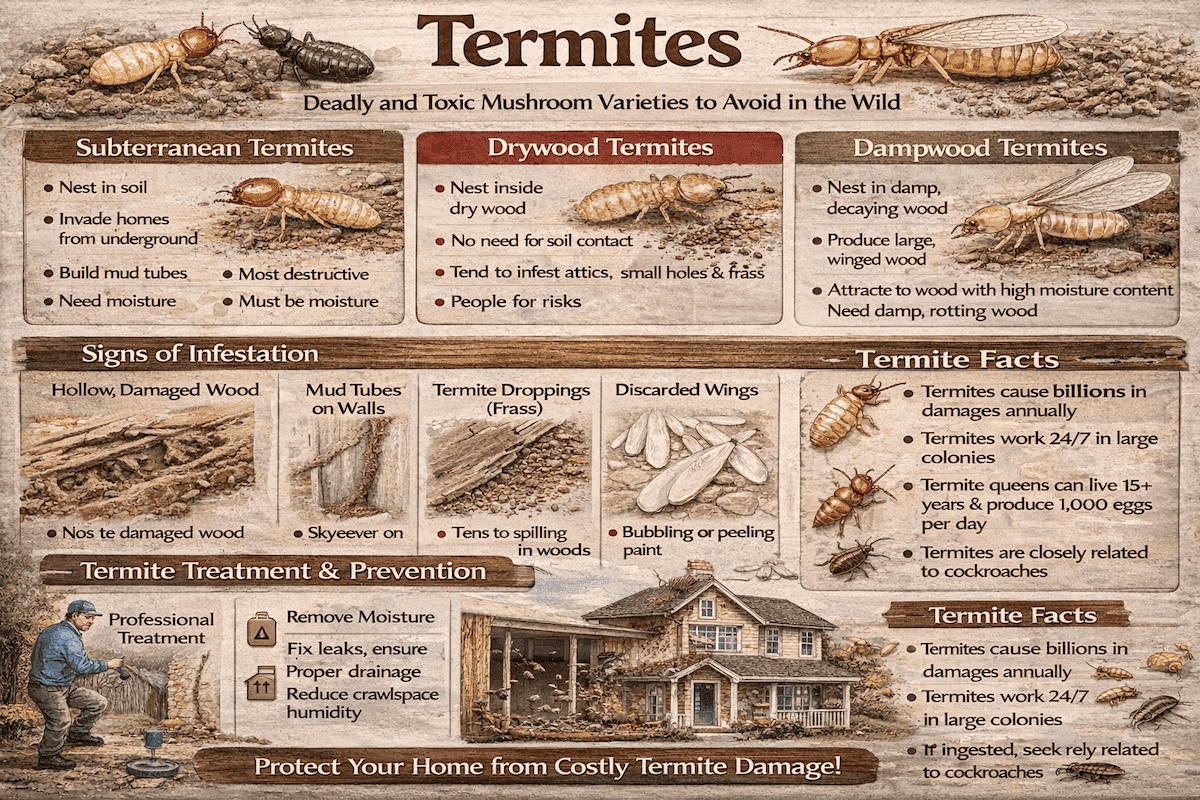

Termites can attack almost any wood species, but some woods are more attractive than others. Softwoods commonly used in framing and construction are especially vulnerable because they are easier for termites to chew and are often located close to soil and moisture sources where subterranean termites live.
Softwoods such as pine, spruce, and Douglas fir are widely used in residential construction and are frequent targets for termite activity. Their relatively lower density allows worker termites to carve out internal galleries just beneath the surface, leaving only a thin veneer of wood or paint that can conceal extensive internal termite damage.
Even wood products that are reused in construction—such as reclaimed wood from old barns, factories, or historic buildings—can be vulnerable if the material has not been properly treated or inspected. While reclaimed lumber is valued for its durability and character, termite infestations can still occur if moisture conditions allow colonies to access the wood.
Hardwoods such as oak, ash, and maple generally offer greater resistance because of their higher density and natural chemical compounds. However, “more resistant” does not mean termite-proof. Under damp conditions or in poorly ventilated spaces, termites will tunnel into hardwood flooring, trim, or furniture.
Fast-growing plantation species such as hybrid poplar are often used for biomass, pulpwood, and engineered wood products. Because these trees grow rapidly and produce lighter wood fibers, materials made from them may be more susceptible to termite attack if they are not properly treated or protected.
For outdoor structures, some species such as black locust and certain tropical hardwoods contain natural compounds that improve resistance to insects and decay. In addition, natural protective layers such as tree bark help shield living trees from pests in nature, although once wood is processed and used in construction, that protection is largely removed.
Even ornamental hardwoods such as magnolia trees can become part of the termite food chain after trees die or wood is incorporated into landscaping features. Proper storage, drainage, and keeping wood materials away from direct soil contact greatly reduces termite risk.
Climate and microclimate play a major role in where termites thrive and when they become active. In general, termites favor environments with:
Changes in climate patterns—such as warmer winters, increased rainfall, or stronger storms—may expand termite ranges into areas that historically had lower infestation risk. As these environmental conditions shift, regular termite inspections and preventative treatments become increasingly important for homeowners.
Termites are found on every continent except Antarctica. In natural ecosystems they play an important role by breaking down dead wood, fallen branches, and plant material, recycling nutrients back into the soil and supporting forest health.
Problems arise when termite colonies shift their food source from fallen logs and forest debris to human structures such as homes, decks, sheds, and fences. Once termites establish colonies near buildings, wood framing and structural timbers become an accessible source of cellulose.
In North America, subterranean termites dominate most regions, while drywood termites are more common in warm southern and coastal climates. Around the world, termite species vary in colony size, nesting behavior, and aggressiveness, but they all share the ability to rapidly consume wood and plant fibers.
Understanding which termite species occur in your local region helps determine the most effective prevention strategies and treatment options.
Termites live in highly organized colonies with a sophisticated division of labor. Understanding this termite social structure helps explain how colonies can expand rapidly and cause significant structural damage.
Finding discarded termite wings near windows, doors, or foundations is often one of the earliest warning signs of a nearby termite colony.

Termite nests range from hidden underground chambers to spectacular aboveground mounds. Subterranean termites typically nest in the soil and extend foraging tunnels outwards in search of food. They build protective mud tubes up foundation walls and along beams so they can move in humid, enclosed channels.
In warmer regions of Africa, Australia, and South America, some species construct massive termite mounds made of soil, saliva, and feces. These structures can reach several meters high and act as natural climate-control systems, regulating temperature and humidity with a network of internal shafts and chambers.
Drywood termites, by contrast, build their nests entirely inside the wood they consume. There are no mud tubes to give them away—just tiny exit holes and piles of frass (pellet-like droppings) that gradually accumulate below infested timbers or furniture.
Early detection is the best way to limit termite damage to your home. Watch for:
If you spot one or more of these clues—especially in combination—schedule a professional termite inspection to confirm species, assess damage, and plan next steps.
Effective termite control targets the colony, not just the visible insects. Common approaches include:
Because misapplied termiticides can contaminate soil and water or fail to stop the colony, most structural termite treatments are best handled by licensed pest management professionals.
Ironically, the same termites that threaten wood structures also inspire innovation. Their mounds have guided passive building designs that regulate temperature and airflow, similar to a solar chimney. Researchers also study termite foraging and construction behavior to develop self-organizing algorithms for robotics, logistics, and traffic management. By observing termites, engineers find new ways to design energy-efficient buildings and resilient networks.
Preventing termites is easier and far less expensive than repairing termite damage. Combine these termite prevention tips with ongoing monitoring:
Combine these measures with good overall home maintenance, and you create an environment that’s far less inviting to termites.
Termites may be small and secretive, but their impact on unprotected homes can be enormous. By learning the types of termites that live in your area, recognizing early warning signs, and investing in prevention and professional control when needed, you can safeguard your home’s structure and your long-term investment.
With regular inspections, smart building choices, and prompt action when activity is detected, these silent destroyers don’t have to become your worst homeowner nightmare.
The three main groups of wood-damaging termites are:
Species and behavior vary by region, but subterranean termites are generally considered the most destructive to houses and other buildings.
Early detection is critical. Call a licensed pest professional if you notice:
Prevention focuses on eliminating food, moisture, and entry points:
In high-risk regions, annual professional inspections are one of the best long-term prevention strategies.
Yes. Termites commonly attack deadwood, stumps, and the roots of stressed or declining trees. Living trees with sound, healthy wood are less attractive but can still be affected if they are weak or damaged.
Whether you remove an infested tree depends on the level of structural risk:
When in doubt, consult a certified arborist who can assess both termite activity and the mechanical stability of the tree.
Treatment options depend on the termite type, location, and severity:
A licensed pest management professional can design an integrated pest management (IPM) plan that combines exclusion, moisture control, and targeted treatments.
DIY steps are helpful for prevention (fixing moisture problems, sealing gaps, reducing wood-to-soil contact), but established colonies—especially subterranean termites—are difficult to eradicate without professional tools and products.
Over-the-counter sprays may kill visible termites but usually do not reach the colony. For structural protection and long-term monitoring, professional installation of soil barriers or bait systems is usually recommended.
In most cases, no. Standard homeowners policies treat termite damage as a preventable maintenance issue rather than a sudden, accidental loss. Some insurers may offer optional riders or endorsements that provide limited coverage.
It’s wise to review your policy and speak with your agent if you live in a high-risk area—and to invest in regular termite inspections to catch problems before repairs become expensive.
Copyright © All rights reserved Tree Plantation