


 INVEST
 PLANT
PLANT
 SOFTWOODS
 HARDWOODS
 CALCULATORS
 RESOURCES
 PROGRAMS

Softwoods
Learn More
Tree stumps are often seen as leftovers—something to grind down, pull out, or work around. But in reality, a well-placed stump can become one of the most creative and character-filled features in a landscape. Whether it comes from a towering hardwood tree or a resin-rich softwood, a stump can be transformed into a functional, artistic, and highly memorable element in your yard or garden.
With a little imagination, repurposing tree stumps can turn what appears to be waste into rustic outdoor furniture, garden art, wildlife habitat, play features, or practical landscape accents. Instead of viewing a stump as the end of a tree’s story, think of it as the beginning of a second life—one that blends craftsmanship, sustainability, and natural beauty.
Hardwood and softwood stumps each offer different possibilities. Dense hardwood stumps are often ideal for carving, seating, tabletops, and long-lasting decorative features because of their strength and durability. Softwood stumps, while generally lighter and easier to shape, can be just as useful for planters, whimsical garden displays, and rustic projects where texture and ease of modification are an advantage. The best use for any stump depends on its size, condition, species, and location.
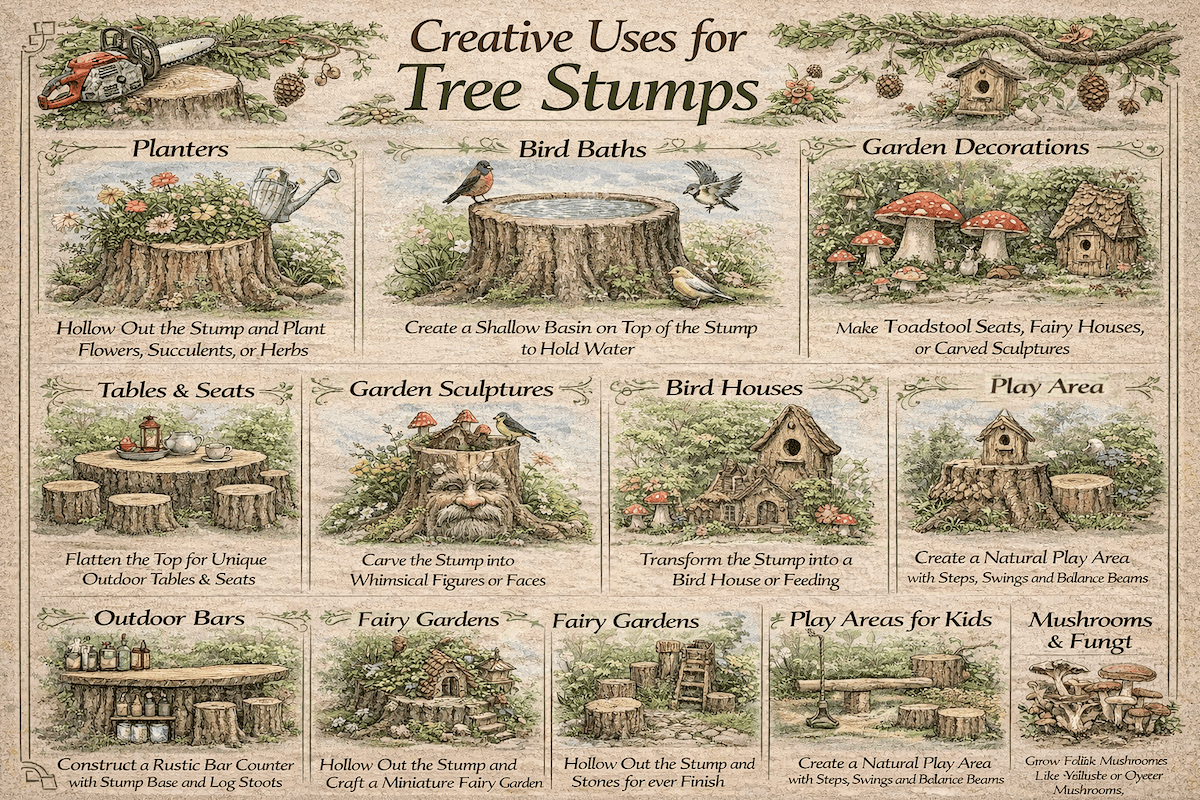
One of the most striking ways to reuse a stump is to leave it slightly taller than usual and transform it into a sculptural focal point. With skill, patience, and the right tools, a stump can be carved into a face, woodland creature, spirit figure, or rustic totem. Projects like chainsaw sculpting can turn an ordinary cut remnant into a true conversation piece, especially when the natural grain, knots, and shape of the wood are incorporated into the design.
Tree stumps can also be converted into beautiful garden planters. By hollowing out the center and filling it with quality soil, you can create a raised planting pocket for flowers, trailing vines, herbs, succulents, or even compact vegetables. In shaded areas, a stump planter can work beautifully with ferns and mosses; in sunny spots, it can become a colorful display of annuals or pollinator-friendly blooms. This is one of the easiest ways to blend a stump naturally into the surrounding landscape while giving it a clear purpose.
Another popular idea is to shape a stump into outdoor seating. A broad, stable stump can become a rustic stool, a side table, or even a carved chair with a whimsical, storybook quality. With enough height and width, you can carve the back and seat into a “hobbit-style” garden chair that feels like something from a fairy tale. Sanded, sealed, and placed in the right location, stump seating can add warmth and character to patios, fire pit areas, and woodland-style gardens.
For families, tree stumps can become natural play surfaces and game stations. A flat, level stump top can be sanded smooth and sealed with a weather-resistant finish to create a game board for checkers, tic-tac-toe, or chess using natural pieces such as painted stones, acorns, shells, or carved wooden markers. Grouped stumps can also become stepping platforms, storytelling seats, or imaginative play features for children.
Smaller or lower stumps can serve practical roles throughout the landscape. They can be used as bases for bird baths, pedestal stands for pots, platforms for lanterns, or supports for small sculptures. Some gardeners even incorporate them into wildlife-friendly spaces, allowing fungi, moss, lichens, and beneficial insects to slowly colonize the surface over time. In this way, a stump can become part of a living microhabitat that adds ecological value as well as visual appeal.
If you prefer a more polished look, a stump can be topped with stone, tile, glass, or a finished wood slab to create a durable outdoor table. It can also be drilled and fitted to hold umbrellas, signs, or decorative lighting. In cottage gardens and rustic landscapes, stumps often work especially well because they help soften the transition between built elements and the natural environment.
Before starting any stump project, it is important to inspect the wood carefully. Sound, solid stumps are best for furniture and carving, while decaying stumps are usually better suited to planters, habitat features, or more temporary uses. You should also consider drainage, exposure to moisture, insect activity, and how close the stump is to pathways, foundations, or other landscape features. A good sealant or outdoor finish can significantly extend the life of decorative stump projects.
In the end, tree stumps offer far more potential than most people realize. With creativity and a willingness to experiment, they can become works of art, useful furniture, charming garden accents, or living ecological features. What was once simply the cut base of a tree can be reimagined as something beautiful, functional, and entirely unique to your landscape.
Feel free to share this creative uses for tree stumps infographic on your website or blog. Please include a link back to this page as the source.

Transforming tree stumps into natural planters is a brilliant way to repurpose what many might consider garden waste. A softwood tree stump in your yard, is not to be viewed as a remnant of a tree to be ground up and discarded, but rather as a potential centerpiece for a beautiful, organic container garden.
To begin this transformation, you carefully hollow out of the center of the tree stump. This requires a delicate balance between removing enough wood to create a spacious cavity for planting, while maintaining the structural integrity of the stump so it will hold soil. Leaving a 3-inch wall around the hollowed-out cavity will ensure the structural integrality of your stump garden for years to come. Depth is important as well – the deeper the cavity the more room for plant roots. Carving out a depth between 12 and 20 inches should be more than adequate.
You can use chisels and an electric drill with a ling wood bit to hollow out the stump.
Once the hollow is ready, I fill it with a high-quality soil mix, suitable for the plants or flowers that will grow in this new environment. It is recommended that you drop in at least one bag of happy plant fertilizer as well.
It is often recommend to add a layer of permeable landscape fabric inside the walls and floor of the hollowed stump. This is a crucial step that many might overlook. The fabric serves as a barrier, preventing weed growth which could otherwise emerge through the stump and compete with the plants.
Selecting the right plants is also key . Choose species that complement the natural look of the stump that thrive in the local climate. This not only ensures a stunning display but also promotes a healthy, sustainable garden.
The final result is always a sight to behold – a beautiful, natural garden container that adds a unique charm to the landscape. It's not just about the look of the thing; this approach also aligns with eco-friendly landscaping principles, turning what was once a tree into a thriving habitat for other plant life. By repurposing a tree stump, you will discover how rewarding it is to see how a simple tree stump can be transformed into a beautiful and functional piece of living art.

A chainsaw sculptor, will view a tree stump not just as the remainder of a tree but as a raw natural canvas brimming with potential. The idea of turning a tree stump into an outdoor chair is an opportunity to approach a tree stump with practicality and creativity.
Select the right stump tree stump is key. First, it needs to be big enough (at least 3 feet round and 4 feet tall). It needs to be solid, newly cut from either a softwood or a hardwood tree. The initial cuts are crucial. A chainsaw is used to level off the stump, ensuring it's flat and even at the top. This step requires a steady hand and a keen eye for detail, as it sets the foundation for the entire chair.
After leveling the top, the basic shape of the seat is cut. The chainsaw sculpts the wood quickly, creating curves and contours that will enhance the chair's look and comfort. Leaving some of the natural textures and features of the wood intact, adds character to the piece.
Next, using various grades of sandpaper, the rough edges and surfaces of the chair can be smooth out to a degree. This can time-consuming but is an essential part of the making the stump chair sittable.
Once the chair is sanded smooth, it can be protected with varnish or sealant. This not only preserves the wood and extends the chair's life but also brings out the natural beauty of the wood grain. Adding a touch of paint to highlight certain features or will add a pop of color, to match it with the décor of the yard or house.
Finally, you can add a cushion or seat pad to provide comfort for the sitter. The cushion can be easily changed to match seasonal décor, a Halloween theme for the fall, for example.
Turning a tree stump into a chair is more than just creating a piece of outdoor furniture; it's about giving a new life to an often-discarded part of a tree.

To the first nation people, tree stumps are not just remnants of a tree; they are sacred gifts from nature, offering themselves as canvases for storytelling and honoring the natural world. Native Americans for example, see the transformation of these stumps into carvings of spirit animals and totems as a deeply spiritual and artistic practice. Tree stumps, whether they be from a hardwood or softwood tree, each with their unique textures and patterns, are ideal for bringing to life the spirits of animals that are significant to first nation culture and beliefs.
When a skilled woodworker from the first nation community, approach a tree stump, they do so with reverence and a deep understanding of the importance of these spirit animals and totems in first nation heritage. Carving intricate designs of animals such as the eagle, bear, or wolf, we are not just creating art; we are giving form to the guardians and guides that play a vital role in first nation peoples spiritual journey and daily life.

If you are an avid bird watcher, transforming a tree stump into a bird bath is a great project that brings the wonder of avian life right into your yard. The project starts with selecting the perfect stump, ideally one that's stable, has a flat top and is a hardwood. Carefully carve out a shallow bowl from the top of the stump, ensuring it's just deep enough to hold water but shallow enough for the safety of smaller birds – twelve inches is about perfect.
Adding pebbles and small stones to the bath not only a natural touch but serves to mineralize the water, which is of benefit to the birds. Watching birds cautiously approach, then confidently perch on the rim of the stump and splash around in the water is a true delight.
Refreshing the water and keeping it clean, is essential for the health of my feathered visitors. Bird lovers are always mindful of changing the water to prevent algae growth and ensuring it doesn’t freeze over in the winter, so the birds always have access to fresh water. Adding a bubbling water feature at the center of the bath will refill and refresh the water automatically.
In urban areas, especially, where natural water sources may be limited, like in the Arizonian desert for example, a bath like this becomes a crucial water haven. It's heartwarming to see a variety of birds flock to this makeshift oasis, each species with its unique drinking and bathing habits.
Beyond its practicality, the bird bath is a focal point in my garden, offering endless opportunities for bird watching. Observing the different species that visit, from tiny sparrows and chickadees to larger robins and blue jays, and watching their interactions and behaviors is fascinating. It’s a window into the natural world that never ceases to amaze and inspire birdwatchers.

Parents are always looking for creative and natural ways for my children to play and learn outdoors is always a priority. That's why the idea of converting tree stumps into outdoor game boards is a delightful project for any family. Choosing the right tree stump is key – one that was flat enough, tall enough and wide enough to serve as a game surface and stable enough for kids to play safely.
Parents can paint a tic-tac-toe grid and a checkerboard pattern on the top, using bright, child-friendly colors as examples. It is important to use weather-resistant and non-toxic paint, ensuring it was both durable and safe for the kids. For the game pieces, rocks and small branches can be collected as a family, which are painted, dried and positioned on the board. This part of the project is not just fun, but also a great way for the kids to express their creativity.
Tree stump game boards become more than just a play area – it's a space where children learn and grow. Games like tic-tac-toe, checkers and chess encourage them to think strategically and develop problem-solving skills. It’s heartwarming to see them engaging with each other, learning to take turns, and enjoying friendly competition.
Moreover, this project has instilled in them a sense of environmental responsibility. They understand that we've repurposed a part of nature into something new and exciting, teaching them the value of caring for our environment.

Utilizing tree stumps to create insect hotels and worm farms is an innovative and eco-conscious approach to enhance you yard and garden space. This process begins with the selection of a suitable tree stump, which ideally should be of a good size and very stable. For insect hotels, the stump should be at least a year old, and is transformed by drilling holes of varying sizes ideally into the sides of the stump. These holes become sheltering nooks for a variety of beneficial insects, such as solitary bees, ladybugs, and other garden-friendly species. The diversity in hole size is crucial as it accommodates different types of insects, each with their specific nesting preferences.
In addition to drilling holes, one can add other natural materials like straw, bark, or pine cones around and inside the holes to create a more varied habitat. The variety of materials not only enhances the visual appeal of the insect hotel but also caters to a wider range of insect species. Insect hotels play a vital role in supporting local biodiversity. They offer a sanctuary for plant friendly pollinators and other beneficial insects, which are crucial for a healthy and balanced garden. By providing these habitats, an insect hotel encourages natural pest control as well, which benefits the entire garden and your outdoor living space.
Hollowing out the center of the stump to form a cavity, which is then filled with compost and worms, typically red wigglers, will create a worm farm. This setup becomes a self-contained ecosystem where the worms thrive, breaking down organic matter and producing nutrient-rich compost for your planters and the garden.
Both insect hotels and worm farms created from tree stumps not only serve an ecological purpose but also add an educational element to a garden. They offer a unique opportunity for individuals, especially children, to learn about the roles of different insects and worms in the ecosystem – your boys will love it. Observing these creatures up close fosters an appreciation for the smaller yet significant inhabitants of our gardens.
In summary, building insect hotels and worm farms from tree stumps is a creative, environmentally friendly, and educational way to enhance garden ecology. It's a project that brings benefits not only to the garden itself but also to the broader environment, supporting a thriving, diverse, and sustainable ecosystem.

Repurposing hardwood and softwood tree stumps offers a world of innovative possibilities. Whether you choose to transform them into natural planters, unique furniture pieces, works of art, or whimsical or practical additions to your outdoor space, tree stumps can be a cut above the rest when it comes to repurposing materials. So, next time you come across a tree stump, don't see it as waste - see it as an opportunity to unleash your creativity and add a touch of rustic charm to your surroundings.
Copyright © All rights reserved Tree Plantation